Newsletters
From the Christmas 2006 Issue
Knowing The Way Home
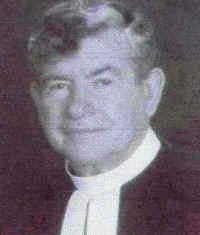
by the Reverend Anthony Lang of New South Wales
A few days ago, when I was telling someone about this morning’s
special pet blessing service, he looked at me strangely and asked, “Um,
you are not going a little odd, are you, Tony?” I told him I didn’t
think so… well, no odder than usual anyway! I am sure that my friend’s
response is the response of many people, at least here in Australia,
where pet blessing services are virtually unheard of. They are not so
uncommon in Europe, where they are held, usually on the nearest Sunday
to the fourth of October, which is St Francis of Assisi Day.
We may well ask, then, apart from the lovely example of St Francis, what
justification do we have for holding a pet blessing service? Should pets
be blessed? For an authoritative answer, all we have to do is turn to
Scripture, and to the ancient Book of Genesis, the first Book in the
Bible. There, in chapter one, from verse 20 on, we read that God blessed
the creatures He had made, and saw that what He had done was good. Note
this: He did not merely create them – He blessed them.
Later, in verse
twenty-eight, the sixth day, He created mankind, male and female, and
blessed them, using almost exactly the same words that were used to
bless the other living creatures. The only difference is that mankind
was given dominion over all other living creatures… not to do with as we
will, but rather as stewards of what has been entrusted to us. The
blessing of God extends beyond man to the whole of God’s living
creatures. In holding a blessing service for our pets, we acknowledge,
first, that God created and blessed them, second, that God is pleased
when we care for what He has made, which He loves, and third, that God
has given us a special responsibility of care.
For all those reasons it is appropriate to bless what God saw to be
good, and blessed
.
All of us who love our pets probably have a wealth of stories to tell,
of our pets’ love, intelligence, faithfulness. There is a delightful
book called “Chicken Soup for the Cat & Dog Lover’s Soul” in which there
are dozens of accounts, in nine memorable chapters, of animal tales:
animals as helpers, friends, healers and teachers. I recall someone
telling me recently of a couple who had an elderly dog that sleeps on a
mat beside their bed. As the dog grew older, it started to snore. On one
particular evening, the husband was out at a reunion. His wife found it
hard to sleep that night, for the dog’s snoring was particularly heavy.
Finally, in desperation, she got out of bed, rummaged through a drawer
and found a big blue ribbon, and tied the sleeping dog’s jaw shut - and
wonder of wonders – the snoring ceased!
Considerably later, her husband rolled in, much the worse for wear,
fell on the bed on his back and commenced snoring heavily, mouth hanging
open. His wife could stand it no longer. She went to the drawer, found
another ribbon, which happened to be red, and tied her husband’s jaw
shut. Again, the result was amazing – the snoring stopped! In the
morning, the husband got up and saw himself in the mirror with the big
red ribbon still attached. He took it off and glanced at the still
sleeping dog, still wearing the big blue ribbon. He shook his head and
said, “I don’t know what you and I got up to last night, dog – but we
sure did OK. You got first prize and I got second!
When it comes to unconditional love and faithfulness, bringing us
comfort in times of sorrow, pleasure and peace of mind in our daily
lives, our pets frequently take out first prize. They get the blue
ribbon. It is now a well-known fact that pet owners usually have lower
blood pressure than non-pet owners, and their value is well known and
well documented in nursing homes, where they are considered wonderful
assets, bringing joy and pleasure to the patients. Yes, the Lord
certainly knew what He was doing when He gave us pets!
Let us not forget, however, that our pets can know fear and pain and
sorrow. They grieve, they fret. Knowing our pets, seeing their needs and
understanding their language when they “speak” to us, can increase our
sensitivity, our compassion. At one time, it was believed that animals
had no real intelligence, that their responses were simply instinctive.
The lie has been given to that theory time and time again.
We know how
truly intelligent are guide dogs, but it is a fact that intelligence,
and an ability to think, are documented in all sorts of creatures.
Be amazed at the astonishing homing abilities of all sorts of
creatures’… birds that criss-cross the planet, fish that find their way
to homes they have never seen. Science often has no explanation but
hazards guesses that may or may not be correct. When we get to know the
wild creatures, we discover that they have personalities. There was a
young magpie in a former parish that often visited our garden. I fed him
occasionally with some bread or meat, which I threw to him. He made it
plain that when I threw it, he wanted to catch it in mid-air. He became
so excited, running almost to my feet. He was actually playing with me,
as in a game. It would be an appalling world, if God had not blessed us
with these wonderful friends who share our world. God has blessed us. He
blessed them, and it is fitting that we bless them too.
There is a chapter in the book, “Chicken Soup for the Cat & Dog
Lover’s Soul” called “Saying Goodbye” which contains some of the sad
stories. We all dread that time when the pets we’ve loved, and who love
us, die. It’s a heart-rendingly painful time. Many’s the time I’ve heard
people ask, and I have wondered myself, “What happens to them? Do they
go to heaven? Will I ever see again this one that I loved so dearly?”
Here, of course, we are sailing into completely uncharted waters. No one
knows what heaven is really like. There are only brief glimpses of it in
the Bible, and none of them mentions animals. The official position of
the mainstream church seems to be a belief that animals don’t have souls
and therefore don’t go to heaven. I can’t agree. In Genesis chapter one,
verse thirty, there is a reference to every creature having “the breath
of life” (RSV). The Hebrew word used for “breath of life” is “Nephesh” –
which can also mean “soul.” The Jewish people believe animals have a
soul. What we call heaven they call “The New Eden”; a blessed time to
come when God will redeem the whole earth. They point to the wonderful
vision of the prophet Isaiah, looking forward to the redemption of the
world, when the wolf shall dwell with the lamb, and the leopard shall
lie down with the young goat. The cow and the bear shall feed; their
young shall lie down together, and the lion shall eat straw like the ox.
“They shall not hurt or destroy in all My holy Mountain”, the prophecy,
continues, “and the earth shall be full of the knowledge of the Lord as
the waters cover the sea.” (Isaiah 11:6-9).
When we turn to the New
Testament, the evidence is more elusive, but there are tantalizing
glimpses. On three separate occasions, we find in the New Testament
mention of the word “paradise.” Jesus told the thief beside Him on the
cross, “Today, you shall be with Me in paradise.” (Luke 23:43). Paul
uses the same word in 2 Cor 12:4, and John in the Book of Revelation
2:7. The literal translation of the word “paradise” is a “walled
garden.” Can you imagine a garden without trees, flowers, birds and
animals? I certainly can’t. Here again, we just may be given a tiny
glimpse into what heaven may be like.
I grew up on a farm. When I was very young, during the war, when
there was very little petrol to be had, I would watch my father
ploughing, behind by two magnificent Clydesdale horses, Annie and Tom.
They were beautiful creatures and they loved each other. We also had
another horse called Fizzer, who used to pull our sulky. One day my
mother took my young brother and me in the sulky, visiting a
neighbouring family on another farm. It was dark when we left for home,
and my mother soon became hopelessly lost. It was pitch black, not a
farmhouse light in sight, dead flat country, side roads snaking off here
and there into the darkness, no way of knowing where we were. Finally my
mother gave Fizzer his head, which means she simply let the reins go.
Fizzer, who by that time was thoroughly disgusted with all the to-ing
and fro-ing, set off at a fast trot, and took us straight home without
one wrong turn!
When I recall that experience, I often recall the words of our text:
Cattle know who owns them, and donkeys know where their master feeds
them, but that is more than my people Israel know. They don’t understand
at all.” Isaiah was speaking to Israel early in the 8th century BC, at a
time when things were bad, and faith was at low ebb. Many had no faith.
Today, as then, there are many who have no faith. They don’t understand.
They don’t know the way home. There are many ways by which faith may
come to us, such as through God’s Word, and the action of the Holy
Spirit. Another way is to open our eyes, and see, in this wonderful
world, and in the awesome harmony of the universe, the hand of the One
Who created and blessed His creatures, Who calls us to share eternity in
heaven with Him. Although the way is not always clear, and sometimes may
even be dark, as it was that night for old Fizzer, may we take the road
that leads to our eternal home.
Go on to ‘At The Cross, At The Cross
Where I First Saw The Light’!
Return to
Christmas 2006 Issue
Return to
Newsletters


 Animal Padre's


