Companion Animal Care Articles used with permission from All-Creatures.org
Fleur Dawes discusses the harrowing situation in Morocco, where dogs continue to be massacred ahead of the 2030 FIFA World Cup. She also shares the tireless efforts of one local rescuer who continues her essential trap-neuter-vaccinate-return work in the face of ongoing tragedy.
Dogs in Morocco Are Still Being Killed Ahead of FIFA World Cup, but Rescuers Aren’t Giving Up
From Fleur Dawes, IDA In Defense of Animals, idausa.org
March 2026
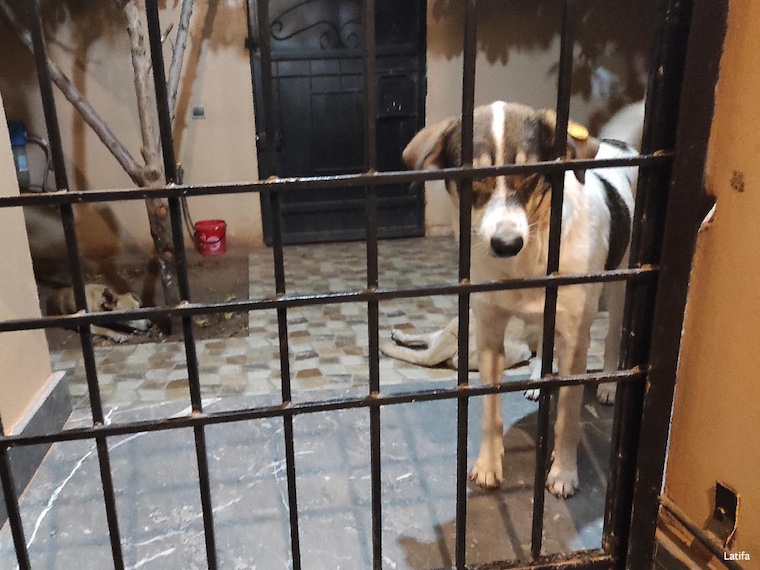
Photo Credit: Latifa
The situation for millions of street dogs in Morocco is dire as mass killings continue, but we’re supporting the efforts of one brave rescuer who’s standing against the horrific cruelty and has plans to do more in her area to save innocent lives.
The situation heated up last year as part of a campaign to rid the streets of dogs ahead of the 2030 FIFA World Cup, which Morocco is co-hosting with Spain and Portugal. Stories and videos of dogs being brutally beaten, poisoned, and shot drew international scrutiny and outrage, along with protests, including one we co-hosted at a FIFA World Cup match in Philadelphia last summer.
In 2019, a number of agencies signed an agreement supporting the use of trap-neuter-vaccinate-return (TNVR) and shelters in Morocco, but it obviously hasn’t been implemented. Instead, dogs have been killed in the streets en masse, shelters have become facilities for extermination, and now there’s even more troubling legislation in the works, Draft Law 19-25, that would criminalize caring for them.
Latifa, who lives with her husband and teenage daughter in Oujda, Morocco’s easternmost city near the Algerian border, has been working tirelessly to save lives from dog-killing squads that show up under the cover of darkness.
Her efforts have seen many dogs, including Elena, Blondie, and Cookie, get spayed/neutered and vaccinated, but even dogs like these, who pose no risk to the public, are still being targeted for death in her neighborhood.
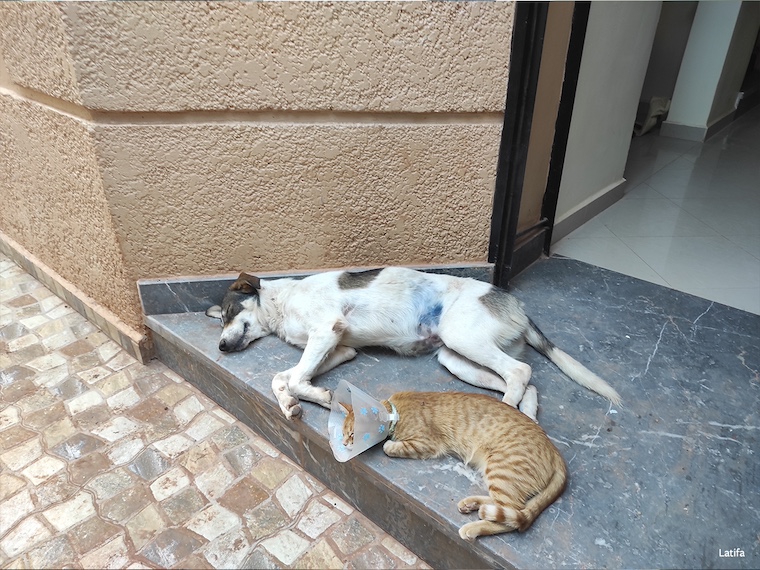
Cookie and Latifa’s cat, MishMish. Photo Credit: Latifa
Just weeks ago, even though she had hidden Elena and Cookie at her parents’ house, and Cookie at her own, dog killers showed up near her home and began killing dogs her family had cared for, waking Latifa’s daughter with the sound of gunshots.
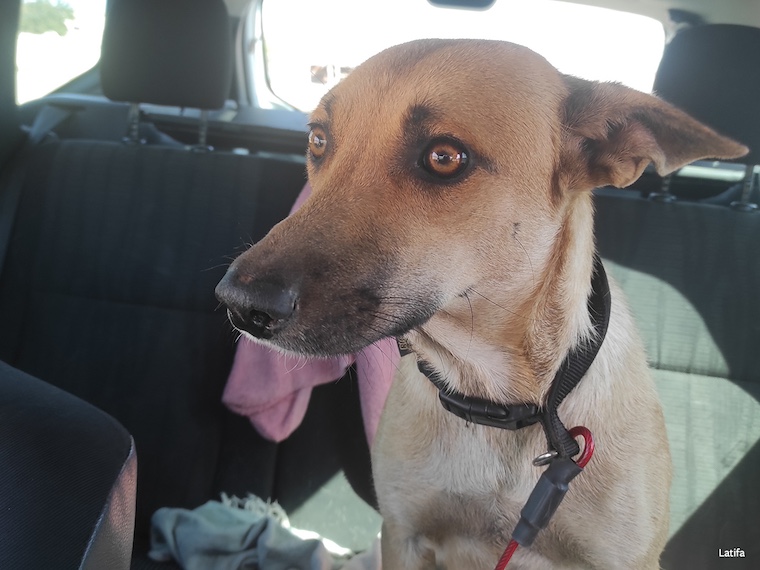
Elena on the way to Latifa’s parents’ house. Photo Credit: Latifa
Despite objections and interference by Latifa’s husband and neighbors, killers still managed to take the lives of familiar dogs, including young puppies, leaving the streets stained with blood and hearts of caretakers broken.
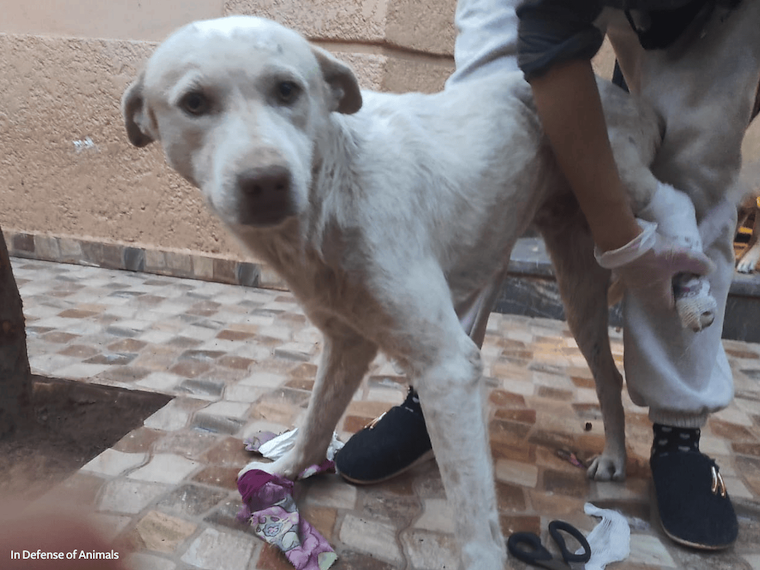
Friendly dog who was tragically killed. Photo Credit: In Defense of Animals
Mass killing of dogs is not ethical or effective. The dogs who lived and still live in Oujda have protected the streets and kept more from moving in. They also don’t wander far, reducing the likelihood of spreading diseases.
Latifa hopes to be an example by continuing her work vaccinating and spaying/neutering as many dogs as she can in her neighborhood, in addition to working to get dogs adopted internationally, dispelling myths about community dogs, and, ultimately, building a clinic and sanctuary. Right now, she believes TNVR will be successful in her area, but only if there are enough places to hide dogs when killers come.
We’re supporting her work with a coalition of organizations to fund food, spay/neuter surgeries and vaccinations, and secure passports for adoptable dogs. We’ve also continued conducting targeted outreach to U.S. and U.K. politicians, including testifying in Parliament, to secure diplomatic pressure.
We’re also working with the International Animal Welfare Protection Coalition (IAWPC) to demand that FIFA support the implementation of TNVR, and have presented overwhelming evidence that the killing continues.
TNVR is the only solution that will reduce conflicts and the risk of spreading diseases like rabies, and we will continue to stand with those who are fighting back against the brutality dogs are facing through no fault of their own.
Posted on All-Creatures.org: March 6, 2026
Return to Companion Animal Care
Follow us on:


- Home Page
- What's New
- Contact Us
- Action Alerts
- Animal Exploitation
- Animal Issues
- Animal Rights Activism
- Archives
- Art & Photography
- Articles Directory
- Bible
- Bible Commentary Blog
- Books
- Campaigns
- Church & Religion
- Discussions
- Events / Podcasts / Media
- Health
- Hosted Web Sites
- Humor
- Kids' Korner
- Letters
- Links
- Nature Studies
- Newsletter
- Poetry & Stories
- Prayers
- Quotations
- Recipes with Photos
- Recipes Without Photos
- Sermons
- Stop Cruelty in Churches
- Video Library
- The Mary T. and Frank L. Hoffman Family Foundation
- Email: [email protected]
A web site sponsored by The Mary T. and Frank L. Hoffman Family Foundation and all-creatures.org
Copyright © 1998-2026 The Mary T. and Frank L. Hoffman Family Foundation. All rights reserved. May be copied only for personal use or by not-for-profit organizations to promote compassionate and responsible living. All copied and reprinted material must contain proper credits and web site link www.all-creatures.org.
Fair Use Notice: This document, and others on our web site, may contain copyrighted material whose use has not been specifically authorized by the copyright owners. We believe that this not-for-profit, educational use on the Web constitutes a fair use of the copyrighted material (as provided for in section 107 of the US Copyright Law). If you wish to use this copyrighted material for purposes of your own that go beyond fair use, you must obtain permission from the copyright owner.

Thank you for visiting all-creatures.org.