An Entertainment Abuses Article used with permission from All-Creatures.org
Ed Boks discusses the LA Zoo's decision to relocate Billy and Tina and provides valuable background on the histories of these elephants and their situation.
The Elephants in the Room: LA’s Stolen Farewell to Billy and Tina
From Ed Boks, Animal Politics with Ed Boks, AnimalPolitics.substack.com
May 2025
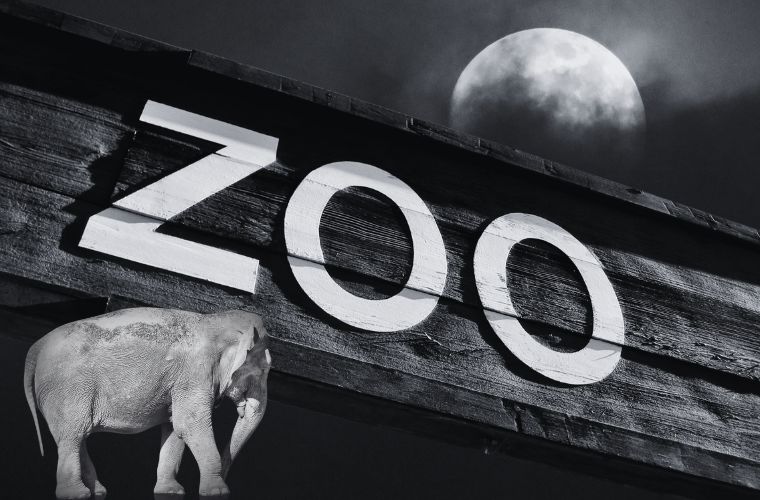
Images from Canva
In the pre-dawn hours of May 20, 2025, without fanfare or formal notice, the Los Angeles Zoo loaded its last remaining elephants—Billy, a 40-year-old bull, and Tina, a 59-year-old female—into ventilated transport crates and quietly sent them 1,400 miles east to the Tulsa Zoo. The move, framed by officials as a necessity for the elephants’ welfare, instead crystallized decades of bitter controversy surrounding their treatment and fate.
To zoo administrators and the Association of Zoos and Aquariums (AZA), the transfer was a technical compliance: the AZA mandates that member zoos house elephants in groups of at least three. With the deaths of Jewel (2023) and Shaunzi (2024), Los Angeles no longer qualified. Tulsa, with its 17-acre "Elephant Preserve" and five Asian elephants, provided an expedient fix.
But to animal welfare advocates, the relocation marked a failure of political courage, public transparency, and moral responsibility.
A Pattern of Resistance
Billy has long been a lightning rod for criticism. Since his arrival in 1989—after having been forcibly taken from his birthplace in Malaysia and traded to the LA Zoo—he has displayed stereotypic behavior—rhythmic head bobbing linked to chronic stress—a condition experts have repeatedly cited as evidence of psychological suffering.
Tina, who arrived at the Los Angeles Zoo in 2010, suffers from arthritis and age-related joint degradation. Her transfer from Toronto occurred just before that zoo’s landmark 2011 decision to send its remaining elephants to the Performing Animal Welfare Society (PAWS) sanctuary—a move now cited by advocates as a model for prioritizing animal welfare and public transparency.
Both elephants were long seen as ideal candidates for sanctuary retirement. Organizations, including PAWS in San Andreas, California, and The Elephant Sanctuary in Tennessee, publicly offered placement for Billy and Tina, providing hundreds of acres of roaming space and no public display—critical components for recovery from decades in confinement.
Yet neither offer was seriously pursued. According to an L.A. Times investigation, city officials ignored sanctuary overtures while rapidly finalizing the Tulsa plan. In fact, the transfer occurred just weeks after Los Angeles City Councilmember Bob Blumenfield introduced a motion urging the zoo to explore sanctuary options and halt the relocation until public discussion could take place. “Let’s find the best place possible for them to live out their lives,” Blumenfield told the Times. “It shouldn’t be done quietly in the middle of the night” (Los Angeles Times, April 22, 2025).
But the motion never received a hearing. And almost as if to silence dissent, Billy and Tina were quietly removed from their enclosure and sent to the Tulsa Zoo under cover of night.
LA Zoo/City Response
In response to criticism, the LA Zoo stated that the decision to move Billy and Tina was made “with the animals’ care and well-being as the top priority,” following recommendations from the AZA and its Species Survival Plan. Zoo officials emphasized that all available options, including AZA-accredited sanctuaries, were evaluated, but Tulsa was chosen to allow the elephants to remain together in a larger herd. “Although they will be missed, we are grateful for the outpouring of support... As they begin their new chapter, we know that Billy and Tina will receive the same love and expert individualized care that they have had at the Los Angeles Zoo,” the zoo said in a statement.
A representative for Mayor Karen Bass added that the decision was made in consultation with elephant experts and was “solely” in Billy and Tina’s “best interests,” underscoring the city’s commitment to animal welfare.
Institutional Incentives on Both Ends
While zoo officials framed the move as a necessary step for the elephants’ welfare, institutional and economic incentives—such as maintaining AZA standing and reciprocal animal management programs—also influenced the decision. Within the AZA network, accredited zoos maintain reciprocal animal management programs, including breeding rights and exhibit collaborations that carry both scientific prestige and financial benefits. Sanctuaries, by contrast, operate outside the AZA system. They do not breed animals, do not exhibit them for public education, and often prohibit the commercial use or transfer of the animals.
The Tulsa Zoo, which opened its $30 million Mary K. and John T. Oxley Family Elephant Experience in 2021, had a clear stake in acquiring two additional elephants. The facility had five Asian elephants and planned to grow its herd, fulfilling AZA’s emphasis on maintaining socially dynamic groups of at least three elephants.
By accepting Billy and Tina, Tulsa believes it enhanced its public appeal and reinforced its role as a national leader in elephant care—benefits that apparently go well beyond the welfare of the animals themselves. Meanwhile, LA Zoo’s departure from elephant housing preserved its AZA standing by transferring animals to another accredited facility, rather than a sanctuary outside the syndicate's control.
Was It Best for the Elephants?
Tulsa officials insist Billy and Tina are already acclimating. “They’re settling in well,” Tulsa Zoo President and CEO Peggy Simmons told People Magazine after their arrival. “Our team is excited to introduce them to their new herd once quarantine is complete”.
Experts note that the welfare needs of aging elephants extend far beyond herd integration. Carol Buckley, a renowned elephant behaviorist and founder of Elephant Aid International, has long argued that older elephants require expansive natural environments, minimal human interference, and the freedom to make autonomous choices—conditions rarely met in even the best zoo settings.
Her work emphasizes that confinement, limited range of movement, and constant exposure to visitors can exacerbate both physical and psychological ailments in captive elephants.
A Defining Moment for Zoos
The journey of Billy and Tina—from years on display in Los Angeles to their clandestine relocation to Tulsa—reflects more than the fate of two elephants. It embodies the ethical crossroads facing modern zoos as they navigate tradition, public scrutiny, and evolving animal welfare standards.
Zoos often cite conservation and education as their mission. Yet the continued confinement of large, intelligent animals like elephants contradicts those ideals. Today’s technology offers powerful alternatives: immersive virtual reality, interactive exhibits, and high-definition wildlife storytelling—from Planet Earth to Our Planet—that inspire empathy without captivity. Institutions like the Smithsonian and the American Museum of Natural History are already moving in that direction.
What happened to Billy and Tina is not just about two elephants—it’s about the values we claim to hold. It’s about whether we’re ready to let go of outdated models in favor of ethical progress.
In the end, Los Angeles chose what was easy over what was right—and squandered the chance to lead.
Posted on All-Creatures.org: May 28, 2025
Return to Entertainment Abuses Articles
Follow us on:


- Home Page
- What's New
- Contact Us
- Action Alerts
- Animal Exploitation
- Animal Issues
- Animal Rights Activism
- Archives
- Art & Photography
- Articles Directory
- Bible
- Bible Commentary Blog
- Books
- Campaigns
- Church & Religion
- Discussions
- Events / Podcasts / Media
- Health
- Hosted Web Sites
- Humor
- Kids' Korner
- Letters
- Links
- Nature Studies
- Newsletter
- Poetry & Stories
- Prayers
- Quotations
- Recipes with Photos
- Recipes Without Photos
- Sermons
- Stop Cruelty in Churches
- Video Library
- The Mary T. and Frank L. Hoffman Family Foundation
- Email: [email protected]
A web site sponsored by The Mary T. and Frank L. Hoffman Family Foundation and all-creatures.org
Copyright © 1998-2026 The Mary T. and Frank L. Hoffman Family Foundation. All rights reserved. May be copied only for personal use or by not-for-profit organizations to promote compassionate and responsible living. All copied and reprinted material must contain proper credits and web site link www.all-creatures.org.
Fair Use Notice: This document, and others on our web site, may contain copyrighted material whose use has not been specifically authorized by the copyright owners. We believe that this not-for-profit, educational use on the Web constitutes a fair use of the copyrighted material (as provided for in section 107 of the US Copyright Law). If you wish to use this copyrighted material for purposes of your own that go beyond fair use, you must obtain permission from the copyright owner.
Thank you for visiting all-creatures.org.
