Book Recommendations, Reviews and Author Interviews from All-Creatures.org
Bethany Cortale reviews Marcie Fallek's Little Miracles Everywhere: My Unorthodox Path to Holistic Veterinary Medicine, exploring both the challenging and illuminating lessons from Fallek's veterinary journey — chief among them that ethically compromised veterinarians, Big Pet Food, and a profit-hungry pharmaceutical industry form a toxic alliance that leaves nonhuman companions sick and vulnerable to bad medicine.
A Veterinarian Exposes a Corrupt Industry and Finds a Better Path Forward
From Bethany Cortale
August 2026
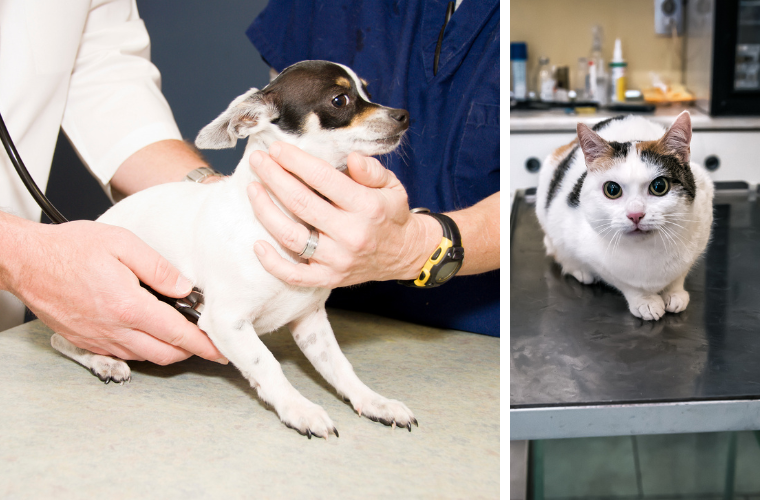
Photos from Canva
As a long-time cat guardian, I’ve had one too many negative experiences that have soured me on conventional veterinary medicine. I’ve learned the hard way that veterinarians do not always have the best interests of their patients at heart, which motivated me to spend years researching topics and educating myself so I can make better choices for my cat companions. Given my painful experiences and my quest for natural, non-toxic approaches, I was very excited to read Marcie Fallek’s memoir, Little Miracles Everywhere: My Unorthodox Path to Holistic Veterinary Medicine, hoping to get an inside glimpse of the veterinary industry and the process of becoming a holistic veterinarian. In this endeavor, the book did not disappoint; however, it did very little to dispel my negative feelings about conventional veterinary medicine. On the other hand, Fallek’s inspiring and encouraging stories of healing reinforced my commitment to holistic medicine.
Fallek’s book is part memoir and part exposé. It is educational as well as riveting, for both good and bad reasons. It is one woman’s account of her educational, personal, and working experience as both a conventional and holistic veterinarian. It should be required reading for anyone who wants to be a vet or who loves and cares for nonhuman companions.
Fallek’s education began in Italy, where she went to veterinary school. The program did not involve any practical experience and focused mostly on nonhuman animals whom Italians ate! “I’d never performed any surgery, drawn blood, or inserted an IV catheter. In fact, I’d barely seen a live animal at vet school, except for at that slaughterhouse,” acknowledged Fallek. Exams were lax, involved a lot of memorizing, and were inconsistently administered by professors, some of whom were sexually motivated. Her final exam topic was fish and involved one question: “How do you prepare shrimp in your country?” She passed by answering “shrimp scampi.”
Fallek obtained a “Doctor of Veterinary Medicine” title, but when she came back to the States with her limited knowledge and experience, my first thought was that she had no business being a vet, which she appears to admit. “I felt woefully inadequate,” she wrote, “I lacked the most basic skills of even a veterinary technician.”
Before she could work in the U.S., Fallek had to pass the American boards. The New York boards consisted of “six stations: horses, cows, goats, sheep, pigs, chickens, and exotics.” No cats. No dogs. No rabbits. None of the nonhuman beings you would typically find at a veterinary office. She was also “grilled on [‘]laboratory animals,[’] rodents and other [‘]things[’] that researchers experiment on,” she insensitively wrote. Because guinea pigs share a good number of traits with humans, they are exploited as tools for painful and gruesome vivisection, which is why we callously refer to “test subjects” as guinea pigs. “It is because of their similarities with us,” Fallek wrote, “that researchers use them for lots of medical experiments.” She calls this a “fun fact,” but I don’t see the humor.
In preparation for the exams, Fallek was informed that the cow section of the boards may ask her how to “hook an udder to a milking machine” and “point to the instrument used to dehorn a cow” (a very painful, unnecessary procedure involving a hot iron, blade, or scissor-like implement, usually without anesthesia). Fallek was told that “cows were a big deal on the New York exam.” (New York is the 5th largest cow-milk producing state in the country.) “I bottle-fed calves while volunteering at a kibbutz in Israel,” Fallek wrote, “but I’d never stuck my arm up a cow’s rectum, which according to the notes, was how you figured out the stage of an ovary and whether it was ripe for artificial insemination.”
Fallek frequently discusses her vegetarianism and her love for other animals, yet she fails to question why most of the nonhuman people she studied are those manipulated and killed for their flesh, milk, and eggs and those used as test subjects by Big Pharma. A veterinarian should be helping other animals, not assisting in their exploitation and abuse on behalf of nonhuman enslavement and slaughter operations and vivisectors. Her training demonstrates that veterinary medicine is an agent for industries that abuse and commodify nonhuman people. Furthermore, Fallek ignores the intense suffering caused by her own consumption of cow milk and eggs. Female cows and chickens sustain prolonged abuse as they endure years of captivity, rape (artificial insemination), and illness/disease from being forced to produce more milk and eggs than their bodies would normally. Their reproduction is controlled and manipulated by humans to produce more babies, milk, and eggs for humans to steal and eat. And when they can no longer reproduce, they are also killed for their flesh—the same flesh Fallek doesn’t eat. When Fallek’s grandmother offered her calf flesh (“veal chops”), Fallek reminded her grandmother that she’s a vegetarian, yet “veal” is a direct byproduct of the cow-milk industry. Since male calves are useless to the cow-milk industry, they are stolen away from their mothers at birth to keep them from using up her milk and are shipped out—sick and weak—to “veal” producers. Therefore, by buying and consuming cow-milk products (“I bought a coffee, no sugar with 2-percent milk, and a Swiss cheese on rye,” she noted), Fallek supports the “veal” industry. Likewise, male chicks are useless to the egg industry and are killed shortly after birth in one of three ways: ground up alive in a macerator, suffocated in plastic bags, or thrown away in the trash, so Fallek is supporting their destruction as well. What’s more, I’m astonished that human females, like Fallek, have no compunction about indirectly participating in the sexual abuse and domination of other female bodies; stealing their babies, milk, and eggs, and exploiting their reproductive processes. It begs the question of why someone as sensitive as Fallek is to the suffering of other animals isn’t vegan.
With little to no experience, some of the cats and dogs in her care, especially in her early years, were essentially test subjects. Having never anesthetized a cat, she burned one. “I steadied my right hand with my left and approached the cat. I managed to stick the needle in the leg, but apparently not in the vein. The cat screeched. (This is how I learned that ketamine burns if it gets outside of the vein.) The cat’s skin swelled up into a big blue blob. I tried not to cry.”
Another time, after watching her supervisor, Elizabeth, handle a cat with a blocked bladder, she decided to “pick up where she left off. I wanted to feel the bladder for myself, plus I wanted to be useful...I put my hand between the cat’s hind legs and felt an enormous balloon. I began to squeeze the way Elizabeth had. Then my thumb slipped. Suddenly, there was no more bladder. I watched in horror as the cat started to retch.” The cat’s caregiver was not told that Fallek had just burst the cat’s bladder, only that the cat was in worse shape than originally thought and needed to be euthanized.
While Fallek certainly didn’t intend to harm these two cats, these examples speak to the inadequacies of her veterinary education and experience.
Fallek’s speciesist language throughout the book is also disconcerting. Like her previous statement calling nonhuman animals used in vivisection “things”, she constantly uses wrong pronouns when referring to living beings, using “that”, “which”, or “anything” instead of “who” or “anyone”. For example, “As I handed pieces of the cereal to the creature, which took them...”; or “The examiner directed me to a cage with a calico creature that looked like a bloated mouse on steroids.”; or “The months passed, and I managed not to kill anything.”
She also misuses the term euthanasia. For example, “Shelters need vets to euthanize unwanted dogs.” Euthanasia is administered to relieve the irremediable suffering of another being; it is not administered for human expedience. Being unwanted, homeless, or having a behavioral problem is not a deadly illness or disease. Unwanted nonhuman people or those with challenging behaviors are killed—they are not euthanized! Vets, like many shelter workers, as well as the media, incorrectly use “euthanasia” and “put down” instead of kill to muffle their consciences and make the uncalled-for murder of other animals appear compassionate.
Vet Practices
Years ago, I read Slaves of Our Affection: The Myth of the Happy Pet by Dr. Charles Danten, a former vet who gave up his practice because of ethical conflicts between making money and standard veterinary practices. The first half of Fallek’s book, while hard to read at times, is another important behind-the-scenes look at the largely unethical, greedy, and compassionless veterinary industry. “I’d rarely met a vet in America who loved animals,” Fallek damningly noted. “Many of the vets I’d met in Connecticut and New York seemed indifferent, at best. Others even appeared to actively dislike animals. (Of course, that’s not what they projected to the clientele.)”
Fallek’s first stop was at a clinic in a rough neighborhood run by a couple who were also trained in Italy. The vets performed unnecessary and abusive procedures such as tail docking (cutting tails off) and ear cropping (cutting off parts of a dog’s ears) at the request of their human clients. “I later learned that our hospital had built a reputation for ear cropping...the surgery is tedious and bloody,” wrote Fallek.
At another clinic, Fallek learned that a miniature schnauzer had a bacterial infection that would only respond to one antibiotic. She couldn’t find the antibiotic and asked her boss, a former head of the state ethics committee, if he would order it. “I’m not ordering any more antibiotics until we finish what we have,” he said before walking out of the room. Fallek “didn’t want to make waves,” so she “gave the client something we had in stock. It wouldn’t harm the dog at least, but it probably wouldn’t work,” she wrote.
After she was let go from that job, she interviewed at another clinic in a well-to-do neighborhood. During the interview, the veterinary doctor presented her with a scenario. “A client calls up and makes an appointment to [‘]euthanize[’] a litter of kittens. What do you do?” he coldly asked her. “I work with a rescue group,” said Fallek, “everyone wants kittens.” “That’s not the correct answer,” the doctor replied. “If the client wants you to [‘]euthanize[’] the kittens, that’s your job.” Since killing kittens wasn’t something Fallek would do, the interview ended.
Fallek’s next stint was at a clinic run by two male veterinary doctors, one of whom owned pet stores that sold sickly puppies from puppy mills (industrial breeding facilities with appalling conditions). Many of the dogs had trouble walking from the metal grates of their former cages and “had been on continuous rounds of antibiotics for chronic respiratory infections, diarrhea, or skin disease.” The clinic financially benefited from these sickly dogs sold at the doctor’s pet store. “Vets made a fortune off of pet stores,” wrote Fallek. “They visited the stores each week to vaccinate and treat sick puppies. In return, store owners referred new puppy owners back to those vets for a health check. Owners tended to use the same vet for the rest of their dogs’ lives. Therefore, the more puppies the pet stores sold, the more clients the veterinarians acquired. Quid pro quo.”
The doctors also kept “hospital dogs” captive in the back of the clinic to be used solely for blood donations. Fallek noted that blood “had been required exactly three times in the four years” she worked there. “Her [the dog’s] pitiful, resigned expression broke my heart,” Fallek wrote. Fallek was even more upset when she learned the dogs were sent back and forth to the local human hospital for vivisection, and sometimes didn’t return because they had died from the trauma inflicted upon them.
As Fallek grew in her knowledge of acupuncture and homeopathy, she used her newfound skills to treat many of the clinic’s patients who were not helped—and even harmed—by conventional medicine. One doctor was determined to kill Simon, an old dog who was not eating. After three days of drugs and fluids, Fallek requested permission to give Simon acupuncture treatment. “Do whatever you want,” her boss said. “I’m putting the dog down in half an hour.” She performed acupuncture and meditation and prayed for God’s intervention. Within minutes, Simon jumped up in surprise and was given a bowl of dog food, which he gulped down. “I had no doubt that God had worked through me when I lay my hands on Simon,” Fallek wrote. Her boss gave a disturbing and heartless response to Simon’s recovery. “Well, I guess I won’t need the euthanasia solution,” he said. “And with that, he moved on to his next appointment, never asking a thing about the treatment.”
Fallek also cites examples of veterinary doctors manipulating X-rays and lying to human clients to charge them more for procedures their companions didn’t need. She also recalled outright neglect. “I washed the filthy dogs before discharging them from boarding. That experience broke my heart. I learned that we pet owners had been lied to—the dogs were never walked. Instead, they lay in the dark in their excrement for hours and sometimes days.”
In some cases, human clients were just as horrendous as the doctors. At her first clinic, a kid brought in a litter of puppies with infected tail stumps. He eventually admitted to cutting off the puppies' tails with scissors to pass them off as purebreds so he could sell them and so as not to have to pay the vet to do it. Another client became angry when Fallek tried to offer a holistic product in place of the monthly steroid injection a cat named Leo was receiving for allergic itching. Later that day, her boss called to tell her that the owner was irate that she hadn’t given his cat the steroids. Fallek was warned to “stick to protocol” if she wanted to keep her job.
Out of all the places Fallek worked, only one veterinary doctor seemed genuinely concerned about the nonhumans in her care. “She was an excellent vet, a real professional with high standards and expectations,” Fallek wrote. She even encouraged Fallek to rescue dogs on death row at the local shelter and bring them to the veterinary hospital for adoption, which eventually led to Fallek starting her own rescue organization, New Leash on Life.
Food
Fallek recognized early on that the so-called “prescription” foods sold at veterinary clinics are garbage, and she would not give it to her dog, Annie. “I refused to feed her this stuff. I researched the ingredients and found it to consist of animal waste-products condemned for human consumption, artificial colorings and flavorings and lots of words I couldn’t pronounce,” she wrote.
Manufacturers of "prescription" diets often require clinics to carry their brand exclusively in exchange for partnerships, specialized training, and discounts to encourage consumer loyalty and maximize veterinary clinic sales. It’s another quid pro quo that benefits Big Pet Food and veterinary clinics, not cats and dogs. There is nothing special about these so- called “prescription” diets. They are not regulated, approved, or overseen by the FDA as prescription medicine. Manufacturers of “prescription” pet foods purposefully restrict sales to veterinary clinics as a clever marketing tactic to create the illusion of specialty and to limit price competition. In addition, these foods are often labeled as “veterinarian recommended,” however, general veterinarians have little to no knowledge of companion nutrition other than what the manufacturers tell them. Fallek acknowledged this when she attended Dr. Richard Pitcairn’s Professional Course in Classical Homeopathy. “He, like me, hadn’t learned a thing about nutrition in vet school,” Fallek wrote. “We vets repeated what our veterinary elders and the pet food reps had said: feed a good commercial diet (preferably the ones we sold).”
Kibble is the worst kind of “food” because it is ultra-processed, loaded with carbs and synthetic supplements, and contains very little moisture. Many pet owners buy it simply because it is cheap and convenient—to their and their companion’s detriment. When Fallek questioned Leo’s owner about what he was feeding the obese 24-pound cat with allergic itching, he said “whatever dry food is on sale at the supermarket.” Fallek explained “that cats should eat a raw-meat-based diet, or at least a premium canned cat food with human-grade ingredients. You’re feeding your cat the feline equivalent of McDonald’s,” she told him.
Most pet food ingredients are feed grade, which is inferior to USDA-inspected and approved ingredients allowed for human consumption. Fallek acknowledged that these substandard, feed-grade "pet foods—both store brands and vet-endorsed—include ‘the 4- Ds': dead, diseased, disabled, and dying animals sourced from slaughterhouses; road kill; even euthanized dogs and cats from shelters (euthanasia solution included).” Indeed, there have been multiple incidents of dogs and cats who became severely ill and/or died from eating pet food contaminated with pentobarbital—a powerful sedative primarily used to kill dogs and cats at shelters.
Even though Fallek is a vegetarian, she accurately recognizes that cats and dogs are not. “Although I didn’t eat meat, Annie had to,” she wrote. During the conference, Pitcairn asserted that dogs and cats should eat as their wild cousins eat, “raw flesh, organ meat, bones, and the grassy intestinal contents of their herbivore kill.”
Drugs
Fallek questioned the efficacy of drugs early on in her career. “Although I’d studied conventional medicine and dealt with pharmaceuticals for a living, personally, I avoided drugs. I knew from experience that drugs had side effects—seizures, paralysis, liver failure, kidney failure—which I was careful to spell out to my clients.”
Drugs and vaccines for nonhuman companions are heavily promoted and are a “huge source of income for vets,” wrote Fallek. “The shelves of the stockroom at work, like all the hospitals I’d practiced at, were laden with poisons used for flea and tick prevention and dozens of prescription drugs with long fold-down inserts listing the many dangerous side effects in tiny print.”
After Annie suffered an injury due to a vaccine-attributed autoimmune disease, Fallek began to question vaccines, too. At an annual holistic veterinarian conference, Fallek heard from Dr. Jean Dodds, a top veterinary immunologist who “asserted that we over- vaccinate our companion animals and condemned vaccines as the principle [sic] cause of auto-immune disease.” Many of the ailments Fallek treated, “including allergies, hypothyroidism, rheumatoid arthritis, degenerative myelopathy, dry eye, inflammatory bowel disease, Addison’s disease, Cushing’s disease, and dozens of others, she [Dodds] attributed to vaccinations.”
Fallek makes clear the power and influence of pharmaceutical companies in veterinary medicine. “We veterinarians...rode a financial wave powered by yearly vaccine protocols dictated by pharmaceutical companies,” Fallek noted. “Not only that, but most of our income came from treating diseases caused...by those very vaccinations, creating a self- propagating circle.” “....until Dr. Dodds’s lecture, I’d never doubted that vaccinations were safe and effective,” she continued. “But I thought about the pharmaceutical companies’ booths at our continuing education conferences and realized these were the very companies sponsoring many of the events. My bosses powwowed with pharmaceutical reps on a regular basis.”
When patients became sick shortly after receiving a vaccine, she was coached by pharmaceutical companies to say that they “must’ve been harboring something.” “This was what the hotline of a pharmaceutical company had expressly told me to say,” wrote Fallek. “During a house call, I’d convinced a woman to vaccinate her perfectly healthy, outdoor, six-year-old domestic short-hair cat for feline leukemia. That was the only thing I administered. The next day, the woman called to tell me her cat was vomiting and wouldn’t eat a thing. I raced back, drew blood from the cat, and sent it to the lab. The bloodwork indicated the cat was in kidney and liver failure. I called the pharmaceutical company to report an adverse reaction. The pharmaceutical rep told me that the failing kidneys and liver had nothing to do with their vaccine. ‘The cat must’ve been harboring something,’ the rep said. ‘Tell them that.’”
After hearing Dr. Dodds speak, Fallek questioned whether she could continue to work in conventional veterinary medicine, but she remained skeptical and deflected responsibility. “My job was to follow hospital protocol, not to decide whether or not to vaccinate. That wasn’t my call,” she wrote. “And my thriving house-call business—essential to my financial survival—was based almost exclusively on vaccines.”
Despite her newfound knowledge, Fallek continued administering vaccines, even to those who were immunocompromised. When Fallek returned to work, she decided to ask her clients “which vaccines they wanted” to give their companions instead of trying to convince them to order every vaccine as she had done in the past. However, when her clients said that they wanted all the vaccines, she “felt a bit weak in the knees...especially if their animal was old or sick.” I don’t understand why she didn’t believe she had a responsibility—as a doctor—to voice her concerns, share her knowledge, and guide her clients to make healthier decisions for their companions.
A few months later, Fallek attended Richard Pitcairn’s Professional Course in Classical Homeopathy. Pitcairn also “blamed vaccines for the bulk of chronic disease in our patients,” she wrote. Pitcairn’s associate, Laurie, another conventionally trained vet, called vaccines “the worst thing we inflicted on our pets.”
During the course, Pitcairn read from Current Veterinary Therapy XI: Small Animal Practice, published in 1992, criticizing overvaccination: “A practice that was started many years ago and that lacks scientific validity or verification is annual revaccinations. Almost without exception, there is no immunologic requirement for annual revaccination. Immunity to viruses persists for years or for the life of the animal. Successful vaccination to most bacterial pathogens produces an immunologic memory that remains for years...” “The only rationale for annual vaccines, the authors concluded,” wrote Fallek, “was to get the animals in for an office visit to increase income."
Cats continue to develop fibrosarcomas (fatal, cancerous tumors) at the injection sites of rabies vaccines, and occasionally the leukemia vaccine. These vaccines were typically injected in between the shoulder blades, but because the ensuing tumors couldn't be easily removed, the cats died. “As a result, the American Veterinary Medical Association [AVMA] recommended that we instead administer the rabies shot in the right thigh, and the leukemia shot in the left,” wrote Fallek. “—that way we could amputate a leg if a tumor appeared.” Just as with veterinarians, the pharmaceutical industry exerts significant influence over the AVMA via event sponsorships, lobbying, and financial partnerships. Rather than question the efficacy of these vaccines, the AVMA’s answer is to simply inject the vaccines in a place that can be amputated. Who needs a leg, right?
In spite of her discoveries and reservations, Fallek continued to toe the line, but this became increasingly difficult. When a 15-year-old dog with “uncompensated heart failure” came in for vaccines as well as a flea and tick bath and dip, Fallek couldn’t rationalize vaccinating the sick and elderly dog. A few minutes later, her boss called her. “Dr. Hunter was on the line, and he was furious,” she wrote. “‘Darlene [the receptionist] told me you won’t vaccinate that dog,’ [he said]. ‘Any dog that is not dying on the table gets all of its vaccines!’ It seemed as if I’d been ordered to kill this dog,” Fallek wrote. “Darlene stood sentry, making sure that I carried out the boss’s dictates. I felt sick as I injected him.” Fallek handed in her notice at her next scheduled shift.
Faith
Throughout the book, Fallek experiences little miracles that propel her forward in her journey, helping her to fulfill her purpose and help other animals. She often acts as a conduit for God’s healing and continually calls on God for help. “Healing didn’t depend on me; my job was to allow God and His infinite power to work through me,” she wrote. Seemingly serendipitous events take place that she knows are divine orchestrations, “my reminder that God was near and listening.” As she grew both spiritually and in her knowledge as a holistic veterinarian, she was able to help other animals in amazing ways that bolstered her spirit and confirmed that she was on the right path. “I felt my heart bursting with love and gratitude toward God—for gifting me the opportunity to work as His instrument in this Divine healing,” she wrote. Her accounts are truly miraculous!
But there is one last, very important topic to address. Fallek began her search for God at a young age. “Although I was Jewish, I’d always had a soft spot for Jesus. When I was little and our maid, Nellie, invited me to her Baptist church, I went. I loved the singing and appreciated the religious zeal, but, even at nine years old, I questioned the dogma: whoever didn’t believe in Jesus would go to hell? I knew that if there was a God, he wouldn’t send millions of faithful Jews, Muslims, Buddhists, Hindus, and the rest to hell, so I kept looking.”
Like many people, I think Fallek mischaracterizes and misunderstands the essential component of Christian faith. The Old Testament prophets foretold of Jesus’s coming as the Messiah. Jesus Christ is God. Sin separates us from God, but Jesus interceded for us. God sent His Son to be crucified for all our sins, which were placed on Him and taken to the cross so we can be forgiven and free. Christ’s death on the cross paid the penalty for our sins, thereby allowing us to have relationship and reconciliation with God: “For God so loved the world, that He gave His only Son, that whoever believes in Him should not perish but have eternal life” (John 3:16). God loves us that much! It is the unearned grace of God, and everyone is invited to receive this gift of salvation. It is not exclusionary but inclusive of anyone who puts their faith in Jesus Christ as Savior. “For the wages of sin is death, but the free gift of God is eternal life in Christ Jesus our Lord” (Romans 6:23). The core issue is why so many deny God’s Son and deliberately reject His gift of salvation. This is why Jesus said “I am the way, and the truth, and the life. No one comes to the Father except through Me" (John 14:6). And why the Apostle Peter said, “Salvation is found in no one else, for there is no other name under heaven given to mankind by which we must be saved” (Acts 4:12). God’s invitation to life eternal is not exclusive; it is available to everyone who recognizes the enormity of His love, mercy, and grace through Jesus Christ’s death and resurrection.
Recommendation
Fallek’s memoir is engaging and informative. Fallek demonstrates that an uneducated and uninformed public, plus greedy, unethical vets, and a profit-driven pharmaceutical industry, equals sick companions and bad medicine. She does a wonderful job describing places and events while taking readers along the transformative journey with her. Her book is educational, not only for those who want to pursue veterinary medicine but also for caregivers who want to do right by their companions. (I’m certainly going to pay a lot more attention to the educational backgrounds of my vets.) Lastly, Fallek should be lauded for her candidness. We are all evolving, and Fallek wrote honestly about her experiences, even when they didn’t look favorably upon her. I highly recommend this exceptional book.
Interested in reading Marcie Fallek's Little Miracles Everywhere? When you purchase a book through our affiliate store, Bookshop.org will donate 10% of the sale to All-Creatures.org. Click here to view Fallek's memoir on Bookshop.org!
Posted to All-Creatures: August 14, 2026
Return to Book Recommendations
Read more at Book Directory
Read more at Companion Animal Care
Follow us on:


- Home Page
- What's New
- Contact Us
- Action Alerts
- Animal Exploitation
- Animal Issues
- Animal Rights Activism
- Archives
- Art & Photography
- Articles Directory
- Bible
- Bible Commentary Blog
- Books
- Campaigns
- Church & Religion
- Discussions
- Events / Podcasts / Media
- Health
- Hosted Web Sites
- Humor
- Kids' Korner
- Letters
- Links
- Nature Studies
- Newsletter
- Poetry & Stories
- Prayers
- Quotations
- Recipes with Photos
- Recipes Without Photos
- Sermons
- Stop Cruelty in Churches
- Video Library
- The Mary T. and Frank L. Hoffman Family Foundation
- Email: [email protected]
A web site sponsored by The Mary T. and Frank L. Hoffman Family Foundation and all-creatures.org
Copyright © 1998-2026 The Mary T. and Frank L. Hoffman Family Foundation. All rights reserved. May be copied only for personal use or by not-for-profit organizations to promote compassionate and responsible living. All copied and reprinted material must contain proper credits and web site link www.all-creatures.org.
Fair Use Notice: This document, and others on our web site, may contain copyrighted material whose use has not been specifically authorized by the copyright owners. We believe that this not-for-profit, educational use on the Web constitutes a fair use of the copyrighted material (as provided for in section 107 of the US Copyright Law). If you wish to use this copyrighted material for purposes of your own that go beyond fair use, you must obtain permission from the copyright owner.
Thank you for visiting all-creatures.org.
