Companion Animal Care Articles used with permission from All-Creatures.org
The National Link Coalition shares the work of the Humane Society of Greater Dayton, Ohio, which has developed a four-step, early intervention process to help overwhelmed caregivers and prevent incidents of extreme suffering and neglect for the creatures in their care.
Preventing Animal Hoarding Through Cross-Sector, Less Punitive Systems: A One Health Approach
From November 2026 LINK-Letter, The National Link Coalition
November 2026
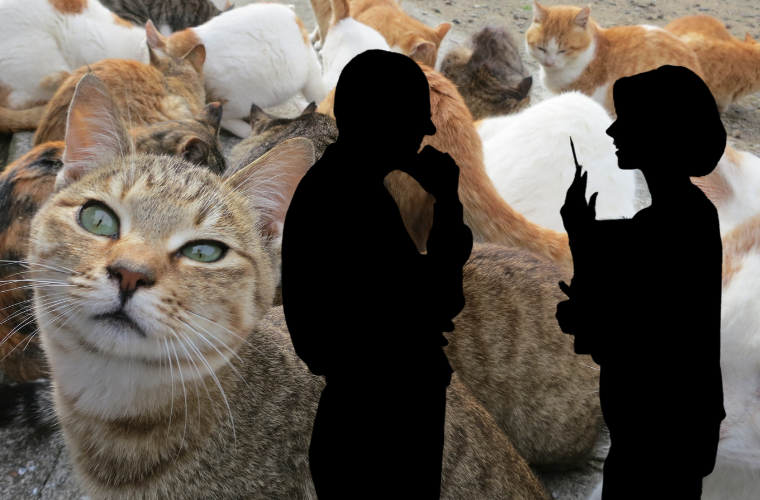
Images from Canva
Is there a solution to the normally intractable challenge of an animal hoarding case?
The team at the Humane Society of Greater Dayton, Ohio, have developed a four-stage process of early intervention that takes time and money now but saves even greater time and money later while minimizing the stressors on the people, animals and organizations involved.
Kristina Hill and Mandy Combs described the outreach at the 9th International Veterinary Work Summit. After expensive hoarding cases taxed the shelter’s capacity and resources, they developed an early trauma-informed and Mandy Combs & Kristina Hill cross-sector intervention program to prevent cases from escalating. “Prevention requires identifying the point(s) where support can still change the trajectory,” said Hill.
A key is to take a collaborative, One Health, less punitive approach and differentiate between an overwhelmed caregiver and a true animal hoarder. By identifying the early signs of caregiver burnout, communicating openly and offering resources that address the caregiver’s stressors without exacerbating the fear or shame they may be experiencing, shelters can support and build increased trust across the veterinary, humane enforcement and social work sectors.
The traditional view sees animal hoarding as driven by a deep-seated psychological pathology or malicious intent, said Hill. This results in a “silent accumulation of animals behind closed doors” and an emphasis on enforcement and forcible removal of the animals that traumatizes the caregiver and the animals, strains the shelter’s capacity, breaks the caregiver’s trust in the system, and only leads to repeating the cycle over and over.
The real fallout from this approach, said Combs, is that the animals face stress, behavioral declines, and a risk of exposure to disease or being euthanized in the shelter. The shelter has to absorb “astronomical” financial costs and increased workloads and trauma while treating the symptoms instead of the root causes. “When your goal is simply to save the animals, and you wind up having to euthanize them, it’s extremely stressful on staff. It’s our worst nightmare.”
A One Health perspective, however, addresses the barriers instead of punishing the problem. It recognizes that the animals’ caregiver is experiencing burnout, extreme social isolation, unmanaged poverty, and grief, and is amenable to collaborative solutions that address resource gaps. It recognizes that hoarders may be experiencing shame, isolation and a crippling fear of judgment and legal penalties that is blocking their self-healing.
Many of the animals are the result of unplanned breeding resulting from misinformation about pet population control and lack of access to affordable spay/neuter programs, they explained. Factors that conspire to overwhelm caregivers include their deep love of animals, a belief that no one else is capable of caring for them, limited veterinary access, and living situations complicated by poverty, isolation, and housing instability.
A client advocate who can tell the hoarder that the shelter wants to help them and their animals makes a difference. “The outcome is very different when the person knows they’re being heard and seen and that their candor is appreciated,” said Hill.
These cases will always cost shelters money; but by documenting how much the shelter can save by intervening early rather than caring for a large influx of hoarding victims, shelters can realize a cost benefit. “You’re going to be financially responsible eventually,” Combs said.
With early recognition and prevention, overwhelmed caregivers may be willing to ask for help, be open to problem-solving, accept support, and follow a care plan.
“I want our clients to know that they can come to us for help,” said Hill. “I tell them that I’m willing to give you the resources that you’re willing to receive. They’ll go straight to Level 4 if we close the door on them.”
“If you give them a solution that works within their cultural parameters and give them an opportunity to come back to you later, you keep the conversation flowing and you leave the door open for them,” concluded Combs. “Convince them that they—and their animals—are at risk and that you want to help them mitigate that risk.”
Humane Society of Greater Dayton’s 4-Stage Framework
Relying on information from the caregivers or individu- als who observe the situation, the Society uses a 4-stage framework of intervention:
Level 1 (Supportive Prevention) begins when the number of animals is still manageable and gaps in the animals’ care are just starting to emerge. By offering access to spay/neuter and veterinary services, pet food and education, shelters can stabilize the individual’s capacity to care for an acceptable number of animals before conditions deteriorate.
Level 2 (Early Intervention) occurs when the numbers are increasing and sanitation concerns are becoming problematic. By offering “warm referrals” and coordinated veterinary and social services responses, with concrete short-term goals, shelters can interrupt the pattern of escalation and deterioration while preserving the animals’ welfare and the caregivers’ dignity. “You can still get financial buy-in from the owner at this stage,” noted Combs.
Level 3 (Intensive Support) kicks in when there are significant concerns about the animals’ or caregivers’ welfare, the environment is unsafe, the caregiver’s needs are complex, and repeated interventions have failed. In these situations a case leader—such as a Veterinary Social Worker—is defined to coordinate cross-system services in order to reduce the immediate risk and create a sustainable care plan.
Level 4 (Protective Action) only occurs when immediate danger is evident, legal thresholds have been crossed and removal of the animals and veterinary care become necessary. The goal is to protect both the animals and people while maintaining a pathway for follow-up at 30, 60 and 90 days and preventing recidivism. “The truth is we don’t have the capacity to handle all the Level 4 cases, so there’s no benefit to not starting to intervene earlier,” said Combs.
Posted on All-Creatures.org: November 18, 2026
Return to Companion Animal Care
Follow us on:


- Home Page
- What's New
- Contact Us
- Action Alerts
- Animal Exploitation
- Animal Issues
- Animal Rights Activism
- Archives
- Art & Photography
- Articles Directory
- Bible
- Bible Commentary Blog
- Books
- Campaigns
- Church & Religion
- Discussions
- Events / Podcasts / Media
- Health
- Hosted Web Sites
- Humor
- Kids' Korner
- Letters
- Links
- Nature Studies
- Newsletter
- Poetry & Stories
- Prayers
- Quotations
- Recipes with Photos
- Recipes Without Photos
- Sermons
- Stop Cruelty in Churches
- Video Library
- The Mary T. and Frank L. Hoffman Family Foundation
- Email: [email protected]
A web site sponsored by The Mary T. and Frank L. Hoffman Family Foundation and all-creatures.org
Copyright © 1998-2026 The Mary T. and Frank L. Hoffman Family Foundation. All rights reserved. May be copied only for personal use or by not-for-profit organizations to promote compassionate and responsible living. All copied and reprinted material must contain proper credits and web site link www.all-creatures.org.
Fair Use Notice: This document, and others on our web site, may contain copyrighted material whose use has not been specifically authorized by the copyright owners. We believe that this not-for-profit, educational use on the Web constitutes a fair use of the copyrighted material (as provided for in section 107 of the US Copyright Law). If you wish to use this copyrighted material for purposes of your own that go beyond fair use, you must obtain permission from the copyright owner.

Thank you for visiting all-creatures.org.