Companion Animal Care Articles used with permission from All-Creatures.org
The National Link Coalition discusses Illinois’s new Companion Animal Custody Equity Act, which will help resolve custody disputes related to companion animals while keeping the creatures’ best interest in mind.
Illinois Updates Divorce Pet Custody Disputes to Cover Unmarried Couples
From August 2026 LINK-Letter, The National Link Coalition
August 2026
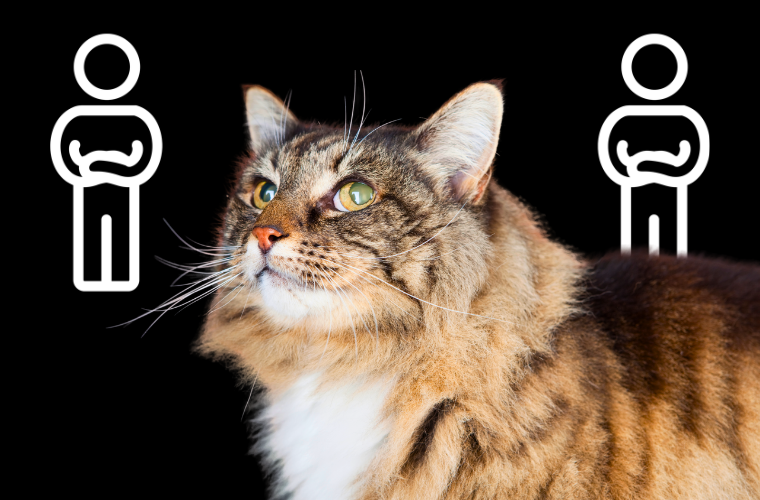
Images from Canva
When Illinois became the second of what are now eight states to enact laws allowing divorce courts to award custody of a separating couple’s pets to what the court deems to be in the animals’ best interests, its legislators probably couldn’t foresee a loophole that became a legal conundrum several years later in Delaware with the curious case of “Tucker” the goldendoodle: how should the court respond when the separating couple aren’t married?
Illinois took a significant step to close this gap in July when Gov. J. B. Pritzker signed into law HB 4540, the Companion Animal Custody Equity Act. The new law establishes a framework for companion animal custody disputes for instances not addressed under the Illinois Marriage and Dissolution of Marriage Act. Its provisions become effective Jan. 1, 2027.
The new law amends 735 ILCS 5/19-101 to now clarify that “parties” in possession disputes concerning companion animals include domestic partners, former partners, fiances, or roommates if shared responsibility for the animals’ care can be demonstrated. It adds a new section, 735 ILCS 5/19-130, allowing courts settling possession disputes to “consider the well-being of the companion animal regardless of the legal status of the parties.”
The new law adds what may be the most comprehensive guidelines to assist judges among the states that have enacted similar laws. In these disputes, the new statute allows Illinois courts to evaluate relevant evidence including:
- History of daily caregiving responsibilities;
- Feeding, grooming, veterinary, and training involve- ment;
- Financial contributions related to the animal’s care;
- Emotional bonds between the animal and each party;
- Stability and continuity of the animal’s living environ- ment;
- Safety considerations and past conduct affecting the animal;
- Credible witness testimony;
- Age and physical or behavioral vulnerability of the animal;
- Continuity of routine and care;
- Ownership documentation.
For companion animals 10 years of age or older, courts may now give additional consideration to these factors as well as the minimization of the animal’s stress. Courts will also be allowed to order mediation between the parties to resolve possession disputes.
Illinois enacted the original law on Aug. 25, 2017 to become effective Jan. 1, 2018, following the 2016 success of the first such law in Alaska. It amended the Illinois Marriage and Dissolution of Marriage Act (See the September 2017 LINK-Letter) to allow parties filing for divorce to file a joint petition for simplified dissolution if they have executed a written agreement allocating ownership and responsibility for their companion animals. It also allowed the parties to petition for sole or joint ownership, contingent upon the court’s consideration of what would be in the animals’ best interests.
Subsequent and similar laws were enacted in California (2018), New Hampshire (2019), New York and Maine (2021), the District of Columbia (2022), Delaware (2023), and Rhode Island (2024). But shortly after Delaware’s law was enacted, courts were confounded by the case of “Tucker”, a goldendoodle jointly owned by Karen Callahan and Joseph Nelson, an unmarried couple who had been fighting for custody since their breakup in 2022 (See the June 2025 LINK-Letter).
Under Delaware law, Tucker was considered “property” which would have to be “partitioned” since the couple were not married. Three separate courts had issued split decisions over where Tucker belonged. When the case wound up in Chancery Court, Vice Chancellor Bonnie W. David resolved the property partition provisions by ruling that one party would own Tucker and the other would receive a monetary award, and it would be up to the couple to determine the details.
In its preamble to the new Illinois law, the General Assembly affirmed that “companion animals often occupy a unique role within households that is not fully reflected in existing statutory frameworks governing possession disputes.” The purpose of the new law, it added, was “to provide courts with guidance when resolving possession disputes involving companion animals while preserving existing property law principles.”
Posted on All-Creatures.org: August 17, 2026
Return to Companion Animal Care
Read more at Legislation/Policy Articles
Follow us on:


- Home Page
- What's New
- Contact Us
- Action Alerts
- Animal Exploitation
- Animal Issues
- Animal Rights Activism
- Archives
- Art & Photography
- Articles Directory
- Bible
- Bible Commentary Blog
- Books
- Campaigns
- Church & Religion
- Discussions
- Events / Podcasts / Media
- Health
- Hosted Web Sites
- Humor
- Kids' Korner
- Letters
- Links
- Nature Studies
- Newsletter
- Poetry & Stories
- Prayers
- Quotations
- Recipes with Photos
- Recipes Without Photos
- Sermons
- Stop Cruelty in Churches
- Video Library
- The Mary T. and Frank L. Hoffman Family Foundation
- Email: [email protected]
A web site sponsored by The Mary T. and Frank L. Hoffman Family Foundation and all-creatures.org
Copyright © 1998-2026 The Mary T. and Frank L. Hoffman Family Foundation. All rights reserved. May be copied only for personal use or by not-for-profit organizations to promote compassionate and responsible living. All copied and reprinted material must contain proper credits and web site link www.all-creatures.org.
Fair Use Notice: This document, and others on our web site, may contain copyrighted material whose use has not been specifically authorized by the copyright owners. We believe that this not-for-profit, educational use on the Web constitutes a fair use of the copyrighted material (as provided for in section 107 of the US Copyright Law). If you wish to use this copyrighted material for purposes of your own that go beyond fair use, you must obtain permission from the copyright owner.

Thank you for visiting all-creatures.org.