Companion Animal Care Articles used with permission from All-Creatures.org
The National Link Coalition discusses why veterinarians may be reluctant to report suspected animal abuse and provides a list of sound points to dispute the common objections raised by these professionals.
Why Are Veterinarians Reluctant to Report Suspected Abuse?
From January 2026 LINK-Letter, The National Link Coalition
January 2026
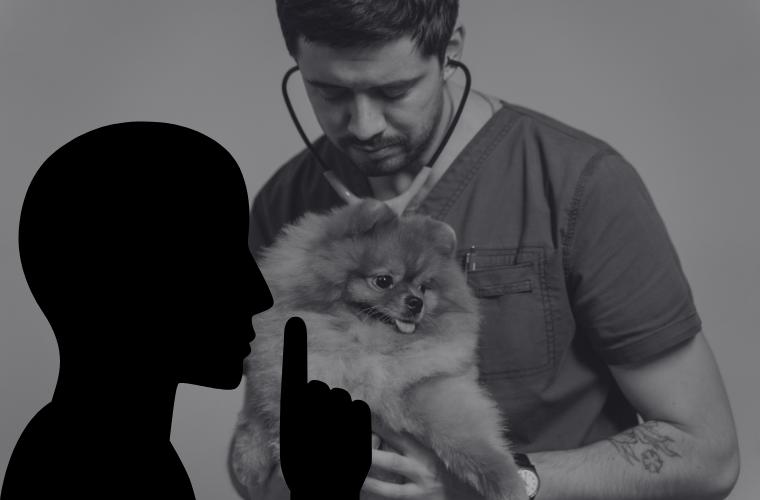
Images from Canva
With animal cruelty and domestic violence so often intertwined, this reporting gap raises urgent questions about protection and prevention.”
That’s the concern raised in a Dec. 17 article by DomesticShelters.org that cites the National Link Coalition’s Phil Arkow and RedRover’s Amanda Landis-Hanna in identifying answers to typical veterinary objections to responding to suspected abuse. Recognizing that “veterinarians are in a critical but complicated position” due to unclear laws, safety concerns and financial pressures, Stephanie Thurrott argues that “Closing reporting gaps could save lives.”
WHY VETERINARIANS ARE RELUCTANT
- Animal abuse isn’t always considered important by government officials.
- A fear that nothing will be done once a report is made.
- They’re not sure that what they’re seeing is abuse.
- They don’t know how to report.
- They fear economic damage, physical retaliation, making matters worse for the animal or the family, negative reviews on social media, or possible legal action. “The veterinarian may prefer to err on the side of silence rather than risk bad things happening,” Landis-Hanna says.
HOW TO OVERCOME THESE OBJECTIONS
- The Veterinary Oath “requires us ethically and morally to protect animals, be a trusted advisor and be an advocate for animals. So there is a responsibility … that if there is suspicion of animal abuse, whether it's direct or indirect, to report it,” says Landis-Hanna.
- Animal abuse is often Linked with physical and emotional domestic abuse. Veterinarians who recognize and report animal abuse can play a crucial role in preventing domestic violence before it escalates. Because the majority of veterinarians, technicians and clients are women, “There’s a high likelihood that there’s domestic violence swirling around any vet office,” says Arkow.
- Laws mandating or permitting veterinarians to report their suspicions, particularly in states where such reports can be made without fear of civil or criminal liability, removes a roadblock.
- Admittedly, community responses to reports vary and further investigations may be limited. But, “The veterinarian is the animal’s first line of defense. You have to make a report and hope the system works,” Arkow says.
- “The veterinarian may fear reporting potential abuse when it’s actually physical disease,” Landis-Hanna says. But veterinarians do not have to know that it is abuse — they just have to report their suspicions when something doesn't match up.
- The National Link Coalition’s National Directory of Abuse Investigation Agencies offers a quick list of who to call in 6,500 communities.
- There’s little evidence that physicians have faced retaliation or legal action for good-faith reports of suspected child or elder abuse. If veterinarians don't intervene, “We know more bad things are going to happen,” Arkow says.
Posted on All-Creatures.org: January 13, 2026
Return to Companion Animal Care
Follow us on:


- Home Page
- What's New
- Contact Us
- Action Alerts
- Animal Exploitation
- Animal Issues
- Animal Rights Activism
- Archives
- Art & Photography
- Articles Directory
- Bible
- Bible Commentary Blog
- Books
- Campaigns
- Church & Religion
- Discussions
- Events / Podcasts / Media
- Health
- Hosted Web Sites
- Humor
- Kids' Korner
- Letters
- Links
- Nature Studies
- Newsletter
- Poetry & Stories
- Prayers
- Quotations
- Recipes with Photos
- Recipes Without Photos
- Sermons
- Stop Cruelty in Churches
- Video Library
- The Mary T. and Frank L. Hoffman Family Foundation
- Email: [email protected]
A web site sponsored by The Mary T. and Frank L. Hoffman Family Foundation and all-creatures.org
Copyright © 1998-2026 The Mary T. and Frank L. Hoffman Family Foundation. All rights reserved. May be copied only for personal use or by not-for-profit organizations to promote compassionate and responsible living. All copied and reprinted material must contain proper credits and web site link www.all-creatures.org.
Fair Use Notice: This document, and others on our web site, may contain copyrighted material whose use has not been specifically authorized by the copyright owners. We believe that this not-for-profit, educational use on the Web constitutes a fair use of the copyrighted material (as provided for in section 107 of the US Copyright Law). If you wish to use this copyrighted material for purposes of your own that go beyond fair use, you must obtain permission from the copyright owner.

Thank you for visiting all-creatures.org.