An Environmental Article used with permission from All-Creatures.org
Educated Choices Program examines why environmental education—and the hope and empowerment it can provide—is so important as we face the mounting effects of climate change.
Students Are Watching the World Change. Why Environmental Education Matters More Than Ever
From Educated Choices Program, ECProgram.org
July 2026
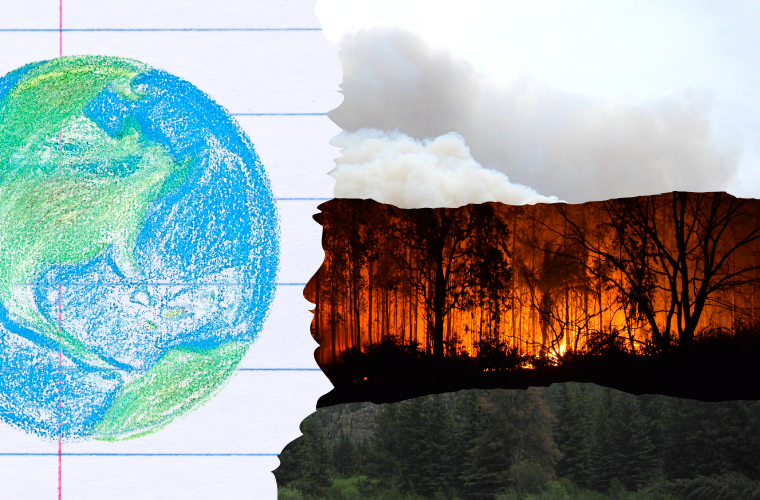
Images from Canva
From record-breaking heat waves and devastating wildfires to changing oceans and food systems, today's environmental challenges are shaping the world our students will inherit. Here's why helping young people understand these issues and empowering them with solutions has never been more important.
The Environmental Crisis Isn't Coming. It's Already Here.
This summer has brought a steady stream of headlines that are difficult to ignore.
Communities across North America and Europe are experiencing dangerous heat waves. Wildfires continue to threaten homes and wildlife, while smoke impacts air quality hundreds or even thousands of miles away. Scientists are monitoring warming oceans, changing weather patterns, and ecosystems under increasing stress.
These aren't isolated events.
They are reminders that today's students are growing up in a rapidly changing world. In the United States, more than 140 million people were recently placed under heat alerts during an extreme heat event, with heat-related deaths reported across multiple states. In Europe, researchers estimate that more than 2,000 excess deaths were linked to a recent record-breaking heat wave. Scientists concluded these extreme temperatures would have been virtually impossible without human-caused climate change.
For educators, these headlines raise an important question: How do we help students understand what's happening and prepare them to become part of the solution?
We answer that need by offering free, accessible educational materials worldwide. These resources help students connect the dots and empower them with practical, everyday actions they can take to reduce their impact on the climate. In peer-reviewed studies, our videos were proven to drive immediate change towards more sustainable action in students who viewed.
Watch our latest video, developed with the Planetary Health Alliance.
Today's Headlines: Connecting Current Events to the Classroom
If you're like the majority of educators in the United States, you have already had climate concerns brought up to you by the young people in your life. Students increasingly report experiencing "climate anxiety" and expressing their belief that not enough is being done to prevent worsening conditions.
Education can help turn some of these current climate headlines and concerns into opportunities for real-world connections. Students can begin to see their own lives and actions as a part of the whole. They begin to discover how their food choices and the food systems that support them contribute to:
Record-Breaking Heatwaves
Extreme heat is becoming one of the deadliest weather hazards worldwide. Beyond uncomfortable temperatures, heat waves can overwhelm hospitals, strain power grids, damage crops, increase wildfire risk, and threaten vulnerable populations. As students hear about heat advisories or experience hotter summers firsthand, many naturally begin asking why these events are becoming more common and what we can do to keep them from getting worse.
Worsening Wildfires
Wildfires are becoming larger, more destructive, and more frequent in many regions. Beyond destroying forests and communities, wildfire smoke can travel long distances, reducing air quality for millions of people and affecting both human and ecosystem health.
While wildfire behavior is influenced by many factors, including weather, land management, and natural fire cycles, warmer temperatures and prolonged drought conditions can increase wildfire risk in many areas. These events provide meaningful opportunities for students to explore how ecosystems function and how environmental systems are connected.
Rising Ocean Temperatures
The world's oceans absorb enormous amounts of heat and carbon dioxide. As ocean temperatures rise, scientists are observing changes that affect coral reefs, fisheries, marine biodiversity, and weather systems around the globe. Researchers are also monitoring shifts in major ocean circulation systems that influence regional climates and weather patterns.
For many students, ocean health can feel like a distant issue. In reality, healthy oceans support food security, regulate Earth's climate, and sustain countless communities worldwide.
Food Systems Education Connect Everything
Many people don't immediately connect environmental issues with what appears on their dinner plate. Yet food systems influence many of today's most pressing environmental challenges, including:
- Greenhouse gas emissions
- Water use
- Land use
- Deforestation
- Biodiversity loss
- Soil health
- Ocean health
- Food quality
Food is one of the few environmental topics students interact with every single day. Understanding these connections helps students see that environmental challenges are not isolated problems. They are interconnected systems that we can influence and improve.
Education Creates Hope (and Proven Change)
When students constantly hear about these environmental disasters without understanding the science or the solutions, it can leave them feeling overwhelmed and defeated. Solutions-focused environmental education offers something different. It replaces fear with knowledge and empowerment. It transforms headlines into learning opportunities. Most importantly, it gives students agency.
Rather than asking, "Why is this happening?" students begin asking:
- What causes these changes?
- How are these ecosystems connected?
- What role do food systems play?
- What solutions already exist?
- How can I make a difference?
Those are exactly the kinds of questions education should inspire. The goal isn't to tell students what to think. It's to give them the scientific knowledge and critical thinking skills to make informed decisions for themselves and their communities. When students know more, they make better decisions. 90% of our viewers say they plan to make positive changes after our videos, and studies at two leading universities found many students were quick to start implementing those changes.
Many educators see the need for climate education, but don't feel they have adequate, age-appropriate resources to cover such a critical topic. Others aren't sure how to connect it to their subject or state requirements. ECP's plug-and-play library breaks down the aligned standards and offers flexibility to include climate education to any curriculum.
Want to include climate education, but aren't sure how? Email [email protected] to connect with a curriculum specialist.
Ready-to-Go Environmental Educational Resources
Educated Choices Program offers free educational resources covering topics including:
- Healthy eating
- Food waste
- Sustainability
- Ocean Health
- Alternative proteins
- Climate impacts of food systems
- Public health
- Community food systems
Each resource includes lesson plans, quizzes, guided notes, activities, discussion prompts, homework assignments, and more, making it perfect for teachers, parents, camps, libraries, youth organizations, and community groups.
Environmental Issues and Related Video Guide
Heat Waves, Climate Change, Food Systems, & Biodiversity: Watch Planetary Heath
Ocean Changes: Watch Sea the Impact
Food Waste: Watch Rethinking Food Waste
Sustainable Diets: Watch Plant-Forward and Powerful
Food Systems and Agriculture: Watch The Environment and Modern Agriculture
Climate Change and Food: Watch Our Carbon Foodprint
Sources:
- https://www.sej.org/headlines/least-25-people-die-record-heatwave-scorches-swaths-us
- https://www.theguardian.com/world/2026/jul/03/deaths-france-surged-hottest-week-record-heatwave-june
- https://www.wvtf.org/2026-07-05/the-worlds-oceans-are-warming-at-a-record-breaking-pace
- https://naaee.org/sites/default/files/2023-02/NAAEE_State%20of%20Climate%20Change%20Education%20Report_SUBMITTED%2012_12_22%5B1%5D.pdf
Follow Us on Social Media!
Stay in the loop with new releases, educator tips, and real-world classroom stories by connecting with ECP online.
Find Educated Choices Program on Instagram, Facebook, LinkedIn, and Pinterest.
For classroom-focused inspiration and educator-specific content, you can also follow Teaching Educated Choices on Instagram and Facebook.
About Educated Choices Program:
At the Educated Choices Program, we believe every student deserves access to accurate and engaging education that empowers them to build a better future. If you agree, support our organization by using our resources in your classroom and connecting with us for future updates:
Bookmark our digital resource library.
Subscribe to our newsletter for content delivered straight to your inbox.
Posted on All-Creatures.org: July 17, 2026
Return to Environment Articles
Follow us on:


- Home Page
- What's New
- Contact Us
- Action Alerts
- Animal Exploitation
- Animal Issues
- Animal Rights Activism
- Archives
- Art & Photography
- Articles Directory
- Bible
- Bible Commentary Blog
- Books
- Campaigns
- Church & Religion
- Discussions
- Events / Podcasts / Media
- Health
- Hosted Web Sites
- Humor
- Kids' Korner
- Letters
- Links
- Nature Studies
- Newsletter
- Poetry & Stories
- Prayers
- Quotations
- Recipes with Photos
- Recipes Without Photos
- Sermons
- Stop Cruelty in Churches
- Video Library
- The Mary T. and Frank L. Hoffman Family Foundation
- Email: [email protected]
A web site sponsored by The Mary T. and Frank L. Hoffman Family Foundation and all-creatures.org
Copyright © 1998-2026 The Mary T. and Frank L. Hoffman Family Foundation. All rights reserved. May be copied only for personal use or by not-for-profit organizations to promote compassionate and responsible living. All copied and reprinted material must contain proper credits and web site link www.all-creatures.org.
Fair Use Notice: This document, and others on our web site, may contain copyrighted material whose use has not been specifically authorized by the copyright owners. We believe that this not-for-profit, educational use on the Web constitutes a fair use of the copyrighted material (as provided for in section 107 of the US Copyright Law). If you wish to use this copyrighted material for purposes of your own that go beyond fair use, you must obtain permission from the copyright owner.
Thank you for visiting all-creatures.org.
