An Environmental Article used with permission from All-Creatures.org
Educated Choices Program discusses the importance of World Ocean Month as an opportunity to educate young people about the essential role our oceans play in regulating the climate and maintaining life on our planet. ECP also provides many ideas and resources for empowering students to become good stewards of the seas.
World Ocean Month Activities and Ocean Conservation Lessons for Students
From Educated Choices Program, ECProgram.org
May 2026
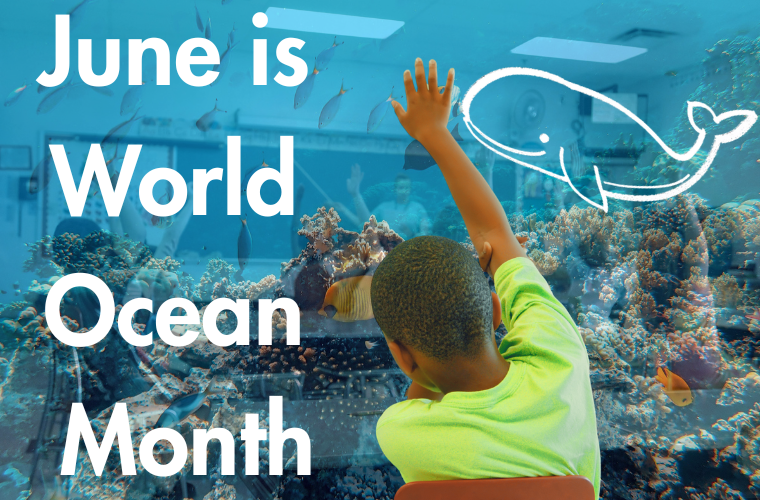
Images from Canva
Today’s youth are inheriting a rapidly changing planet. Education plays a powerful role in helping future generations build a healthier relationship with the natural world.
June's World Ocean Month is not only about awareness. It is about helping students understand that environmental stewardship, sustainability, and community action are interconnected. The largest celebration of the month is World Oceans Day on June 8, when millions of people around the world come together to take action to protect our blue planet.
Today’s students are inheriting a rapidly changing planet. Providing accurate, engaging, and solutions-oriented environmental education helps empower them to navigate complex global challenges with curiosity, compassion, and critical thinking.
Oceans regulate climate, support biodiversity, produce much of the oxygen we breathe, and sustain ecosystems across the globe. Yet many students never fully explore the relationship between ocean health, sustainability, food systems, and human impact during their education.
For educators, World Ocean Month creates an opportunity to bring real-world environmental education into classrooms, summer programs, and community learning spaces through engaging, systems-based learning.
What Is World Oceans Day?
World Oceans Day is an international observance celebrated annually on June 8 in more than 150 countries worldwide. Supported by educators, scientists, organizations, and communities across the globe, the day encourages awareness and action to protect ocean ecosystems and promote a healthier future for our planet.
World Oceans Day is officially recognized by the United Nations. The official 2026 UN World Oceans Day theme is “Reimagine: Beyond the World We Know, A New Relationship With Our Ocean,”at unworldoceansday.org, encouraging people to rethink humanity’s relationship with marine ecosystems.
In addition to the UN campaign, many environmental and ocean advocacy groups are promoting the 2026 global ocean action focus: “Strong Marine Protected Areas for Our Blue Planet,” like worldoceanday.org, highlighting the importance of protecting marine biodiversity and strengthening ocean conservation efforts.
World Oceans Day also takes place during World Oceans Month throughout June, creating opportunities for continued environmental learning, classroom activities, and ocean conservation discussions all summer long.
Why Ocean Education Matters
Ocean education helps students better understand how marine ecosystems connect to climate, biodiversity, food systems, and human wellbeing. Students today are growing up in a world increasingly shaped by environmental challenges such as:
- Plastic pollution
- Marine habitat destruction
- Overfishing and biodiversity loss
- Climate change and ocean warming
- Food system sustainability
- Environmental justice and resource access
Helping students explore these interconnected systems strengthens critical thinking, environmental literacy, and informed decision-making.
Ocean education can also help students better understand:
- How oceans regulate climate systems
- The importance of marine biodiversity
- The relationship between food systems and ocean health
- The environmental impact of pollution and waste
- How individual and community actions affect ecosystems worldwide
Many conversations around ocean conservation focus primarily on plastic pollution and marine debris. While these issues are critically important, ocean health is also deeply connected to food systems, agriculture, sustainability, and land-based environmental practices.
Bring World Oceans Day Activities Into the Classroom or at Home
World Oceans Day provides a moment to connect science, sustainability, environmental stewardship, and systems thinking through hands-on learning activities.
Here are several ways educators and families can bring ocean education into learning environments this June:
World Oceans Day Activities for Students:
- Conduct a household plastic audit
- Research marine species and ocean ecosystems
- Create ocean conservation posters
- Track single-use plastic reduction efforts
- Explore sustainable food systems and ocean health
- Investigate how pollution impacts marine biodiversity
- Participate in local cleanup or environmental stewardship projects
- Discuss how climate change affects oceans and coastal communities
Featured Ocean Education Resource: Sea the Impact
Sea the Impact is our newest classroom-ready ocean education resource designed to help students better understand marine ecosystems, sustainability, pollution, and the connection between food systems and ocean health.
For a limited time, educators and learners can preview the Sea the Impact video in English, Spanish, and Portuguese without creating an account, making it even easier for classrooms to prepare for World Oceans Day and World Oceans Month activities.
This educational package includes:
- A 15-minute educational video
- Lesson plans
- Discussion prompts
- Interactive activities
- Quiz materials
- Additional downloadable classroom resources
Sea the Impact encourages students to think critically about the systems that shape our oceans while exploring practical ways individuals and communities can help protect marine environments.
The resource is available in multiple languages, including English, Spanish, and Portuguese, helping expand access to ocean education for more students and educators.
Explore Our Free World Oceans Day Resources
All Educated Choices Program resources include videos, lesson plans, activities, discussion prompts, quizzes, and additional downloadable materials designed to support educators across grade levels.
Visit our free Resource Library to explore ocean conservation lessons, sustainability education resources, and classroom-ready environmental learning tools.
Together, we can help students better understand the systems that connect ocean health, climate, sustainability, and everyday choices.
Looking for More June Teaching Topics?
For more summer learning ideas and classroom-ready activities, visit our companion post: June Lesson Plan Themes and Summer Activities for Students.
Here are a few additional June teaching topics educators can explore:
Together, these observances create opportunities to connect environmental literacy, sustainability, public health, and systems thinking throughout the summer months.
Follow Us for More
Stay in the loop with new releases, educator tips, and real-world classroom stories by connecting with ECP socials!
Find Educated Choices Program on Instagram, Facebook, LinkedIn, and Pinterest.
For classroom-focused inspiration and educator-specific content, you can also follow Teaching Educated Choices on Instagram and Facebook.
About Educated Choices Program:
At the Educated Choices Program, we believe every student deserves access to accurate and engaging education that empowers them to build a better future. If you agree, support our organization by using our resources in your classroom and connecting with us for future updates:
Bookmark our digital resource library.
Subscribe to our newsletter for content delivered straight to your inbox.
Posted on All-Creatures.org: June 3, 2026
Return to Environment Articles
Follow us on:


- Home Page
- What's New
- Contact Us
- Action Alerts
- Animal Exploitation
- Animal Issues
- Animal Rights Activism
- Archives
- Art & Photography
- Articles Directory
- Bible
- Bible Commentary Blog
- Books
- Campaigns
- Church & Religion
- Discussions
- Events / Podcasts / Media
- Health
- Hosted Web Sites
- Humor
- Kids' Korner
- Letters
- Links
- Nature Studies
- Newsletter
- Poetry & Stories
- Prayers
- Quotations
- Recipes with Photos
- Recipes Without Photos
- Sermons
- Stop Cruelty in Churches
- Video Library
- The Mary T. and Frank L. Hoffman Family Foundation
- Email: [email protected]
A web site sponsored by The Mary T. and Frank L. Hoffman Family Foundation and all-creatures.org
Copyright © 1998-2026 The Mary T. and Frank L. Hoffman Family Foundation. All rights reserved. May be copied only for personal use or by not-for-profit organizations to promote compassionate and responsible living. All copied and reprinted material must contain proper credits and web site link www.all-creatures.org.
Fair Use Notice: This document, and others on our web site, may contain copyrighted material whose use has not been specifically authorized by the copyright owners. We believe that this not-for-profit, educational use on the Web constitutes a fair use of the copyrighted material (as provided for in section 107 of the US Copyright Law). If you wish to use this copyrighted material for purposes of your own that go beyond fair use, you must obtain permission from the copyright owner.
Thank you for visiting all-creatures.org.
