Fishes and other Sea Animals Articles used with permission from All-Creatures.org
Elise Ferguson provides a detailed, evidence-based examination of the ecological and ethical concerns related to catching, raising, and consuming fishes for food on an industrial scale.
Is Seafood Sustainable? The Truth About Overfishing, Bycatch, Bottom Trawling, and Aquaculture
From Elise Ferguson, Curriculum Development Manager, Educated Choices Program, ECProgram.org
June 2026
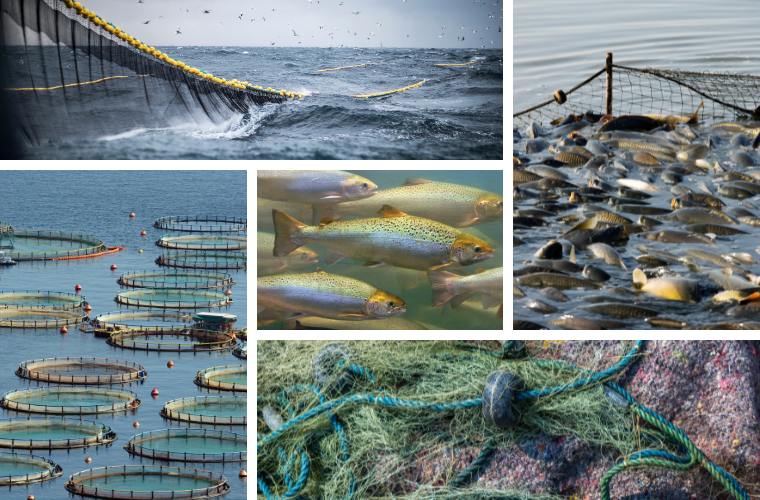
Images from Canva
June is World Oceans Month, a time to celebrate our oceans and recognize the vital role they play in supporting life on Earth. Oceans regulate our climate, produce much of the oxygen we breathe, support incredible biodiversity, and provide food and livelihoods for billions of people worldwide.
At Educated Choices Program, we explore how everyday choices connect to larger environmental systems. One of the key themes in our educational video Sea the Impact is the relationship between food production and ocean health.
When conversations about sustainable eating arise, seafood is often presented as one of the most environmentally friendly options available.
But is seafood sustainable?
The answer is more complicated than many consumers realize.
In this article, we'll examine one of the most common food myths and explore how overfishing, aquaculture, bycatch, bottom trawling, greenhouse gas emissions, and ocean pollution all influence seafood sustainability. Our goal isn't to tell you what to eat, but to provide information that helps you make informed choices for your health, animals, and the planet.
The Myth: "Seafood Is Sustainable"
This genuinely is a tricky one. Before we sink this myth, we have to understand the basics of how fish and shellfish are supplied to consumers worldwide. The world produces roughly 185 million tonnes of aquatic animals for food annually. Some of this is wild-caught, and some is from aquaculture (also called fish farming). Let’s dive into Earth’s wild waters and examine industrial fishing first.
Intro to Industrial Fishing and Aquaculture: Is “Seafood” really sustainable?
The term "industrial fishing” describes a modern, large-scale system in which a vast number of marine animals are removed from the water with specialized equipment. These are wild animals who are caught and then end up on our plates.
Industrial fishing can occur in any large water body, whether fresh or salt, but much of the fishing on this scale occurs in the open ocean.
Roughly two-thirds to three-quarters of wild-caught fish are captured using nets. Some common commercial fishing methods include purse seines, trawling, gillnets, longlines, dredging, and traps.
Now let’s turn our attention to aquaculture, the farming of aquatic species such as fish, shellfish, and seaweed. As the world's fastest-growing food production sector, aquaculture now supplies more fish and shellfish for human consumption than commercial wild-catch fisheries.
Geographical and Economic Context
Before we dive in, let’s give our discussion some important context. Not all fishing and aquaculture happens on a large industrial scale. Many people, particularly in developing countries and small island developing states, rely on fishing for food and livelihoods. This article focuses primarily on consumers who have access to a wider range of dietary choices.
As global populations grow, demand for seafood is expected to increase. Reducing consumption where alternatives are available may help lessen pressure on marine ecosystems.
Another dynamic worth noting is that when people in certain high-income countries eat a lot of seafood, it takes aquatic resources away from people who need them more acutely. The U.S., for example, is a net importer of seafood. Our high demand here puts pressure on the industry to extract resources from parts of the world that are heavily dependent on the ocean, and ship them to the U.S. instead of leaving them accessible for the people who rely on them.
Now that we have laid out some background, we will break down our myth into common supporting assumptions.
“But fishing and aquaculture use less land than farming.”
On the surface, this statement is accurate. However, aquaculture still uses land indirectly. On average, producing 100 grams of “seafood” protein requires about 3.7 square meters of land per year, roughly the size of a king-sized bed for just one or two days' worth of protein.
Unlike algae, farmed aquatic animals cannot produce their own food from sunlight. Historically, carnivorous fish feed relied heavily on fish meal and fish oil from wild-caught fish. Today, plant ingredients such as soy protein and rapeseed oil are increasingly being used. However, growing these crops can contribute to deforestation, particularly when forests are cleared to make room for soy production. And there is another, more direct way aquaculture contributes to deforestation: through mangrove loss. More on that later.
“But there are so many fish in the sea”
What Is Overfishing, and Why Is It a Problem?
Technically, “seafood” is categorized as a renewable resource. However, renewable does not mean infinite, and even renewable resources can be depleted if they are used faster than they can regenerate. Overfishing occurs when we catch more fish than can be replaced by their natural reproduction rate. It leads to a continual decrease in fish populations. According to recent data, 37.7% of assessed fish stocks are overfished, while another 50.5% are being harvested at their maximum sustainable level.
Not only are too many fish taken from the oceans, but sometimes the ecosystems they call home are destroyed in the process. The term trawling refers to using a boat to drag a net through the water, catching organisms as it goes. Bottom trawling refers specifically to various methods that weigh the net down and then drag it across the ocean floor.
About 13.5% of the explorable seabed is trawled each year, roughly 5 million square kilometers, an area nearly the size of the Amazon rainforest. The most destructive forms of bottom trawling, such as hydraulic dredging, can destroy up to 41% of organisms in a single pass. Fragile habitats such as deepwater coral or sponge gardens and seagrass meadows are especially vulnerable.
Disturbed seabed communities may require 1.9 to 6.4 years to recover (more sensitive ecosystems can take much longer). However, many areas are trawled repeatedly, sometimes 3 to 10 times per year. This is despite the sustainable frequency being once every three to 10 years. As a result, many trawled marine ecosystems are under immense stress.
What Is Bycatch, and Why Does It Matter?
Another challenge associated with industrial fishing is bycatch, the accidental capture of non-target marine animals. Sea turtles, dolphins, sharks, seabirds, juvenile fish, and even endangered species can all become victims. Many are discarded overboard, dead or dying.
Some fishing methods are especially prone to bycatch. Trawling and dredging tend to be highly non-selective in their acquisition. In certain instances, bottom trawling can result in half of the catch being discarded. Gillnets, which are meant to trap fish by their gills as they swim into them, are also known to be among the most lethal fishing gears for marine megafauna and protected species.
Although efforts to reduce bycatch have improved in some regions, these measures are not universal and remain imperfect. In addition to harming wildlife, bycatch can contribute to data gaps. Because stock assessments are often based on fish brought to shore, discarded animals may go uncounted, potentially masking the true extent of overfishing.
“But fish don’t produce greenhouse gases.”
While fish and shellfish generally produce fewer emissions than many land-based animal products, they are not usually carbon neutral.
Mangroves
Mangrove forests are important "blue carbon" ecosystems that capture carbon even faster than tropical forests. They can remove up to 130 million metric tonnes of carbon dioxide from the atmosphere each year, equivalent to taking 28 million cars off the road. When mangroves are cleared for aquaculture, this valuable carbon sink is lost, and stored carbon can be released back into the atmosphere.
Mangroves also help communities remain resilient in the face of climate change. Serving as a natural coastline barrier, mangrove forests reduce the energy from waves, storms, and floods by up to 97%, while helping prevent erosion and property damage. Some integrated mangrove aquaculture systems incorporate mangroves, but biodiversity and ecosystem functions are compromised in these when compared to intact mangrove forests.
Feed-related emissions
Feed production is the largest source of greenhouse gas emissions for many farmed species, including shrimp and salmon. It accounts for more than 70% of emissions from these species. This is due to the growing of crops as well as the production and transportation of feed.
Emissions from bottom trawling
Bottom trawling can contribute to climate change by disturbing carbon-rich seabed sediments. This releases stored carbon and may reduce the ocean's ability to function as a carbon sink.
Fishing vessel fuel use
Fishing vessels rely heavily on fossil fuels, making fishing one of the most energy-intensive food production systems in the world. Though the number varies widely, on average, about one tonne of fuel is required for every two tonnes of catch. Overfishing can further increase emissions as vessels must travel farther and spend more time at sea to find fish.
Aquaculture and water pollution
The pollution problem with fish and shellfish doesn’t stop at greenhouse gases. Aquaculture can contribute to water pollution when excess feed, nutrients, and other waste enter surrounding waterways. This can lead to eutrophication, harmful algal blooms, low-oxygen dead zones, and fish kills.
High stocking densities can also increase disease transmission. Farmed fish may spread diseases to wild populations, while escaped fish can impact ecosystems through competition and interbreeding.
Gear and ocean plastic pollution
Ghost gear is another major pollution category associated with fish and shellfish production. It is abandoned or lost fishing equipment such as nets, ropes, and traps, which continue to capture and injure marine animals long after it enters the ocean. Some lost gillnets in particular can stretch up to two miles and persist for centuries. Ghost gear in general threatens more than half of marine megafauna species.
Ghost gear also contributes to declining fish populations and habitat damage. In the Great Pacific Garbage Patch, an estimated 75-86% of plastic debris originates from offshore fishing and aquaculture activities.
“But I only buy sustainable and certified products.”
Sustainable seafood generally refers to fish and shellfish harvested or farmed in ways that maintain healthy aquatic populations, minimize environmental damage, and protect marine ecosystems for future generations.
In practice, sustainability depends on factors such as fish population health, fishing methods, habitat impacts, and pollution.
Understanding these factors is essential when evaluating whether seafood is truly a sustainable food choice.
There are several seafood certification schemes for both wild-caught and farmed “seafood”. While their standards vary, they generally aim to promote more sustainable practices and help consumers make informed choices.
Because seafood supply chains are often complex, international, and difficult to trace, certifications are intended to improve transparency. However, consumers should not assume that a certification guarantees a product is fully sustainable or ethical.
Critics argue that some certifications engage in greenwashing, certifying fisheries that still use environmentally harmful practices such as trawling or dredging. Others point to potential conflicts of interest in the auditing process and note that many certifications fail to account for the full carbon footprint of seafood production.
Environmental impacts are only part of the picture. Issues such as forced labor, workers' rights violations, and animal welfare abuses can also occur within seafood supply chains. While certifications may address some concerns, they do not necessarily eliminate or fully account for all social and ethical issues.
“But fish don’t feel pain anyway.”
Sentience is the capacity to have subjective experiences, including the ability to experience suffering.
Fish sentience has been a topic of increasing scientific interest. A growing body of neuroanatomical, physiological, and behavioral evidence suggests that fish can experience pain and distress.
Common commercial fishing practices may cause prolonged suffering. Fish are often left to suffocate in air or are eviscerated without prior stunning, and death can take minutes to hours depending on the species.
Even fish released after capture may later die from physiological stress caused by the experience.
And remember, it’s not just fish that are hurt by this industry. Animals like marine mammals, sea turtles, and marine birds can be killed too when they are victims of bycatch or ghost fishing. They may drown when caught in gear that drags them to the bottom of the ocean or prevents them from surfacing. They may also swallow fishing hooks and suffer from painful and deadly internal injuries.
Final Thoughts: Is Seafood Sustainable?
If you take away one thing from this blog post, let it be that sustainable seafood is far more complex than many marketing campaigns and labels suggest.
While seafood may outperform some land-based animal products on certain environmental metrics, significant concerns remain regarding overfishing, bycatch, bottom trawling, aquaculture impacts, ghost gear, habitat destruction, ocean pollution, and animal welfare.
For those with access to a variety of food options, reducing seafood consumption and exploring lower-impact alternatives may help lessen pressure on marine ecosystems. Small changes can make meaningful differences over time, and informed choices are among the most powerful tools we have for supporting a healthier and more sustainable food system.
Regardless of the dietary changes you choose to make, the average person can meet all of their protein needs with plant-based foods. For those craving ocean-inspired flavors, seaweed is a nutritious option that is often environmentally beneficial to cultivate. Algae-based omega-3 supplements are also widely available, though it is always best to consult a healthcare professional before adding supplements to your diet.
If you're looking for additional resources, explore ECP's Choices Hub for recipes, documentaries, educational materials, and more. You can also watch Sea the Impact to learn more about the connections between food systems and ocean health.
Stay tuned for more evidence-based myth-busting articles exploring the connections between food systems, health, and sustainability.
Want to learn more about the impact of modern agricultural practices on our oceans?
You can "Sea the Impact" for free today on ECP's library.
Sources used:
- ACS Environmental (2025): “Ecolabels and Sustainability in the Seafood Sector: Key Elements of the Debate and Shortcomings”
- Sustainable Fisheries UW: “Where does seafood come from?”
- Sustainable Fisheries UW: “Commercial Fishing Methods”
- Our World in Data (2024): “Fish and Overfishing”
- Marine Conservation Society: “Fish farming”
- KeAi Water Biology and Security (2024): “Towards a low-carbon footprint: Current status and prospects for aquaculture”
- World Wildlife Fund: “Aquaculture”
- Frontiers in Forests and Global Change (2023): “Integrated mangrove aquaculture: The sustainable choice for mangroves and aquaculture?”
- Food and Agriculture Organization of the United Nations (2024): “The State of World Fisheries and Aquaculture 2024 (SOFIA)”
- World Wildlife Fund: “Fisheries”
- SDG Knowledge Hub (2023): “Ghost Gear: The Hidden Face of Plastic Pollution”
- World Wildlife Fund: “Bycatch”
- Scottish Government (2025): “Ascribing sentience to fish: potential policy implications”
- World Wildlife Fund: “Top 10 facts about Oceans”
- Journal of the World Aquaculture Society (2024): “Carbon footprint assessment and reduction strategies for aquaculture: A review”
- High Seas Alliance (2022): “The Elephant in the Room: Why Are We Ignoring the Industrial Fishing Industry’s Carbon Footprint?”
- United Nations Conference on Trade and Development (2024): “Energy transition of fishing fleets Opportunities and challenges for developing countries”
- NOAA National Ocean Service: “What is eutrophication?”
- Resonance (2023): “10 Pros and Cons of Aquaculture”
- NOAA Fisheries (2022): “Potential Risks of Aquaculture Escapes”
- The Ocean Cleanup (2022): “Over 75% Of Plastic in Great Pacific Garbage Patch Originates From Fishing”
- StanfordCenter for Ocean Solutions: “Addressing Illegal Fishing and Labor Abuses”
- MarFishEco Fisheries Consultants Ltd (2023): “On The Hook External Review of the Marine Stewardship Council (MSC)”
- PNAS Environmental Sciences (2020): “Satellites can reveal global extent of forced labor in the world’s fishing fleet”
- The Maritime Executive (2019): “Blood and Water: Slavery in the Fishing Industry Revealed”
- The Guardian (2024): “Do fish have feelings? Scientists believe they’re getting closer to an answer”
- Fishcount: “Fish are Sentient”
- University of Florida Blog (2019): “A fish out of water!”
- Biological Conservation (2014): “Looking beyond the mortality of bycatch: sublethal effects of incidental capture on marine animals”
Follow Us for More
Stay in the loop with new releases, educator tips, and real-world classroom stories by connecting with ECP socials!
Find Educated Choices Program on Instagram, Facebook, LinkedIn, and Pinterest.
For classroom-focused inspiration and educator-specific content, you can also follow Teaching Educated Choices on Instagram and Facebook.
About Educated Choices Program
At the Educated Choices Program, we believe every student deserves access to accurate and engaging education that empowers them to build a better future. If you agree, support our organization by using our resources in your classroom and connecting with us for future updates:
Bookmark our digital resource library.
Subscribe to our newsletter for content delivered straight to your inbox.
Posted on All-Creatures.org: July 5, 2026
Return to Fishes and Other Sea Animals Articles
Read more at Environment Articles
Follow us on:


- Home Page
- What's New
- Contact Us
- Action Alerts
- Animal Exploitation
- Animal Issues
- Animal Rights Activism
- Archives
- Art & Photography
- Articles Directory
- Bible
- Bible Commentary Blog
- Books
- Campaigns
- Church & Religion
- Discussions
- Events / Podcasts / Media
- Health
- Hosted Web Sites
- Humor
- Kids' Korner
- Letters
- Links
- Nature Studies
- Newsletter
- Poetry & Stories
- Prayers
- Quotations
- Recipes with Photos
- Recipes Without Photos
- Sermons
- Stop Cruelty in Churches
- Video Library
- The Mary T. and Frank L. Hoffman Family Foundation
- Email: [email protected]
A web site sponsored by The Mary T. and Frank L. Hoffman Family Foundation and all-creatures.org
Copyright © 1998-2026 The Mary T. and Frank L. Hoffman Family Foundation. All rights reserved. May be copied only for personal use or by not-for-profit organizations to promote compassionate and responsible living. All copied and reprinted material must contain proper credits and web site link www.all-creatures.org.
Fair Use Notice: This document, and others on our web site, may contain copyrighted material whose use has not been specifically authorized by the copyright owners. We believe that this not-for-profit, educational use on the Web constitutes a fair use of the copyrighted material (as provided for in section 107 of the US Copyright Law). If you wish to use this copyrighted material for purposes of your own that go beyond fair use, you must obtain permission from the copyright owner.
Thank you for visiting all-creatures.org.
