A Meat and Dairy Article used with permission from All-Creatures.org
Roland Azar discusses South Africa’s continued participation in the live animal export trade and the abysmal conditions on one ship from the country that drew international attention.
Animal Welfare Groups Urge South Africa to Ban Live Animal Exports, Mostly Destined for the Middle East
From Roland Azar, MiddleEastVeganSociety.org
July 2026
Images from Canva
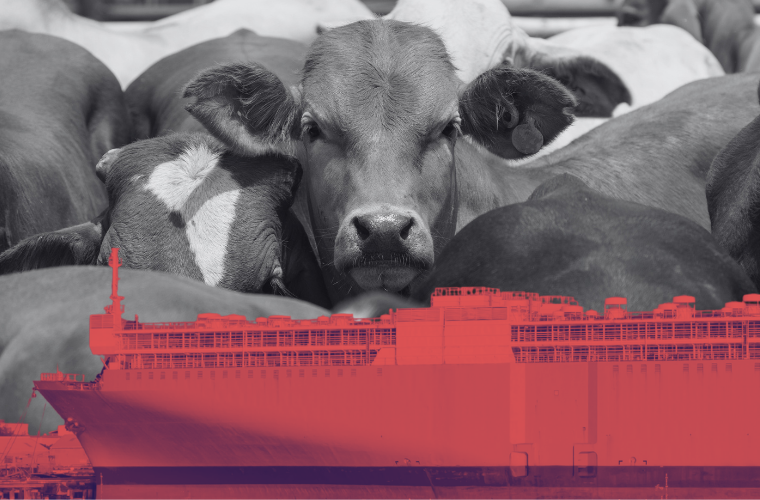
South Africa is facing growing pressure from animal welfare organizations, veterinarians, and international NGOs to ban the export of live animals by sea. Most of South Africa’s shipments are destined for the Middle East and Mauritius. These groups argue that the trade is cruel by its very nature and that no amount of regulation can erase the suffering endured by animals during long voyages. The urgency of reform was underscored in 2024 when the vessel Al Kuwait left Cape Town with 19,000 cattle. For five weeks the animals endured filth, exhaustion, and unbearable conditions. Many collapsed, unable to withstand the journey. The stench that engulfed the port shocked residents and drew international condemnation. For activists, this tragedy proved that regulation cannot make live exports humane.
Campaigners stress that demand from these markets sustains the trade, and without decisive action animals will continue to suffer in overcrowded pens, standing in their own waste, and exposed to toxic ammonia fumes.
Globally, momentum is building against the practice. New Zealand banned live exports in 2023, the United Kingdom followed in 2024, and Australia has committed to phasing them out by 2028. South Africa’s hesitation to follow suit places it increasingly at odds with this international consensus.
Animal welfare advocates in South Africa are clear about their position. Fiona Miles, Director of FOUR PAWS South Africa, said:
“No amount of regulation can make this inherently cruel practice humane. Animals are sentient beings, not cargo. They experience fear, stress and suffering on these long journeys and that cannot be regulated away.”
South Africa’s exports exist because of the demand for meat. This means people in the Middle East have real power to change the future of this trade. By shifting consumer choices, raising awareness, and pressing policymakers, Middle Eastern citizens can help end the suffering of animals at sea.
Choosing plant-based alternatives reduces reliance on this cruel system. Supporting local vegan businesses and restaurants strengthens the movement toward compassionate diets. Sharing information about incidents like the Al Kuwait case helps expose the hidden suffering behind live exports. Speaking out through petitions, campaigns, and direct appeals to governments ensures that leaders cannot ignore the growing call for change.
Posted on All-Creatures.org: July 6, 2026
Return to Meat and Dairy Articles
Follow us on:


- Home Page
- What's New
- Contact Us
- Action Alerts
- Animal Exploitation
- Animal Issues
- Animal Rights Activism
- Archives
- Art & Photography
- Articles Directory
- Bible
- Bible Commentary Blog
- Books
- Campaigns
- Church & Religion
- Discussions
- Events / Podcasts / Media
- Health
- Hosted Web Sites
- Humor
- Kids' Korner
- Letters
- Links
- Nature Studies
- Newsletter
- Poetry & Stories
- Prayers
- Quotations
- Recipes with Photos
- Recipes Without Photos
- Sermons
- Stop Cruelty in Churches
- Video Library
- The Mary T. and Frank L. Hoffman Family Foundation
- Email: [email protected]
A web site sponsored by The Mary T. and Frank L. Hoffman Family Foundation and all-creatures.org
Copyright © 1998-2026 The Mary T. and Frank L. Hoffman Family Foundation. All rights reserved. May be copied only for personal use or by not-for-profit organizations to promote compassionate and responsible living. All copied and reprinted material must contain proper credits and web site link www.all-creatures.org.
Fair Use Notice: This document, and others on our web site, may contain copyrighted material whose use has not been specifically authorized by the copyright owners. We believe that this not-for-profit, educational use on the Web constitutes a fair use of the copyrighted material (as provided for in section 107 of the US Copyright Law). If you wish to use this copyrighted material for purposes of your own that go beyond fair use, you must obtain permission from the copyright owner.
Thank you for visiting all-creatures.org.
