A Sentience Article used with permission from All-Creatures.org
Lia Wilbourn discusses the natural behaviors, inner lives, and individuality of chickens and touches on the abysmal conditions and treatment these bright and sensitive creatures are forced to endure in the meat and egg industries.
Respect for Chickens Month Honors Individuals & Their Right to Freedom
From Lia Wilbourn, IDA In Defense of Animals, idausa.org
May 2026
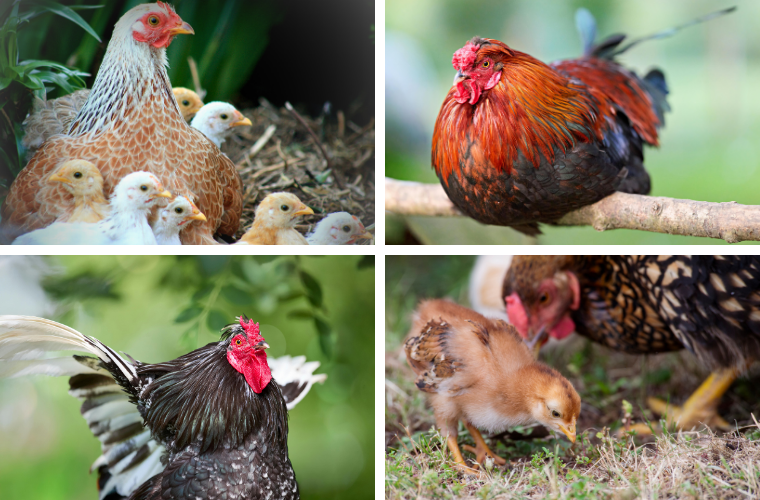
Images from Canva
Chickens outnumber humans by the billions, yet they remain largely misunderstood and denigrated, with their suffering unseen and their autonomy ignored. Chickens, like all animals, deserve to be honored for who they really are: individuals with emotions and intelligence who deserve compassion and protection.
Respect for Chickens Month in May, launched by United Poultry Concerns in 2005, honors chickens throughout the world, recognizes their inherent worth, and raises awareness about the tremendous suffering they endure. Chickens are meant to be outdoors, spreading their wings, pecking in the grass, breathing fresh air, and guiding their young.
What Wings Are For
A chicken’s wings are essential to their survival, communication, and freedom. They use them to protect and nurture their babies, steady their balance, regulate body temperature, express emotion, and escape danger.
Many chickens love dust bathing — rolling, scratching, and fluffing themselves in dry soil, sand, or dust to clean their feathers and skin by removing excess oil, parasites, and debris. With even short flutters and stretches, their wings are vital to their comfort, expression, and well-being.
Who Chickens Truly Are
Chickens are highly intelligent, able to recognize over 100 individual faces, show episodic-like memory, and demonstrate empathy, such as responding to the distress of other flock members. Mother hens are naturally attentive caregivers, teaching their chicks how to find food and stay safe. Chickens use at least 20–30 vocalizations for alarms, food calls, mating, and more.
They also experience fear, pain, curiosity, contentment, grief, and other emotions, and show anticipatory behavior such as excitement when expecting positive events like food or social bonding. When safe and relaxed, they can be affectionate too, making soft, purring-like sounds.
Mass Suffering
Chickens are the most slaughtered land vertebrate animals used for food. In the U.S., they make up about 90% of the nearly 10 billion land animals killed each year. Chickens, descended from wild jungle fowl, have been selectively bred to grow unnaturally large in just a few weeks so they can be killed as fast as possible for profit.
They suffer from broken bones, heart failure, respiratory disease, and chronic pain, including having the tips of their beaks sliced off with no anesthesia. The vast majority of chickens are crammed by the thousands in overcrowded warehouses, forced to stand in their own waste, causing burns, infections, and illness. Many are unable to walk, some can’t even stand, much less engage in natural behaviors such as foraging or flying, effectively grounding them in constant distress.
The “Humane” Lie
Deceptive marketing terms like “free range,” “cage-free,” and “high welfare” are not cruelty-free. Even “backyard eggs,” often seen as harmless and wholesome, support the same demand system that drives factory farms and slaughterhouses.
In the egg industry, male chicks are killed at birth, and hens are slaughtered at around 18 months old. In the meat industry, birds are killed at around six weeks old. A chicken’s natural lifespan in the wild can be up to 10–12 years. Yet the vast majority are denied the ability to nest, raise their young, spread their wings, or experience sunlight, rain, or fresh air. They are also excluded from meaningful protections under laws like the Animal Welfare Act and the Humane Slaughter Act.
These industries are propped up through taxpayer-funded subsidies and bailouts, and through mass killing during zoonotic disease outbreaks largely linked to animal farming. This includes the horrific practice of ventilation shutdown, which has resulted in the killing of millions of chickens while potentially increasing the risk of future pandemics.
Awareness to Action
We must also defend other birds who are exploited, killed, and forgotten, including turkeys, ducks, geese, quails, ostriches, pigeons, and pheasants.
May we open our hearts to the magnificence of chickens and all animals by recognizing their inherent worth and right to freedom and well-being. Chickens are not “poultry”; they are feeling beings and families.
Their bodies and eggs belong to them, not us. Living vegan and speaking up for them is the most effective way to help end their suffering.
Posted on All-Creatures.org: May 15, 2026
Return to Sentience Articles
Read more at Meat and Dairy Articles
Read more at Egg Production Articles
Follow us on:


- Home Page
- What's New
- Contact Us
- Action Alerts
- Animal Exploitation
- Animal Issues
- Animal Rights Activism
- Archives
- Art & Photography
- Articles Directory
- Bible
- Bible Commentary Blog
- Books
- Campaigns
- Church & Religion
- Discussions
- Events / Podcasts / Media
- Health
- Hosted Web Sites
- Humor
- Kids' Korner
- Letters
- Links
- Nature Studies
- Newsletter
- Poetry & Stories
- Prayers
- Quotations
- Recipes with Photos
- Recipes Without Photos
- Sermons
- Stop Cruelty in Churches
- Video Library
- The Mary T. and Frank L. Hoffman Family Foundation
- Email: [email protected]
A web site sponsored by The Mary T. and Frank L. Hoffman Family Foundation and all-creatures.org
Copyright © 1998-2026 The Mary T. and Frank L. Hoffman Family Foundation. All rights reserved. May be copied only for personal use or by not-for-profit organizations to promote compassionate and responsible living. All copied and reprinted material must contain proper credits and web site link www.all-creatures.org.
Fair Use Notice: This document, and others on our web site, may contain copyrighted material whose use has not been specifically authorized by the copyright owners. We believe that this not-for-profit, educational use on the Web constitutes a fair use of the copyrighted material (as provided for in section 107 of the US Copyright Law). If you wish to use this copyrighted material for purposes of your own that go beyond fair use, you must obtain permission from the copyright owner.
Thank you for visiting all-creatures.org.
