The
Atkins Scientific Research – Deceit and Disappointment
http://www.drmcdougall.com
During the Great Nutrition
Debate held February 24, 2000, by the United States Department of
Agriculture in Washington D.C., Dr. Robert Atkins, founder of the world’s
most famous low-carbohydrate diet plan, was challenged for his lack of
medical research to support his claims, especially about the benefits of
his high-fat, high-cholesterol diet for heart disease. Dr. Atkins
responded, “And I haven't been able to fund the study.” Dr. Keith-Thomas
Ayoob, associate professor of nutrition at Albert Einstein College of
Medicine, New York continued his cross examination, “Excuse me. Excuse
me. Ten million books in print, and you can't fund the study?” Dr. Atkins
responded, “Now I can, and I will be the first doctor to dig into his own
pocket to do a study…” And he made true on his promise and since has
funded sufficient research to persuade doctors, media personalities (like
Neal Cavuto of Fox News Channel), and as many as 15% of the population of
the USA, to believe that eating pork rinds, fried cheese, and lobster
dripping in butter is good for body, heart, and soul – and that his
previous 35 years of diet claims were right all along.
Dr. and Mrs. Atkins
established the Dr. Robert C. Atkins Foundation in 1999, and thus far have
endowed it with $3 million in grants – furthermore, the organization that
bears their name, Atkins Nutritionals Inc., has a yearly income of $100
million; therefore, money for supportive research should be no barrier.
Over the past three years several published studies, laced with sufficient
bites of truth to influence the practice of medicine, have indeed been
published. The consequences have been so profound that the Atkins Diet is
now taught to medical students as part of their first year medical
curriculum at the New York Downstate Medical Center in Brooklyn.25
These impressionable students learn that replacing potatoes with beefsteak
protects against the development of heart disease and that the diet is a
safe and effective solution to America’s obesity epidemic.25
The time has come for a thorough review of this research and a challenge
to those who would distort the truth, often at the expense of your health.
The Science behind
Atkins
I have spared no effort to
locate and carefully read the scientific papers that have been published
about the Atkins Diet. The ones that have received most public attention
are those directly comparing the Atkins Diet to a “low-fat” diet. Of the
nine research papers1-9 I was able to obtain and review that
directly compare the Atkins Diet with a “low-fat” diet, four4,6-8
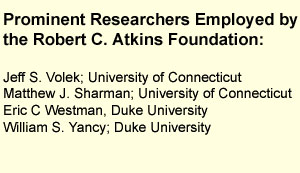
were funded by the Robert C. Atkins Foundation. Other research papers
funded by the Atkins Foundation were also located and reviewed;
10-12
as were several others on this topic with independent financial support.13-20
The funding for the third issue of the journal of Metabolic Syndrome
and Related Disorders was not identified, but the entire edition was
dedicated to the memory of Robert Atkins, MD – and by no coincidence, the
articles within were highly supportive of his low-carbohydrate diet.21-32
There were a few abstracts (a brief written paragraph about an unpublished
study) and several related research papers in obscure journals that I
could not obtain – I doubt that these would have altered my findings.
Ten Conclusions I
Reached after Reviewing the Scientific Research Published on the Atkins
Diet:
1) Use of the Term
“Low-fat” in the Comparisons Is Dishonest
Researchers have deceived
the public by claiming they have compared the Atkins Diet with a “low-fat”
diet. The truth is all of their comparisons are with a calorie-restricted
(portion-controlled) version of the typical American diet, containing
approximately 30% of the calories as fat.1-9 The “dieting”
(calorie-restricted, portion-controlled) approach to weight loss has a
consistent history of failure; therefore, choosing this kind of diet for
comparison greatly increases the odds that the Atkins Diet will appear
favorable.
2) Long-Term Weight
Loss Is Insignificant
Over the short-term
(weeks), people on the Atkins Diet lose more weight than on the
calorie-restricted diet, but this benefit does not last. After one year,
the difference in weight lost between those following the Atkins Diet and
those on the calorie-restricted diet was found to be statistically
insignificant by the only two studies performed for this period of time.1,2
3) A Real Low-Fat Diet
Is Far More Effective
Direct comparison of a
truly low-fat diet (10% or less of the calories from fat) with the Atkins
approach is long overdue. Available evidence supports superior benefits
with a low-fat diet.33-34 A low-fat diet (and exercise) is the
only approach found to provide long-term successful weight loss (an
average of more than 70 pounds of weight lost per person and maintained
for more than 6 years, based on a population of over 4,000 people).35-37
4) The “Metabolic
Advantage” Is Nothing to Brag About
Over the short-term, the
Atkins Diet will cause more weight loss, for the same number of calories
consumed, as a calorie-restricted diet. This is referred to as the
“metabolic advantage” of the low-carbohydrate diet. When the body is
burdened with the wrong fuel (a diet of fat and protein, and insufficient
carbohydrate) it must make changes that are metabolically expensive, thus
burning extra calories.27 Better stated, the burden of the
Atkins Diet requires the body to make adaptations originally intended for
survival; in order to stay alive under this adversity.
5) The Atkins Diet
Worsens Some Important Risk Factors for Heart Disease
The Atkins Diet
consistently raises total and “bad “LDL-cholesterol, whereas, a
calorie-restricted (30% fat) diet lowers these important predictors of
future heart trouble.1,2,18 A truly low-fat diet (10% or less
of calories from fat) is even more effective at reducing these risk
factors than the 30% fat diets used for these comparisons.38-41
6) The Atkins Diet
Improves Some Less Important Risk Factors for Heart Disease
The Atkins Diet lowers
triglycerides (a less important risk factor), but so does a healthfully
designed low-fat diet. “Good” HDL-cholesterol is increased1,2,4,7,8
on the Atkins Diet, but homocysteine (which predicts more heart disease)
is also increased.17 When it comes to “heart health,”
triglyceride and HDL-cholesterol values are of questionable importance and
far less significant than total- and LDL-cholesterol.42,43 But
to read the research paid for by Atkins you would think otherwise.4,6-8
7) Atkins Is Harder to
Follow Long-term
Dropout rates are very
high with both the Atkins and calorie-restricted diets, because both
programs are very hard to follow. The Atkins Diet causes people to become
“sick” and the calorie-restricted diet causes them to suffer the pains of
hunger. When comparing these two unpleasant living conditions, the
authors of the most recent one-year study published in the Annals of
Internal Medicine raised “the possibility that the Atkins Diet was
less sustainable.”2 In other words, constant sickness is more
difficult to endure than the everyday pains of hunger.
8) Exercise Is Not an
Easy Addition to the Atkins Program
Exercise is not a part of
most of the research studies performed. 1-9 On a
low-carbohydrate diet people are too fatigued to participate in increased
physical activity.
9) Adverse Effects Are
Common, Expected, and Sometimes Serious on Atkins
Most of the people
following the Atkins Diet suffer adverse effects like constipation,
fatigue, headaches, muscle cramps, diarrhea, and bad breath. Predictors
of future health problems, such as elevated cholesterol, BUN, uric acid,
and free fatty acids, are found with this diet.1-20
Furthermore, people have been reported to suffer from serious
complications, such as dehydration, cardiac arrhythmias, kidney damage,
kidney stones, liver, brain, and eye damage and also death from following
high protein and ketogenic diets.2,4,14,18,44-55
10) Atkins Is Not
Accepted by the Scientific Community – for Good Reasons
Major health
organizations, for example, the American Heart Association Nutrition
Committee, warn the public that the kinds of foods encouraged by the
Atkins Diet will increase their risk of health problems.44
For the Curious Reader
Further Explanation
and Support of My
Findings Follows
Comparing Atkins with a
“Low-fat” Diet is Deceptive
All of the papers
purporting the comparison of the Atkins Diet with a “low-fat” diet have
deceived the public – and their authors must have known better.1,3-9
The “low-fat” diet used is actually approximately 30% of the calories from
fat in all cases. Consider, the average American eats a diet with 32% to
38% of calories coming from fat. In each case the diet that is labeled
“low-fat” is in truth the conventional, always-known-to-fail,
calorie-restricted diet. In one of the major studies,3 before
the diet began the participants’ diets were 33% fat; the goal was to
reduce to 30% fat – but in the end their “low-fat” diets actually
contained 33% of the calories as fat (the same as before they started) –
so where is the low-fat part of the comparison alleged by the title of the
article? –
“A low-carbohydrate as compared with a low-fat diet in
severe obesity.”
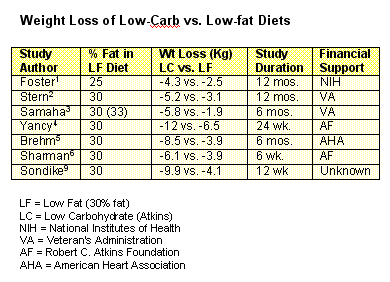
For the short-term (6 to
24 weeks) the Atkins approach betters the calorie-restricted diet by 4 to
12 pounds (2 to 5.5 Kg).4
Some of this early weight loss (up to 8 pounds) reflects water loss (from
diuresis and loss of glycogen stores). However, at 12 months, research
financed independent of Atkins has found the difference in weight loss to
be insignificant (2.1 Kg or less).1,2 The reason people fail
to continue to lose weight on the Atkins Diet is primarily because of lack
of adherence to the diet. Interestingly, researchers from one of the
long-term studies reported those on the calorie-restricted diet who
dropped out continued to lose the same amount of weight as those who
stayed in the study, whereas those in the Atkins group were less likely to
lose weight if they dropped out. This finding, along with the weight
gains that were seen between 6 and 12 months on the Atkins Diet led
researchers to raise the possibility that the Atkins Diet was less
sustainable (than the portion controlled, calorie-restricted diet).2
(I believe the reason Dr. Atkins, himself was so grossly overweight was,
not because of the lack of effectiveness of a ketogenic diet, but because
even he could not follow his own diet for long.)
The Atkins Diet is
inherently difficult to stick with because of the underlying mechanism for
weight loss – the diet makes people sick. Followers of this kind of diet
complain of reduced appetite, nausea, and fatigue – all symptoms of
illness, which result in a natural reduction in daily food intake – which
includes consuming fewer calories. You can only stay sick for so long
before you long for relief and return to eating more carbohydrates and
less fat.
A Low-fat Diet Solves
the Obesity Epidemic
A low-fat diet as used by Kempner (the Rice
Diet), Pritikin, Ornish, McDougall, and Barnard is based on plant foods
and contains 10% or less of the calories from fats of all kinds. Except
for the Kempner Diet, all of these truly low-fat diets emphasize unrefined
foods consumed in unlimited amounts (ad libitum). A recent review of 28
trials using lower-fat, higher-carbohydrate diets found a 10% reduction in
fat resulted in a 6.3 pound (2.88 Kg) weight loss sustained over 6 months.56
When the researchers in another study allowed the dieters to eat as much
as they wanted of a diet containing 18% fat, along with exercise, the
results were: an 11 pound (4.8 Kg) weight loss, and without exercise, the
same diet resulted in a 7 pound (3.2 Kg) weight loss, over 12 weeks.57
Another study of sixty-four healthy post-menopausal women on a low-fat
diet (11% fat) for 8 months found an average 13 pound (6 Kg) weight loss.58
The composition of these low-fat diets reflect the diets of people living
in rural communities in Africa, the Middle East, and the Far East – which
means a starch-based diet followed by millions of people living without
obesity, type-2 diabetes, coronary heart disease, and the cancers common
to Western societies.59
The most relevant information on successful
weight loss comes from the National Weight Control Registry.35-37
Successful dieters have been tracked by this study since 1993. The
registry is simply a database of people successful at maintaining a weight
loss of at least 30 lbs. (13.6 kg) for at least one year. However, the
average registrant has lost 70 pounds (32 kg)
and kept it off for 6 years. To date, there are over 4,000 people,
from all over the United States, enrolled in the National Weight Control
Registry.
On average, registrants
report consuming about 1400 kcal/day (24 percent calories from fat) and
expending about 400 calories/day in physical exercise. Approximately 80%
of the registrants eat less than 30% fat, and 35% eat less than 20% fat.
Although they may have lost their initial weight by a variety of methods,
including liquid protein diets, on their own, or through an organized
program, all are currently maintaining their
weight losses by eating low-energy, low-fat diets and engaging in regular
physical activity. About 50 percent of participants lost weight on
their own without any type of formal program or help.
The “Metabolic
Advantage” of the Atkins Diet
The rational for the
Atkins Diet is that severe carbohydrate restriction will result in ketosis
which promotes lipid oxidation (fat loss), satiety (satisfaction of
appetite), and increased energy expenditure. Supporters of the Atkins
low-carbohydrate Diet promote this approach as a faster, more efficient
way to lose weight than other diets. They believe there is an increased
weight loss per calorie compared to other similar diets, higher in
carbohydrate. They refer to this phenomenon as the “metabolic advantage.”27
The increase in energy loss is due to inefficiency in body metabolism
caused by the low-carbohydrate diet. For example, the human body on a
very low-carbohydrate diet has to expend energy to make carbohydrate for
tissues that absolutely require glucose, like the brain and red blood
cells (through the process of gluconeogenesis, glucose is
synthesized from protein) – this means extra calories are expended. This
is only one of many calorie-requiring adaptions to survive that occur when
the body is forced to live without sufficient carbohydrate.
I believe that following
the Atkins Diet does cause the body to become inefficient and to expend
more calories – but this transformation is not something to brag about.
Gluconeogenesis is a metabolic pathway used naturally during times of
duress when people are not eating, because of starvation or sickness.
Since the brain, red blood cells, and a few other tissues must have
carbohydrate to function, the body must call upon this mechanism to
survive. If increasing calorie expenditure by taxing the body’s survival
mechanisms were truly the proper direction for the diet industry to head,
then might not the next generation of weight loss programs include
infecting people with dysentery, malaria or HIV? There is no question
that the short-term (dysentery and malaria) and long-term (HIV) weight
losses will outstrip even the sickness-associated-weight-loss caused by
Atkins.
However, not all studies
find this “metabolic advantage” and the recent 24-week study published in
the Annals of Internal Medicine (paid for by the Robert C. Atkins
Foundation) found the percentage of total weight lost that was
from fat over 24 weeks was similar in the Atkins and “low-fat,”
calorie-restricted, diet groups.4
Flawed
Research Used to Promote the “Metabolic Advantage” – And They Know Better
Promoters of the
concept of the “metabolic advantage” of the Atkins Diet are so desperate
to make their point that they will use obviously bogus research, and
describe this work as the “most striking” evidence.27 This
spectacular evidence for the “metabolic advantage,” collected by Stephen
Sondike, was published in 2003 in the journal Pediatrics.9
The work by
Sondike is a 12-week, randomized, controlled study of 39 children, aged 12
to 18, placed on either the Atkins Diet or “low-fat” (actually 30% fat)
diet.9 The results: those on the Atkins Diet lost 12.8 pounds
(5.8 Kg) more than those on the “low-fat diet,” while consuming many more
calories each day on the Atkins Diet. Calculated from the difference in
daily calories – 1830 on Atkins minus 1100 on “low-fat” – there would have
been a 730 calorie per day “metabolic advantage” if both groups had lost
same amount of weight.
However, both
groups did not lose the same weight – the Atkins people actually lost 12.8
pounds more than the “low-fat” group – so these calories must be accounted
for also. These 12.8 pounds of weight loss mean an additional deficit of
532 calories per day (12.8 pounds x 3500 calories/pound of fat / 84 days =
532 calories per day). Adding these two differences together (730 plus
532 calories) would mean that the Atkins Diet in this study had a
“metabolic advantage” of 1262 calories a day – that’s more calories than
the children on the “low-fat” diet were said to eat daily. This is
obviously impossible – and any one interested in honest research would
know that, and completely discount these findings. Worse than deceiving
the public, this flawed study is shamelessly used to instruct medical
students on the benefits of the Atkins Diet.25
The Big Lie:
Eating Steak Cuts Your Risk of Heart Disease (That’s What They Tell
Medical Students25 and the Public).
The fact is,
eating fat and cholesterol increases your risk of dying of heart disease,
strokes and other forms of atherosclerosis (kidney failure and peripheral
vascular diseases) – and all major health organizations and almost all
doctors and scientists agree.44 All well-designed studies show
the total cholesterol and “bad” LDL cholesterol both increase with the
Atkins Diet.1,2,18 The May 2004 study, financed by Atkins and
published in the Annals of Internal Medicine, described two
participants in the low-carbohydrate diet group (Atkins) who
dropped out of the study because of concerns about elevated
serum lipid levels.4 In one participant, the LDL-cholesterol
level increased from 184 mg/dl (4.75 mmol/l) to 283 mg/dl (7.31
mmol/l) in 3 months. Another participant’s LDL-cholesterol level went from
182 mg/dl (4.70 mmol/l ) to 219 mg/dl (5.66 mmol/l) in 4 weeks. Overall,
LDL-cholesterol increased by more than 10% in 30% of the people
on the low-carbohydrate diet.4 (Ideally, LDL-cholesterol
should be well below 100 mg/dl, and probably, even below 80 mg/dl for
people concerned about heart disease.)

The spin Atkins
promoters use to minimize the impact of these negative findings is to
point out the Atkins Diet lowers triglycerides, raises “good” HDL-cholesterol,
and increases the amount of “less dense” LDL-cholesterol. Both
triglycerides and HDL-cholesterol are considered of much less importance
than total- and LDL-cholesterol in predicting the future risk of artery
disease. For example, in the well-respected studies on the reversal of
heart disease by Dr. Dean Ornish, participants showed reversal on his
very-low fat diet, while at the same time their triglycerides increased
and their HDL-cholesterol levels decreased.42 In the most
important study yet published on the reversal of artery disease using
cholesterol-lowering medications (like Lipitor), researchers found that
“good” HDL-cholesterol played no role in predicting the condition of the
arteries (growth of plaques).43
Their final
effort to right the heart-disease-promoting wrongs of the Atkins Diet is
to focus on the size of LDL-cholesterol. Some studies show the larger the
LDL-cholesterol particles in the blood, the less the risk of heart disease
in a population. The size of LDL-cholesterol is tied directly to both
triglycerides and HDL-cholesterol. If you agree with me that these two
values are of little value in predicting the effects of diet on real-life
artery disease, then the LDL-cholesterol particle size cannot be the
saving grace for the Atkins Diet.60 Furthermore, a very
low-fat diet improves the LDL-particle size without the adverse
consequences on blood cholesterol caused by the Atkins Diet.39
“The Atkins Diet Does Not Increase Heart Disease” – So They
Say
Studies comparing the
effects of the Atkins Diet and a relatively high-cholesterol, 30% fat,
calorie-restricted diet show, on average, the Atkins Diet increases total
cholesterol by about 2%, and LDL-cholesterol by 3% -- whereas, the
“low-fat” diet lowers these values by 6 % and 9%, respectively. You may
wonder why doubling the saturated fat and cholesterol in the diet by
switching to Atkins doesn’t make even a worse impact on the blood lipids
(cholesterol). There are two important reasons for these unexpected
findings.
First, the body has
tremendous capacity to adapt to extraordinary living conditions in order
to survive. When the fat intake becomes extreme, as it does with the
Atkins Diet, the excess fat interferes with the intestinal absorption of
cholesterol in some, but not all, individuals.61 Also, the
first 200 to 400 mg of cholesterol consumed completely saturates the
capacity of the gut to absorb cholesterol, so any additional is left
behind in the intestine, to be excreted.62 When subjects are
already consuming 30% fat, and 300 mg to 500 mg of cholesterol, as they
are on their pre-Atkins, typical American diet, then little additional
impact is caused by further increases when switching to the Atkins Diet.
Obviously, meaningful information cannot be gained about the true impact
of the Atkins Diet on the body by comparing it with a calorie-reduced
version of a diet that kills more than two-thirds of its followers
prematurely in the first place, the rich Western diet.
Second, the Atkins Diet works by making people
sick. As mentioned above, followers of this kind of diet complain of
reduced appetite, nausea, and fatigue – all symptoms of illness, which
result in a natural reduction in daily food intake. Expected consequences
of eating smaller amounts of red meat, poultry, fish, and cheese – basic
components of these low-carbohydrate diets – are that people consume less
saturated fat, cholesterol, sodium, animal protein, and fewer calories.
Signs of improved health seem to appear because risk factors, like
cholesterol, triglycerides, uric acid, glucose, blood pressure, and body
weight decrease – and the patient is declared healthier. Not necessarily
so. Similar benefits, for similar reasons, are seen when patients are
placed on cancer chemotherapy – and doctors don’t brag about these
results.63
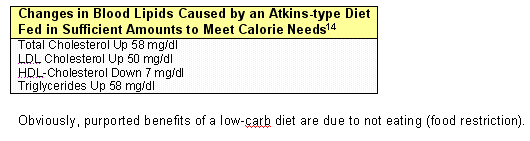
Confirmation of this
“semi-starvation” mechanism of the Atkins Diet for improved risk factors
comes from the results of research on young people with seizure disorders,
treated with a ketogenic diet (like Atkins), who are encouraged to eat
sufficient calories to maintain their body weight. Under these
circumstances, all risk factors – including cholesterol, LDL-cholesterol,
and triglycerides – increase dramatically (and HDL-cholesterol decreases).14
In simplest terms, low-carbohydrate diets
exaggerate consumption of the unhealthiest components of the Western diet
(animal protein and fat) to a level that makes people sufficiently ill to
lose their desire to eat – and expected changes follow. The alternative
is to encourage people to eat foods that promote both ideal body weight
and health – those from a high-carbohydrate, low-fat diet.33,34
Finally, this entire subject of risk factors
must be placed in proper perspective. Risk factors, like the level of
cholesterol in the blood, are not diseases, but rather bits of
information that help to foretell one’s future health. No one dies of
high-cholesterol – rather, they die of diseased arteries – but because
the same foods that raise cholesterol also damage the arteries, the two
are commonly associated. Therefore, because this is an association,
rather than a cause-and-effect relationship, it is important to realize
that improving the values of risk factors may not necessarily translate
into improved health – this is obviously true if the means for changing
these values is inherently unhealthy, like feeding a diet of pork rinds,
fried hamburger patties, and lobster dripping in butter to people; i.e.
the Atkins Diet.
Real Damage from Atkins Would Be Seen with Honest Comparisons
To determine the true
impact of the Atkins Diet on blood cholesterol, a comparison must be made
with a truly low-fat (10% or less), no-cholesterol diet. Two studies of
people following very low-cholesterol diets suggest what will be found:
When subjects following a low-cholesterol diet (97 mg/day) were fed one
egg a day (an additional 321 mg of cholesterol) their “bad” LDL-cholesterol
increased by 12%.64 By comparison, the egg industry has funded
numerous studies to “prove” eating eggs does not raise cholesterol – they
accomplish this by feeding eggs to subjects whose intestines are already
fully saturated with cholesterol from their regular diet – so they are
able to absorb little more.65
A group of Tarahumara
Indians from Northern Mexico was switched from their traditional diet of
corn, beans, squash and other vegetables (2700 calories, 16% fat and trace
cholesterol) to an American diet (4100 calories, 44% fat, and 1020 mg
cholesterol) for five weeks.66 These changes were seen in
their blood:
Total cholesterol
increased 31% (121 to 159 mg/dl)
LDL-cholesterol increased
by 39% (72 to 100 mg/dl)
HDL-cholesterol increased
by 31% (32 to 42 mg/dl)
Triglycerides increased by
18% (91 to 108 mg/dl)
(Note that eating an
unhealthy diet with more fat and cholesterol increases all fractions of
cholesterol, including “good” HDL-cholesterol.)
Long-term benefits of a
low-fat diet have been seen with the Ornish and Pritikin groups.40,41,67
Six month results from the very low-fat diet used by Dr. Ornish found
significantly greater reductions in anginal (chest pain) frequency, body
weight, body mass index, systolic blood pressure, total cholesterol,
low-density lipoprotein cholesterol, and glucose, than in a cardiac
rehabilitation group using the standard Heart Association (30% fat) diet.40
Results of a study of 4587
adults who attended a 3-week residential Pritikin Program using a very
low-fat diet, showed total cholesterol was reduced by 23% (234 to 180
mg/dl) and LDL-cholesterol was reduced by 23% (151 to 116 mg/dl).41
Follow-up studies for 18 months on a small group of these people showed
that, in most cases, continued compliance with the program maintained
total cholesterol values well below 200 mg/dl.
The Atkins Diet: Short-term Weight Loss –
While Sacrificing Health
The research says the Atkins Diet makes people
sick. The most recent study paid for by the Robert C. Atkins Foundation
found three of the 59 participants in the Atkins group dropped out; 2
because of a rise in LDL-cholesterol and one because of shakiness and
uneasiness.4 Many troublesome problems occurred frequently
in the low-carbohydrate diet (Atkins) group:4
Symptom (% of patients complaining)
Constipation (68%)
Headache (60%)
Halitosis (38%)
Muscle cramps (35%)
General weakness (25%)
Diarrhea (23%)
Rash (13%)
One participant sought medical
attention for constipation, but had no complications. One 53-year-old
man with a family history of early heart disease
developed chest pain near the end of the study, and coronary
heart disease was subsequently diagnosed.4 In the Samaha
study (not financed by Atkins) one patient was hospitalized with chest
pain and one patient died while on the low-carbohydrate, Atkins Diet.3
Other reported adverse
effects of a low-carbohydrate/ketogenic diet include:
* Increased fat and
cholesterol increases the blood cholesterol and risk of heart attacks.44
* Increased fat increases
the long-term risk of obesity.45
* Increased dietary fat
has been linked to various common cancers.46
* Increased dietary
protein and acid increases the risk of kidney stones and osteoporosis.47,48
* Free fatty acids, which
increase the risk of heart (cardiac) arrhythmias double.18
Cardiac arrhythmias
have been observed on the diet.18
* Uric acid, creatinine
and BUN increase, which reflect an increased workload on the kidneys and a
prediction of future kidney failure.2
* Patients complain of
fatigue, thirst, lassitude, bad taste, and foul breath.18
* Increased depression,
anger, confusion, fatigue and decreased vigor.49-51
* Neuropsychological tests
show worsening performance when people are on a ketogenic diet (like
Atkins).52
* Damage to the eyes
(optic neuropathy) has been seen with a ketogenic diet.53
Special Problems for
Children
(The diet is recommended for children by Atkins and others.9,20)
* Long-term adherence to
a low-carb (ketogenic) diet may cause permanent damage to the developing
brain.54
* Short-term effects
include hypoglycemia, vomiting, diarrhea, dehydration, and refusal to
eat; long-term effects include irritability, lethargy, kidney stones,
acidosis, hyperuricemia, hypocalcemia, decreased amino acids, growth, and
hypercholesterolemia.14
* Serious adverse events were experienced by five children (10% of the
group): severe hypoproteinemia, lipemia (excess triglycerides in the
blood), and hemolytic anemia, Fanconi's renal tubular acidosis; and two
children manifested marked increases in liver function tests.55
*
Long-standing ketosis has been associated with myocardial dysfunction
(heart problems) in children.56 Of twenty patients on the
ketogenic diet, 3 had EKG abnormalities (prolonged QT interval) and three
patients had evidence of cardiac chamber enlargement. In one patient with
severe dilated cardiomyopathy and EKG abnormalities, these problems
normalized when the diet was discontinued.56
Also understand that the foods recommended on
a low-carbohydrate diet are primarily meat, poultry, fish, and cheeses.
Over 90% of the environmental chemicals, such as DDT, dioxin, and PCB –
substances known to cause cancer and damage to your nervous system – enter
your body through these foods (not plant-foods). Also realize that these
same animal foods carry microbes known to infect people, including bovine
leukemia viruses, the “mad-cow” agent, E. coli, salmonella, tuberculosis,
and listeria, to name a few well-known threats to your health.
You Can Have
Weight Control and Health, Too
The overwhelming
popularity of low-carbohydrate diets and the acceptance of supportive
scientific research are largely because Atkins is speaking to the choir –
people love to hear good news about their bad habits. “Just tell me I
will lose weight and avoid heart disease and diabetes by eating more eggs,
cheese, lobster, and steak.” But that is not the truth and deep down
inside even the current followers of Atkins must know this. The
overwhelming evidence clearly condemns the low-carb diet, and this
approach should not be used for even short-term weight loss.
Don’t despair,
there is a meal plan that will allow you good looks and good health – and
that is a time-honored diet that most people who have ever walked this
earth have consumed – a high-carbohydrate, low-fat diet, based on starches
with the addition of fruits and vegetables. Leave the eggs for Easter, the
ham for Christmas and the turkey for Thanksgiving – rather than eating
these “Atkins delights” every meal, everyday, until you make yourself so
sick you lose a little weight – then you quit and you regain your lost fat
– just as the two, twelve-month-long studies on the Atkins Diet prove you
will do.1,2
References:
1) Foster GD,
Wyatt HR, Hill JO, McGuckin BG, Brill C, Mohammed BS, Szapary PO, Rader
DJ, Edman JS, Klein S. A randomized trial of a low-carbohydrate diet for
obesity. N Engl J Med. 2003 May 22;348(21):2082-90.
2) Stern L,
Iqbal N, Seshadri P, Chicano KL, Daily DA, McGrory J, Williams M, Gracely
EJ, Samaha FF. The Effects of Low-Carbohydrate versus Conventional Weight
Loss Diets in Severely Obese Adults: One-Year Follow-up of a Randomized
Trial. Ann Intern Med. 2004 May 18;140(10):778-785.
3) Samaha FF,
Iqbal N, Seshadri P, Chicano KL, Daily DA, McGrory J, Williams T, Williams
M, Gracely EJ, Stern L. A low-carbohydrate as compared with a low-fat
diet in severe obesity. N Engl J Med. 2003 May 22;348(21):2074-81.
4) Yancy WS Jr,
Olsen MK, Guyton JR, Bakst RP, Westman EC. A Low-Carbohydrate, Ketogenic
Diet versus a Low-Fat Diet To Treat Obesity and Hyperlipidemia: A
Randomized, Controlled Trial. Ann Intern Med. 2004 May
18;140(10):769-777.
5) Brehm BJ,
Seeley RJ, Daniels SR, D'Alessio DA. A randomized trial comparing a very
low carbohydrate diet and a calorie-restricted low fat diet on body weight
and cardiovascular risk factors in healthy women. J Clin Endocrinol
Metab. 2003 Apr;88(4):1617-23.
6) Sharman MJ, Gomez AL, Kraemer WJ, Volek JS. Very
low-carbohydrate and low-fat diets affect fasting lipids and postprandial
lipemia differently in overweight men. J Nutr. 2004
Apr;134(4):880-5.
7) Volek JS, Sharman MJ, Gomez AL, Scheett TP, Kraemer WJ.
An isoenergetic very low carbohydrate diet improves serum HDL cholesterol
and triacylglycerol concentrations, the total cholesterol to HDL
cholesterol ratio and postprandial pipemic responses compared with a low
fat diet in normal weight, normolipidemic women. J Nutr. 2003
Sep;133(9):2756-61.
8) Volek JS, Sharman MJ, Gomez AL, DiPasquale C, Roti M,
Pumerantz A, Kraemer WJ. Comparison of a very low-carbohydrate and
low-fat diet on fasting lipids, LDL subclasses, insulin resistance, and
postprandial lipemic responses in overweight women. J Am Coll Nutr.
2004 Apr;23(2):177-84.
9) Sondike SB,
Copperman N, Jacobson MS. Effects of a low-carbohydrate diet on weight
loss and cardiovascular risk factor in overweight adolescents. J
Pediatr. 2003 Mar;142(3):253-8.
10) Westman EC,
Yancy WS, Edman JS, Tomlin KF, Perkins CE. Effect of 6-month adherence to
a very low carbohydrate diet program. Am J Med. 2002
Jul;113(1):30-6.
11) Sharman MJ, Kraemer WJ, Love DM, Avery NG, Gomez AL,
Scheett TP, Volek JS. A ketogenic diet favorably affects serum biomarkers
for cardiovascular disease in normal-weight men. J Nutr. 2002
Jul;132(7):1879-85.
12) Volek JS, Sharman MJ, Love DM, Avery NG, Gomez AL,
Scheett TP, Kraemer WJ. Body composition and hormonal responses to a
carbohydrate-restricted diet. Metabolism. 2002 Jul;51(7):864-70.
13) Volek JS, Gomez AL, Kraemer WJ. Fasting lipoprotein
and postprandial triacylglycerol responses to a low-carbohydrate diet
supplemented with n-3 fatty acids. J Am Coll Nutr. 2000
Jun;19(3):383-91.
14) Kwiterovich
PO Jr, Vining EP, Pyzik P, Skolasky R Jr, Freeman JM. Effect of a
high-fat ketogenic diet on plasma levels of lipids, lipoproteins, and
apolipoproteins in children. JAMA. 2003 Aug 20;290(7):912-20.
15) Alford BB,
Blankenship AC, Hagen RD. The effects of variations in carbohydrate,
protein, and fat content of the diet upon weight loss, blood values, and
nutrient intake of adult obese women. J Am Diet Assoc. 1990
Apr;90(4):534-40.
16) Gutierrez M,
Akhavan M, Jovanovic L, Peterson CM. Utility of a short-term 25%
carbohydrate diet on improving glycemic control in type 2 diabetes
mellitus. J Am Coll Nutr. 1998 Dec;17(6):595-600.
17) Hays JH,
DiSabatino A, Gorman RT, Vincent S, Stillabower ME. Effect of a high
saturated fat and no-starch diet on serum lipid subfractions in patients
with documented atherosclerotic cardiovascular disease.
Mayo Clin Proc. 2003 Nov;78(11):1331-6.
18) Larosa JC, Fry AG, Muesing R, Rosing DR. Effects of
high-protein, low-carbohydrate dieting on plasma lipoproteins and body
weight. J Am Diet Assoc. 1980 Sep;77(3):264-70.
19) Lean ME, Han TS, Prvan T, Richmond PR, Avenell A.
Weight loss with high and low carbohydrate 1200 kcal diets in free living
women. Eur J Clin Nutr. 1997 Apr;51(4):243-8.
20) Willi SM, Oexmann MJ, Wright NM, Collop NA, Key LL Jr.
The effects of a high-protein, low-fat, ketogenic diet on adolescents with
morbid obesity: body composition, blood chemistries, and sleep
abnormalities. Pediatrics. 1998 Jan;101(1 Pt 1):61-7.
21) Dandona P. Editorial. Metabolic Syndrome and
Related Disorders. 2003;1:179-179.
22) Freedland E.S. A Tribute to Robert C. Atkins, M.D.
Metabolic Syndrome and Related Disorders. 2003;1:181-182.
23) Atkins V. The Robert C. Atkins, M.D. Issue.
Metabolic Syndrome and Related Disorders. 2003;1:183-184.
24) Aljada A.; Mohanty P.; Dandona P. Lipids,
Carbohydrates, and Heart Disease
Metabolic Syndrome and Related Disorders.
2003;1:185-188.
25) Feinman R.D.; Makowske M. Metabolic Syndrome and
Low-Carbohydrate Ketogenic Diets in the Medical School Biochemistry
Curriculum. Metabolic Syndrome and Related Disorders.
2003;1:189-197.
26) Bell S.J.; Sears B. A Proposal for a New National
Diet: A Low-Glycemic Load Diet with a Unique Macronutrient Composition.
Metabolic Syndrome and Related Disorders. 2003;1:199-208.
27) Feinman R.D.; Fine E.J. Thermodynamics and Metabolic
Advantage of Weight Loss Diets. Metabolic Syndrome and Related
Disorders. 2003;1:209-219.
28) Bailes Jr. J.R.; Strow M.T.; Werthammer J.; McGinnis
R.A.; Elitsur Y. Effect of Low-Carbohydrate, Unlimited Calorie Diet on
the Treatment of Childhood Obesity: A Prospective Controlled Study.
Metabolic Syndrome and Related Disorders. 2003;1:221-225.
29) Hickey J.T.; Hickey L.; Yancy Jr. W.S.; Hepburn J.;
Westman E.C. Clinical Use of a Carbohydrate-Restricted Diet to Treat the
Dyslipidemia of the Metabolic Syndrome. Metabolic Syndrome and Related
Disorders. 2003;1:227-232.
30) Vernon M.C.; Mavropoulos J.; Transue M.; Yancy Jr W.S.;
Westman E.C. Clinical Experience of a Carbohydrate-Restricted Diet: Effect
on Diabetes Mellitus. Metabolic Syndrome and Related Disorders.
2003;1:233-237.
31) Yancy Jr. W.S.; Vernon M.C.; Westman E.C. A Pilot
Trial of a Low-Carbohydrate, Ketogenic Diet in Patients with Type 2
Diabetes. Metabolic Syndrome and Related Disorders. 2003;1:239-243.
32) Dissertations. Metabolic Syndrome and Related
Disorders. 2003;1: 245-252.
33) Jequier E,
Bray GA. Low-fat diets are preferred. Am J Med. 2002 Dec 30;113
Suppl 9B:41S-46S.
34) Astrup A,
Astrup A, Buemann B, Flint A, Raben A. Low-fat diets and energy balance:
how does the evidence stand in 2002? Proc Nutr Soc. 2002
May;61(2):299-309.
35) Shick SM,
Wing RR, Klem ML, McGuire MT, Hill JO, Seagle H. Persons successful at
long-term weight loss and maintenance continue to consume a low-energy,
low-fat diet. J Am Diet Assoc. 1998 Apr;98(4):408-13.
36) Wing R.
Successful weight loss maintenance. Annu Rev Nutr. 2001;21:323-41.
37)
Wyatt HR, Grunwald OK, Mosca CL, Klem ML, Wing
RR, Hill JO (2002). Long-term weight loss and breakfast in subjects in the
National Weight Control Registry. Obesity Research; 10:78-82.
38) McDougall J,
Litzau K, Haver E, Saunders V, Spiller GA. Rapid reduction of serum
cholesterol and blood pressure by a twelve-day, very low fat, strictly
vegetarian diet. J Am Coll Nutr. 1995 Oct;14(5):491-6.
39) Beard CM,
Barnard RJ, Robbins DC, Ordovas JM, Schaefer EJ. Effects of diet and
exercise on qualitative and quantitative measures of LDL and its
susceptibility to oxidation. Arterioscler Thromb Vasc Biol. 1996
Feb;16(2):201-7.
40) Aldana SG,
Whitmer WR, Greenlaw R, Avins AL, Salberg A, Barnhurst M, Fellingham G,
Lipsenthal L. Cardiovascular risk reductions associated with aggressive
lifestyle modification and cardiac rehabilitation. Heart Lung. 2003
Nov-Dec;32(6):374-82.
41) Barnard RJ.
Effects of life-style modification on serum lipids. Arch Intern Med.
1991 Jul;151(7):1389-94.
42) Ornish D,
Scherwitz LW, Billings JH, Brown SE, Gould KL, Merritt TA, Sparler S,
Armstrong WT, Ports TA, Kirkeeide RL, Hogeboom C, Brand RJ. Intensive
lifestyle changes for reversal of coronary heart disease. JAMA.
1998 Dec 16;280(23):2001-7.
43) Nissen SE,
Tuzcu EM, Schoenhagen P, Brown BG, Ganz P, Vogel RA, Crowe T, Howard G,
Cooper CJ, Brodie B, Grines CL, DeMaria AN; REVERSAL Investigators.
Effect of intensive compared with moderate lipid-lowering therapy on
progression of coronary atherosclerosis: a randomized controlled trial.
JAMA. 2004 Mar 3;291(9):1071-80.
44) St Jeor ST,
Howard BV, Prewitt TE, Bovee V, Bazzarre T, Eckel RH; Nutrition Committee
of the Council on Nutrition, Physical Activity, and Metabolism of the
American Heart Association. Dietary protein and weight reduction: a
statement for healthcare professionals from the Nutrition Committee of the
Council on Nutrition, Physical Activity, and Metabolism of the American
Heart Association. Circulation. 2001 Oct 9;104(15):1869-74
45) Bray GA,
Popkin BM.. Dietary fat intake does affect obesity! Am J Clin Nutr.
1998 Dec;68(6):1157-73.
46) Lichtenstein
AH, Kennedy E, Barrier P, Danford D, Ernst ND, Grundy SM, Leveille GA, Van
Horn L, Williams CL, Booth SL. Dietary fat consumption and health.
Nutr Rev. 1998 May;56(5 Pt 2):S3-19.
47) Reddy ST.
Effect of low-carbohydrate high-protein diets on acid-base balance,
stone-forming propensity, and calcium metabolism. Am J Kidney Dis.
2002 Aug;40(2):265-74.
48) Herzberg GZ,
Fivush BA, Kinsman SL, Gearhart JP. Urolithiasis associated with the
ketogenic diet. J Pediatr. 1990 Nov;117(5):743-5.
49) Horswill CA, Hickner
RC, Scott JR, Costill DL, Gould D. Weight loss, dietary carbohydrate
modifications, and high intensity, physical performance. Med Sci
Sports Exerc. 1990 Aug;22(4):470-6.
50) Keith RE, O'Keeffe KA,
Blessing DL, Wilson GD. Alterations in dietary carbohydrate, protein,
and fat intake and mood state in trained female cyclists. Med Sci
Sports Exerc. 1991 Feb;23(2):212-6.
51) Filaire E, Maso F,
Degoutte F, Jouanel P, Lac G. Food restriction, performance, psychological
state and lipid values in judo athletes. Int J Sports Med. 2001
Aug;22(6):454-9.
52) Wing RR,
Vazquez JA, Ryan CM. Cognitive effects of ketogenic weight-reducing
diets. Int J Obes Relat Metab Disord. 1995 Nov;19(11):811-6.
53) Hoyt CS,
Billson FA. Optic neuropathy in ketogenic diet. Br J Ophthalmol.
1979 Mar;63(3):191-4.
54) Zhao Q, Stafstrom CE,
Fu DD, Hu Y, Holmes GL. Detrimental effects of the ketogenic diet on
cognitive function in rats. Pediatr Res. 2004 Mar;55(3):498-506.
55) Ballaban-Gil
K, Callahan C, O'Dell C, Pappo M, Moshe S, Shinnar S. Complications of
the ketogenic diet. Epilepsia. 1998 Jul;39(7):744-8.
56) Best TH,
Franz DN, Gilbert DL, Nelson DP, Epstein MR. Cardiac complications in
pediatric patients on the ketogenic diet. Neurology. 2000 Jun
27;54(12):2328-30.
57) Hays NP,
Starling RD, Liu X, Sullivan DH, Trappe TA, Fluckey JD, Evans WJ. Effects
of an ad libitum low-fat, high-carbohydrate diet on body weight, body
composition, and fat distribution in older men and women: a randomized
controlled trial. Arch Intern Med. 2004 Jan 26;164(2):210-7.
58)
Mueller-Cunningham WM, Quintana R, Kasim-Karakas SE. An ad libitum, very
low-fat diet results in weight loss and changes in nutrient intakes in
postmenopausal women. J Am Diet Assoc. 2003 Dec;103(12):1600-6.
59) Weisburger
J. Eat to live, not live to eat. Nutrition. 2000; 16:767-73.
60) Kenny J.
Very-low-fat diets do not necessarily promote small, dense LDL particles.
Am J Clin Nutr. 1999; 70:423-25.
61) Sehayek E,
Nath C, Heinemann T, McGee M, Seidman CE, Samuel P, Breslow JL. U-shape
relationship between change in dietary cholesterol absorption and plasma
lipoprotein responsiveness and evidence for extreme interindividual
variation in dietary cholesterol absorption in humans. J Lipid Res.
1998 Dec;39(12):2415-22.
62) Connor WE,
Hodges RE, Bleiler RE. Effect of dietary cholesterol upon serum lipids in
man. J Lab Clin Med. 1961 Mar;57:331-42.
63) McDougall J.
Effects of a low-carbohydrate diet. Mayo Clin Proc. 2004
Mar;79(3):431
64) Sacks FM,
Salazar J, Miller L, Foster JM, Sutherland M, Samonds KW, Albers JJ, Kass
EH. Ingestion of egg raises plasma low density lipoproteins in
free-living subjects. Lancet. 1984 Mar 24;1(8378):647-9.
65) McDougall,
J. The McDougall Plan. New Win, 1983.
66) McMurry MP,
Cerqueira MT, Connor SL, Connor WE. Changes in lipid and lipoprotein
levels and body weight in Tarahumara Indians after consumption of an
affluent diet. N Engl J Med. 1991 Dec 12;325(24):1704-8.
67) Anderson JW,
Konz EC, Jenkins DJ. Health advantages and disadvantages of
weight-reducing diets: a computer analysis and critical review. J Am
Coll Nutr. 2000 Oct;19(5):578-90.
Fair Use Notice: This document may contain copyrighted material whose
use has not been specifically authorized by the copyright owners.
We believe that this not-for-profit, educational
use on the Web constitutes a fair use of the copyrighted material (as
provided for in section 107 of the US Copyright Law). If you wish to use
this copyrighted material for purposes of your own that go beyond fair
use, you must obtain permission from the copyright owner.