Folic Acid Supplements are a Health Hazard
John McDougall, M.D.
http://www.drmcdougall.com
- Stop Folic Acid Pills Now
- Limit Your Intake of Fortified Flour Products (in the USA)
- Don�t Lower Your Homocysteine Levels with Supplements
Taking supplements with as little as 0.8 mg/day of folic
acid has been shown to increase your risk of dying of heart disease and
cancer, according to the results of the first large randomized treatment
trial to carefully examine this issue.1 The Norwegian Vitamin Trial (NORVIT)
of 3,749 patients, who were followed for 3.5 years was designed to show
the benefits of taking supplements�but the results were contrary to
expectations. Folic acid supplementation was found to lower homocysteine
levels by 28%., but to increase relative risks of heart attack, stroke,
and death by 20%, along with a more than a 30% increase in cancer. Those
with the highest baseline homocysteine levels (13 umol/L or greater)
suffered the most harm from taking supplements of folic acid.
Homocysteine Is Only a Risk Factor
Elevated levels of the amino acid homocysteine, found
with a blood test have been associated with many common diseases,
including heart disease, strokes, venous thrombosis, dementia, and
Alzheimer�s disease. The commonly made, but incorrect, assumption is that
these diseases are caused by elevated homocysteine in the body and the
solution is to give medications (vitamin pills) to fix the problem.
However, homocysteine is not the problem. Elevated
homocysteine is only a sign that the body is becoming diseased and at risk
of a tragedy. We call this type of sign a �risk factor��it predicts future
risk, but it is not a disease in itself�no one dies of an elevated
homocysteine level�most commonly, clogged heart arteries are the actual
cause of death for those people showing this sign. So what is the real
meaning of this risk factor?
Homocysteine levels increase when people eat more meat
and fewer vegetables. These same dietary habits cause other signs (risk
factors)�indicating a higher chance of death and disability�to rise; like
cholesterol, triglycerides, uric acid, blood sugar, lipoprotein a,
C-reactive protein, blood pressure, and body weight. Fortunately,
correcting the poor diet heals the underlying disease, and at the same
time the risk factors show improvement.
Folic Acid Supplements Overload the Body
Consuming more than 0.2 mg of folic acid daily floods
the bloodstream with this vitamin, overloading the metabolic capacities of
the body, causing imbalances that increase the risk of heart disease and
cancer.2 Folic acid is a synthetic version of the natural vitamin, folate,
found in plant foods. Folate from food is essential for good health. Folic
acid sold in capsules is a medication at best and a toxin at worst. When
given in doses of 0.8 mg it will lower homocysteine by about 30% (3 to 4
umol/L).3 Higher doses than 0.8 mg have no greater benefit for lowering
blood levels of homocysteine.
Folic Acid Mandated for U.S. Cereal Products
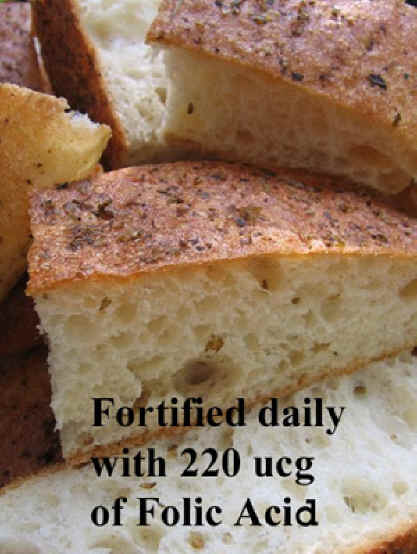
January 1998 was the mandatory deadline for the
fortification of grain products with folic acid in the United States.
Folic acid was added to flours used to make bread, rolls, and crackers.
Another hefty source of this supplement comes from enriched
(vitamin-added) �ready-to-eat cereals.�
Since 1998, folic acid intake has increased
significantly in every segment of the U.S. population with the average
additional intake of 0.22 mg/day.3,4 Remember, as little is .2 mg causes
overloads and imbalances with an increased risk of illness . A significant
segment of the USA population is now consuming over 1 mg/day of folic acid
daily�an amount found by the NORVIT study to increase the risk of heart
disease and cancer.
Doctors Harm Patients with Supplements
Cardiologists are fond of recommending vitamin pills to
treat elevated homocysteine in hopes of preventing further heart disease
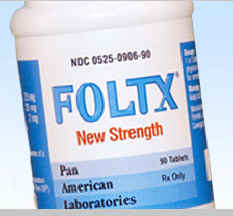
in their patients. One of the most commonly prescribed preparations is
called Foltx � a combination of 2.5 mg of folic Acid, 25 mg of vitamin B6,
and 2 mg of vitamin B12. A recent study showed a similar preparation
reduced the homocysteine levels of patients with a history of stroke by 2
units (umol/L), but found no difference in risk of future strokes, heart
attacks, or death compared to a control group.5
Another recent study showing folic acid actually causes
the heart arteries to close should cause doctors to mend their prescribing
practices. After six months of supplementation in 636 heart patients with
stents (stents are wire-mesh supports placed in the coronary arteries
during angioplasty), the Folate After Coronary Intervention Trial found
those patients taking folic acid had significantly more narrowing of the
arteries, more artery closure (restenosis), and more major adverse cardiac
events compared to those taking placebo�the exact opposite of what
investigators had expected to find.6,7 As expected, the homocysteine blood
levels were reduced by the above treatment. The authors recommended that
the routine administration of folate treatment not be advocated at the
present time.
Even with all this condemning evidence, you can easily
find experts (many working with vitamin companies) trying to convince the
unaware buyer that high-dose folic acid supplementation�as much as 5
mg/day�will be good for their heart and blood vessels.8
Appropriate Response to Homocysteine in Your Blood
The main motivation behind fortification of flours and
taking supplemental vitamins has been to reduce the occurrence of serious
birth defects, especially the occurrence of neural tube defects (NTDs).
The effort seems to be working a little�since the onset of fortification
there has been a 19% decrease in the incidence of NTDs. Unfortunately,
these same widespread recommendations to take folic acid may be causing
more heart disease and cancer. So, what to do?
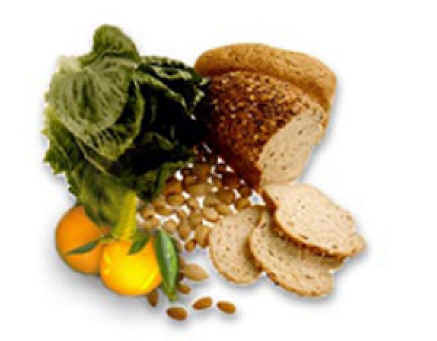
All that money and effort now spent on supplementation
with the hope of reducing birth defects, heart disease, and cancer should
be directed towards educational programs to teach people to eat more
legumes, vegetables, and fruits�the plentiful and safe sources of folic
acid. (The name folic comes from the word foliage, which refers to
plants.) When packaged in the plant, folic acid is never harmful and
always beneficial. Further efforts should be made towards making sure all
people have ready access to plant-foods.
Because of the overwhelming evidence that the vitamin
supplements people are buying are a serious health hazard, I propose these
products be labeled with bold warnings like: �Taking Vitamin E can raise
your risk of dying,� Vitamin A (retinol) can damage your bones and cause
birth defects,� �Beta carotene may raise your risk of cancer,� and �Folic
acid causes heart disease.� All supplement packages should also tell
people that vitamins and other nutrients are best obtained from healthy
vegetable foods. For more information on the hazards of supplementation,
please read from my newsletter archives the following:
August 2003: Plants, not Pills, for Vitamins and
Minerals:
http://www.nealhendrickson.com/mcdougall/030800puvitaminsandminerals.htm
November 2004: Vitamins Do Not Prevent Cancer and May
Increase Likelihood of Death: How Supplements Can Make You Sicker
http://www.nealhendrickson.com/mcdougall/2004nl/041100pufavorite5.htm
July 2005: Neither Aspirin Nor Vitamin E Will Save Women
http://www.drmcdougall.com/misc/2005nl/july/050700fav5.htm
February 2004: Treating Homocysteine with Vitamins Fails
http://www.nealhendrickson.com/mcdougall/040200pufavorite5.htm
References:
1) Bonaa KH. NORVIT: Randomized trial of
homocysteine-lowering with B-vitamins for secondary prevention of
cardiovascular disease after acute myocardial infarction. Program and
Abstracts from the European Society of Cardiology Congress 2005; September
3-7, 2005; Stockholm, Sweden. Hot Line II.
2) Quinlivan EP, Gregory JF 3rd. Effect of food
fortification on folic acid intake in the United States. Am J Clin Nutr.
2003 Jan;77(1):221-5.
3) Homocysteine Lowering Trailists Collaboration.
Dose-dependent effects of folic acid on blood concentrations of
homocysteine: a meta-analysis of the randomized trials.
Am J Clin Nutr. 2005 Oct;82(4):806-812.
4) Choumenkovitch SF, Selhub J, Wilson PW, Rader JI,
Rosenberg IH, Jacques PF. Folic acid intake from fortification in United
States exceeds predictions. J Nutr. 2002 Sep;132(9):2792-8.
5) Toole JF . Lowering homocysteine in patients with
ischemic stroke to prevent recurrent stroke, myocardial infarction, and
death: the Vitamin Intervention for Stroke Prevention (VISP) randomized
controlled trial. JAMA. 2004 Feb 4;291(5):565-75.
6) Lange H. Folate After Coronary Intervention Trial� (FACIT).
http://www.accitalia.it/congress_centre/meeting_int/detail.asp?acr_trial=FACIT
Lange H. The folate after coronary intervention trial (FACIT).
Scientific presentation at the 52nd Annual Scientific Sessions of the
American College of Cardiology, Chicago, March 30th, 2003.
7) Schnyder G, Roffi M, Flammer Y, et al. Effects of
homocysteine-lowering therapy on restenosis after percutaneous coronary
intervention for narrowings in small coronary arteries. Am J Cardiol 2003;
91:1265-1269.
8) LifeExtension:
http://www.lef.org/magazine/mag2005/mar2005_report_folic_01.htm?source=Google&key=folic_acid_supplements&WT.srch=1
Fair Use Notice: This document may contain copyrighted material whose
use has not been specifically authorized by the copyright owners.
We believe that this not-for-profit, educational
use on the Web constitutes a fair use of the copyrighted material (as
provided for in section 107 of the US Copyright Law). If you wish to use
this copyrighted material for purposes of your own that go beyond fair
use, you must obtain permission from the copyright owner.