Meat Free Zone
Articles - Health & Nutrition
|
Meat Free Zone |
|
Home Woodstock Animal Rights Movement
A Store For Life
P. O. Box 746 |
Preventive Medicine and Nutrition
What Is High Blood Pressure? High blood pressure (hypertension) increases the risk of dangerous health problems, such as heart attacks and strokes. Doctors measure blood pressure using two numbers, such as 120/80. The first number shows the surge of pressure in the arteries with every heart beat, and the second number shows the pressure between beats. If either one of these numbers is too high, blood pressure can be dangerous.1
Bringing blood pressure under control is very important, and treatment often involves taking medication. However, changing the way you eat can bring you blood pressure down and may help reduce the need for medication. What Can I Do to Control My Blood Pressure? Reduce salt in your diet. Cutting down on salt helps reduce blood pressure. You can do this by:
Read the �Nutrition Facts� label. The amount of sodium (salt) in a food product is listed on the nutrition facts label. The following label claims can be placed on a food package which will tell you if the product is low in salt:
Choose more vegetarian foods. People who follow vegetarian diets typically have lower blood pressure.2,3,4 No one knows exactly why these foods work so well, but it is probably because cutting out meat, dairy products, and added fats reduces the blood�s viscosity (or �thickness�) which, in turn, brings down blood pressure.5 Plant products are generally lower in fat and sodium and have no cholesterol at all. Vegetables and fruits are also rich in potassium, which helps lower blood pressure. Try following a vegetarian diet for four to six weeks to find out how well these foods will work for you. Then have your doctor check your blood pressure. Pure vegetarian diets�diets that do not contain any meat, chicken, fish, poultry, eggs, dairy, or animal fat�are generally adequate in all nutrients except vitamin B12, which is found in fortified cereals, such as Product 19 and Total, or any common multivitamin. Include more of the following foods in your diet which are naturally low in sodium:
Lower your weight. Avoiding fatty foods, such as animal products and fried foods, and increasing the use of whole grains, vegetables, fruits, and beans helps reduce weight. In turn, this helps bring down blood pressure. As an added benefit, losing weight reduces your risk of diabetes, heart problems, joint problems, some cancers, and other conditions. If you have a significant weight problem, be sure to consult with your doctor about the best ways for you to lose weight. Limit alcohol use. Alcohol can raise blood pressure and it helps to limit alcohol to no more than one to two drinks per day (beer and wine count as drinks). Become more physically active. Exercise can help bring down your blood pressure. A typical healthy exercise schedule would include a brisk walk for a half-hour each day or one hour three times per week. Since exercise puts added strain on your heart, be sure to check with your doctor first about the best way for you to become more physically active. Avoid tobacco. There are many good reasons to quit smoking, and healthier arteries is one of them. Let your doctor know you are concerned about your blood pressure and want to use foods to help bring it under control. High blood pressure is dangerous, so, let your doctor guide you as to when and if your need for medication has changed. References |
Your
comments are welcome

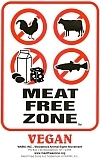
The Meat Free Zone (MFZ) campaign is intended to make the MeatFreeZone logo as recognizable a symbol as the "Smoke Free Zone". The idea was originally conceived when The WARM Store in Woodstock, NY, was in operation throughout the '90's (Woodstock Animal Rights Movement). The store was truly a meat free zone as it was the first cruelty-free, Vegan, socially conscious animal rights store in the United States. Now that the Vegan and Vegetarian movements have been growing so rapidly, more and more people are showing concern about the food in their diet and their overall health and nutrition. Many people are giving up eating fish, chicken, beef, pork (pigs ), dairy (milk, cheese, yogurt, ice cream) and eggs. Headlines of Mad Cow disease, E-coli and salmonella are in the news with greater frequency. Vegan and vegetarian recipe cookbooks are standard now in all bookstores and many restaurants have added Vegan and Vegetarian options to their menus. We hope you will help us with the Meat Free Zone campaign by putting the signs up in your homes and workplaces and by spreading them to all the vegetarian and vegan restaurants that you know and frequent. And someday we will have true "meat free zones" in establishments that serve meat. (d-2)
|
This site is hosted and maintained by: |