Articles Reflecting a Vegan Lifestyle used with permission from All-Creatures.org
Victoria Moran reflects on karma offsets, perspective differences among individual vegans, and the desire for a more compassionate world that ultimately unites us.
“Karma Offsets”: Perfection, the Fine Points, & What It Means to Be Vegan
From Victoria Moran, Main Street Vegan Academy, MainStreetVegan.com
February 2026
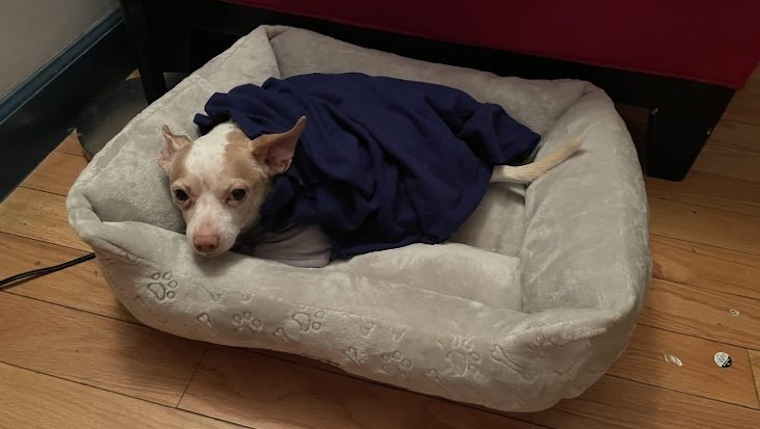
Photo from MainStreetVegan.com
Originally printed in the Main Street Vegan blog, MainStreetVegan.com.
A friend of mine talks about “karma offsets.” These are a way for people who recognize that animals should not be abused or slaughtered, but who cannot or will not give up chicken or cheese, to even things up a little. They can support organizations that help make others vegan, thus offsetting their own choices. It’s a fascinating concept, and as I think about it, being vegan itself is a karma offset too.
While the dictionary defintion of vegan as a noun is blissfully simple—“a person who does not eat any food derived from animals and who typically does not use other animal products”—it gets complicated. We’re human. We complicate things because that’s what we do, and as vegans, we do it for all the best reasons. We want the world to be kind and sane, but sometimes we have a hard time with gray areas and the fact that every single one of us, no matter how perfectly vegan we think we are, is using some karma offsets.
For example, I know a couple of committed vegans who eat bivalve shellfish—oysters, mussels, clams, scallops—because these creatures have no central nervous system and presumably do not feel pain. Oooo, I want to get judgmental about that, but everybody’s house is made of glass and showing stones, online anyway, is more popular than ever.
Take the old controversy about honey. While now on the verboten list of the Vegan Society (UK), the default arbiter of such things, honey consumption was, when I became vegan, left to individual conscience. If you watch documentaries such as Queen of the Sun and Disappearance of the Bees, it’s easy to conclude that buying honey from bee-honoring beekeepers may actually support bees. It is, in any case, arguably more ethical than eating apples, almonds, and cherries, pollinated by factory-farmed bees, trucked around the country to ensure mass pollination in an age of mono-cropping and decreasing bee populations. So here I am, a vegan who consumes the produce bees pollinate. I don’t use honey. Is that a karma offset? Maybe.
Things get even stickier when we move beyond animal foods to the very human penchant for assuming that if I think something is bad, you ought to think so, too, and vice versa. The problem is: it’s not happening. We all think for ourselves, and thank goodness for that. Otherwise, we’d be vegan automatons bound not by that simple dictionary definiton but by a vast list of politically correct—why hasn’t somebody coined “veganically correct”?—beliefs and practices that would deny individual vegans their right to self-determination. Here are some examples, in alphabetical (not intentionally controversial) order:
Abortion: I remember to this day my shock when, in my early 20s, American Vegan Society founder Jay Dinshah told me that he was on the pro-life side of the debate. He laid out compelling reasons supporting the logic of vegans’ taking this position, and contemporary vegans, such as Roman Catholic philosopher and author, Charles Camosy, PhD, have done the same. I still come down on the side of a woman’s right to have autonomy over her body, but I cannot deny that the arguments of these fellow vegans are worthy of consideration.
Companion animals—living with them: While the vegan stance on purchasing living beings from pet shops is close to universal—don’t do it—perhaps the majority of us live with, and love, one or more adopted or rescued companion animals. There is within our movement, however, a small but convinced minority that “owning” a living being is enslavement, and using the term guardianship rather than ownership is merely semantic evasion.
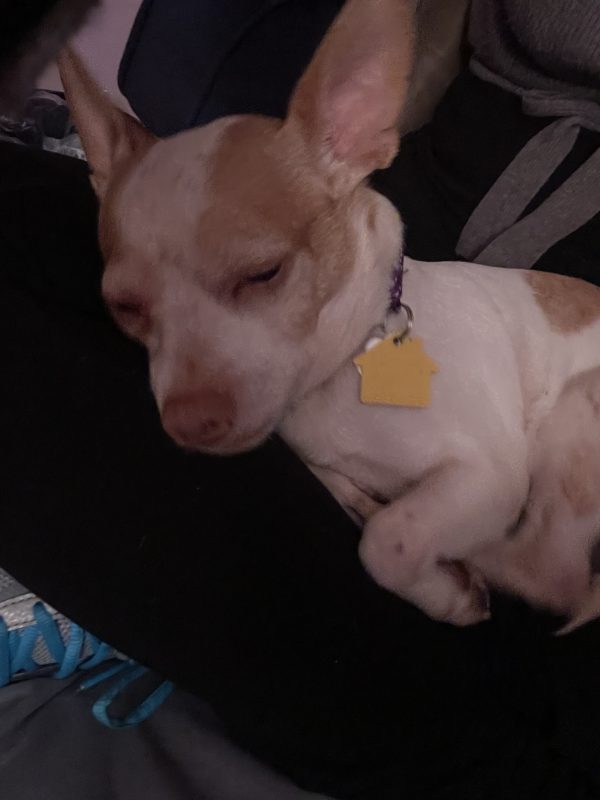
Photo from MainStreetVegan.com
Companion animals—feeding them: The animals who most often share homes with humans are cats (obligate carnivores) and dogs (technically omnivores, but the dogs I’ve known have had a decided preference for meat). For vegans, this is a damned-if-you/damned-if-you-don’t situation. If you want to get some serious hate on social media, post about your vegan dog. You’ll hear that you’re endangering an innocent animal and denying them their “natural instincts” for your own “extremist” beliefs. (Interestlingly, however, the longest-lived dog on record was a British border collie named Bramble, who was fed exclusively vegan food and lived twenty-five healthy years. He is the namesake for Bramble food for dogs, vegan-created and owned.) On the other hand, if your pup hasn’t warmed to all-plant chow, criticism is likely to come from your fellow vegans. And if your companion is a cat, denying him or her animal food is dangerous without careful supplementing of nutrients including taurine, arginine, and arachidonic acid. An Austrian company called Biocraft is making a lab-grown mouse meat for cats, but it’s not yet available in the U.S., and your cat has to eat.
Cruising: The environmental disadvantages of traveling by ship are widely known. I spoke last fall on the Holistic Holiday at Sea and will do it again when they ask me. Even though I don’t partake in “regular” cruises, I believe that this one does such immeasurable good in making and sustaining vegans, it’s a net positive. For this reason, I’m proud to both promote and participate. Not everyone will agree, and not everyone has to.
Incendiary incidentals: Condoms often contain casein, a milk protein. The glue that attaches the label to one’s vegan wine or the sole to one’s non-leather shoe probably contained animal collagen. If you’re in the UK, watch out for that £5 note: it contains tallow. Vinyl and plastic (which has other problems, of course) may use stearic acid from animal fat as a lubricant. This substance is also likely in your tires—or in your Uber driver’s tires—improving the rubber’s durability, flexibility, and grip. Alliteration notwithstanding, these aren’t incendiary at all, because everybody uses them and there’s no one to single out.
Pharmaceuticals: There may be not a single pharmaceutical drug, prescription or over-the-counter, that did not undergo extensive testing on animals in laboratories. Many also contain slaughterhouse byproducts and other animal-derived ingredients. The mid-20th century vegans who kicked off our movement in England were strong supporters of London’s Nature Cure Clinic and Hospital, because they wanted their vegan consistency to include their healthcare choices. Even now, vegans tend to favor natural approaches to disease prevention and cure, but people, including vegan people, are alive because of pharmaceuticals: insulin, antibiotics, drugs to prevent strokes and seizures, the anesthesia that made life-saving surgeries possible—the list goes on.
Procreation: There is a substantial anti-natalist movement among vegans, especially younger ones. Whilst a pure anti-natalist philosophy is the belief that to put the inevitable sufferings of life onto a presumbably unwilling entity, some make the childless choice for reasons of sustainability. Others hold the view that humans are a scourge to the earth and all life on it, and the last thing this planet needs is more of us. Even in the 1980s, these ideas reached me and I chose to have only one child. Now that I’m in my seventies, I wish I’d had more, hedging my bets that at least one of them might consistenly be closeby. “But that’s selfish, and selfishness has gotten us into the mess we’re in.” I don’t know if that voice is societal or internal. It’s right, of course. And I still wish I had more kids to call on.
War and peace: The vegan lifestyle is based on nonviolence, so conventional wisdom would have it that we’re all pacifists, but most of us aren’t. While we might resonate with beating swords into plowshares, we reason, “Somebody had to stop Hitler,” and somebody did. Still, as we hope to see slaughterhouses extinct, don’t we long for the day when munitions plants, too, will have been abolished?
All this said, I love being vegan and I love it that you’re vegan, or on your way there. It’s hopeful. It’s a stand for kindness and justice and expanding our circle of compassion until no one is excluded from its warmth and comfort and care. We, as vegans, have every right to champion other causes and espouse other principles. When we do so, we might find ourselves seeing something differently from the way a fellow vegan does. Can we give him or her the right to have a perspective? It’s tough to change how we eat, to say no to Mom’s pot roast or child’s plea to go the circus. We’ve all drawn a line in the sand, a line we won’t cross. My line isn’t just where yours is, and there are some lines so far into lofty territory, I can’t see that far down the beach. But here’s what’s cool: we’ve each drawn a line. If everybody did that, this world would change in an instant. It’s already a better place because we’re in it, karma offsests and all.
Victoria Moran generally avoids controversy, but she was feeling feisty this morning…Victoria has been vegetarian since 1969 and vegan since 1983. She hosts the Main Street Vegan Podcast and is founder and director of Main Street Vegan Academy, training and certifying Vegan Lifestyle Coaches & Educators since 2012. Her books include Compassion the Ultimate Ethic, Main Street Vegan, The Love-Powered Diet, The Good Karma Diet, and Age Like a Yogi. Subscribe at https://www.mainstreetvegan.com to receive “Recipes to Help You Age Like a Yogi.” To read more about Victoria and her books, see https://www.victoriamoran.com. Follow here on IG @VictoriaMoranAuthor, FB @VictoriaMoranAuthor, and YouTube @VictoriaMoranAuthor.

Photo from MainStreetVegan.com
Posted on All-Creatures: February 4, 2025
Return to Articles Reflecting a Vegan Lifestyle
Follow us on:


- Home Page
- What's New
- Contact Us
- Action Alerts
- Animal Exploitation
- Animal Issues
- Animal Rights Activism
- Archives
- Art & Photography
- Articles Directory
- Bible
- Bible Commentary Blog
- Books
- Campaigns
- Church & Religion
- Discussions
- Events / Podcasts / Media
- Health
- Hosted Web Sites
- Humor
- Kids' Korner
- Letters
- Links
- Nature Studies
- Newsletter
- Poetry & Stories
- Prayers
- Quotations
- Recipes with Photos
- Recipes Without Photos
- Sermons
- Stop Cruelty in Churches
- Video Library
- The Mary T. and Frank L. Hoffman Family Foundation
- Email: [email protected]
A web site sponsored by The Mary T. and Frank L. Hoffman Family Foundation and all-creatures.org
Copyright © 1998-2026 The Mary T. and Frank L. Hoffman Family Foundation. All rights reserved. May be copied only for personal use or by not-for-profit organizations to promote compassionate and responsible living. All copied and reprinted material must contain proper credits and web site link www.all-creatures.org.
Fair Use Notice: This document, and others on our web site, may contain copyrighted material whose use has not been specifically authorized by the copyright owners. We believe that this not-for-profit, educational use on the Web constitutes a fair use of the copyrighted material (as provided for in section 107 of the US Copyright Law). If you wish to use this copyrighted material for purposes of your own that go beyond fair use, you must obtain permission from the copyright owner.
Thank you for visiting all-creatures.org.
