A Meat and Dairy Article from All-Creatures.org
Tyson Foods dumps millions of pounds of toxic slaughterhouse pollutants into US rivers and lakes
From Amy Jones, SpeciesUnite.com
May 2024
Tyson released 87 billion gallons of wastewater, containing contaminants including blood, bacteria, and animal feces, directly affecting water sources relied upon for drinking, fishing, and recreation.
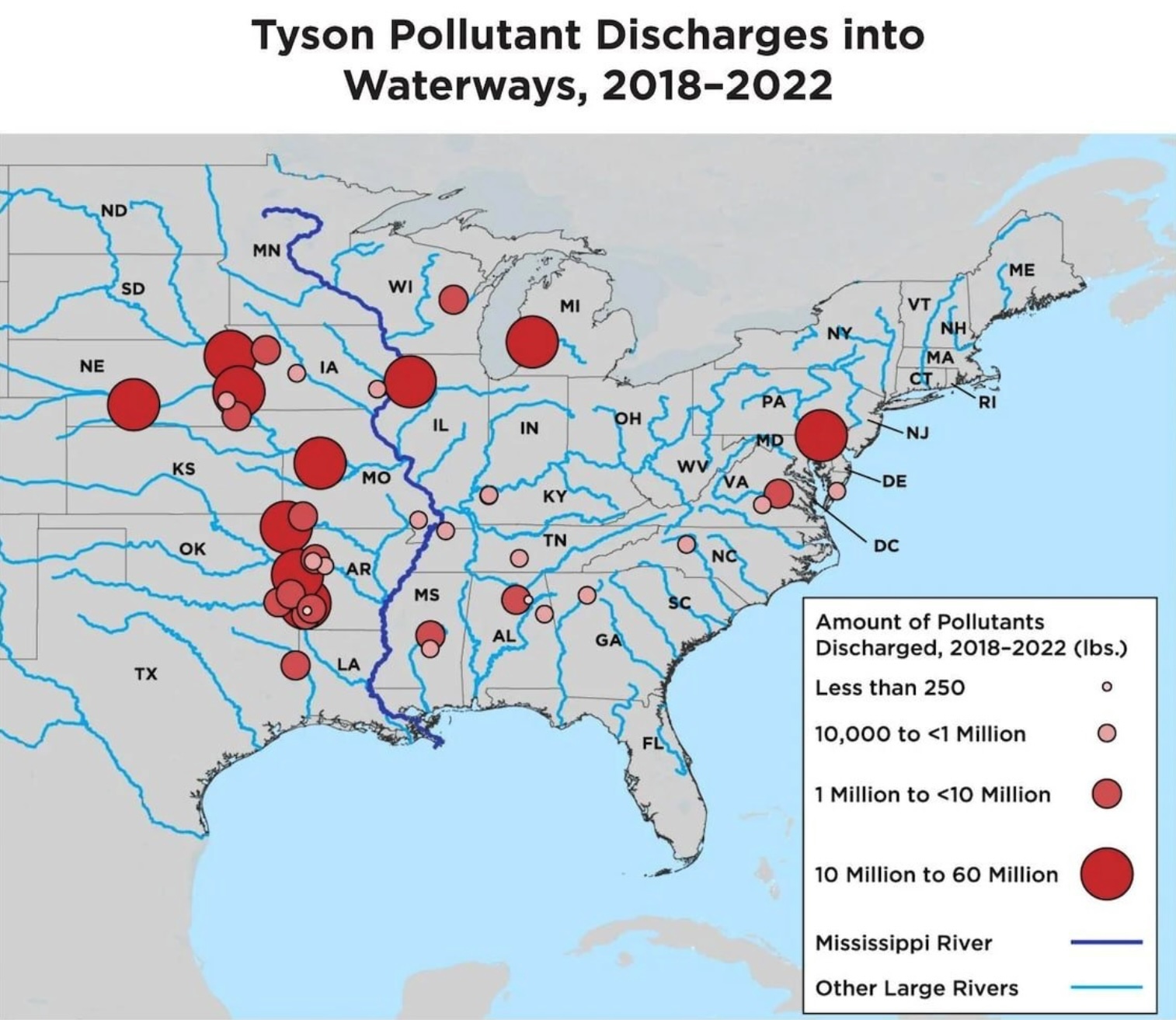
From 2018 to 2022, 41 Tyson slaughterhouses and mega processing plants were responsible for releasing 371m lb of pollutants, including nitrogen, phosphorus, chloride, oil and cyanide, into waterways, according to the investigation by the Union of Concerned Scientists (UCS).
According to the findings, published in a report titled Waste Deep: How Tyson Foods Pollutes US Waterways and Which States Bear the Brunt, Tyson released 87 billion gallons of wastewater into streams, rivers, lakes and wetlands. This wastewater contained contaminants mixed with blood, bacteria, and animal feces, directly impacting water sources used for drinking water, fishing, and recreation.
“As the nation’s largest meat and poultry producer, Tyson Foods plays a huge role in our food and agriculture system and has for decades exploited policies that allow big agribusiness corporations to pollute with impunity,” said Omanjana Goswami, co-author of the report and an interdisciplinary scientist with the Food and Environment Program at UCS. “In 2022, the latest year for which we have data, Tyson plants processed millions of cattle and pigs and billions of chickens, and discharged over 18.5 billion gallons of wastewater, enough to fill more than 37,000 Olympic swimming pools.”
....
Please read the ENTIRE ARTICLE HERE.
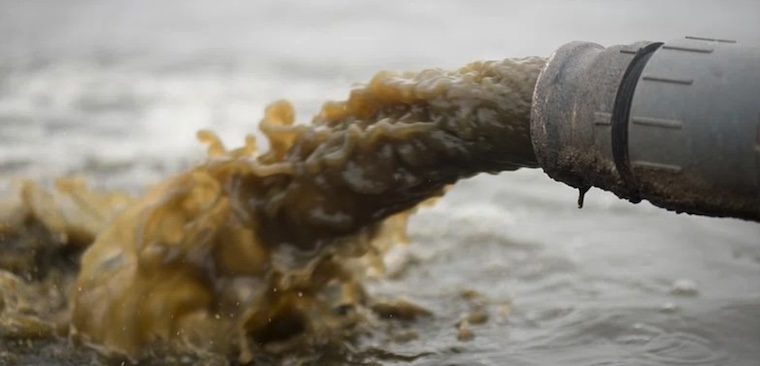
Image from USDA
Posted on All-Creatures.org: May 18, 2024
Return to Meat and Dairy Articles
Read more at Environment Articles
Follow us on:


- Home Page
- What's New
- Contact Us
- Action Alerts
- Animal Exploitation
- Animal Issues
- Animal Rights Activism
- Archives
- Art & Photography
- Articles Directory
- Bible
- Bible Commentary Blog
- Books
- Campaigns
- Church & Religion
- Discussions
- Events / Podcasts / Media
- Health
- Hosted Web Sites
- Humor
- Kids' Korner
- Letters
- Links
- Nature Studies
- Newsletter
- Poetry & Stories
- Prayers
- Quotations
- Recipes with Photos
- Recipes Without Photos
- Sermons
- Stop Cruelty in Churches
- Video Library
- The Mary T. and Frank L. Hoffman Family Foundation
- Email: [email protected]
A web site sponsored by The Mary T. and Frank L. Hoffman Family Foundation and all-creatures.org
Copyright © 1998-2026 The Mary T. and Frank L. Hoffman Family Foundation. All rights reserved. May be copied only for personal use or by not-for-profit organizations to promote compassionate and responsible living. All copied and reprinted material must contain proper credits and web site link www.all-creatures.org.
Fair Use Notice: This document, and others on our web site, may contain copyrighted material whose use has not been specifically authorized by the copyright owners. We believe that this not-for-profit, educational use on the Web constitutes a fair use of the copyrighted material (as provided for in section 107 of the US Copyright Law). If you wish to use this copyrighted material for purposes of your own that go beyond fair use, you must obtain permission from the copyright owner.
Thank you for visiting all-creatures.org.
