An Animal Rights/Vegan Activists' Strategies Article used with permission from All-Creatures.org
Jon Hochschartner explains how advocating for the development of cultivated meat is not tantamount to abandoning the ethical argument for animal liberation. Rather, it is a strategy to reduce suffering and death that has the potential to change the ethical values of our society as the technology develops.
Cultivated meat and moral argument
From Jon Hochschartner, Slaughter-Free America, slaughterfreeamerica.substack.com
March 2026
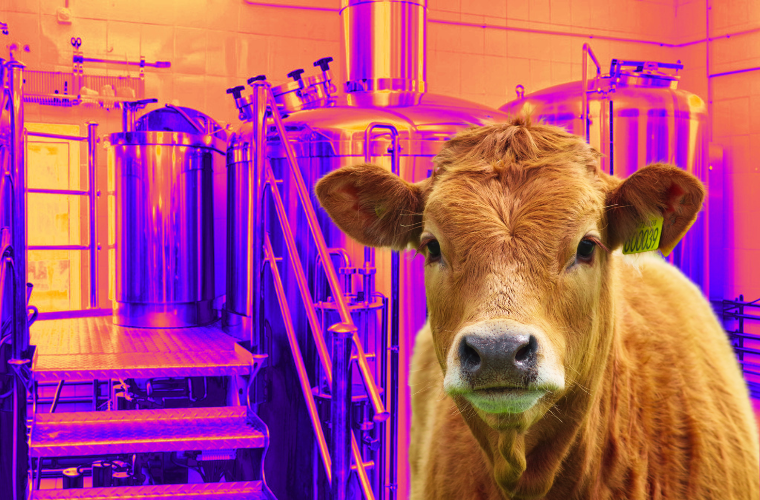
Images from Canva
A criticism I see with some frequency of those animal advocates, like myself, who are prioritizing the development of cellular agriculture as a means of reducing nonhuman suffering and premature death, is that we are abandoning the moral argument for animal liberation. Needless to say, I don’t believe this is really the case, though I understand how the misunderstanding can arise.
First of all, there is no reason advocates can’t make a moral argument for, say, public funding of cultivated-meat research. I do this all the time. In my writing for general audiences, I typically make the case for cellular-agriculture development on animal rights, environmental and public-health grounds. The latter two arguments are solid, but it’s the former one which motivates me.
What is true is cultivated-meat proponents, including me, generally don’t believe ethical argument alone will achieve animal liberation. But is this so unusual? When, for instance, animal activists protest outside of a shop that sells fur, they might be making a moral case to potential customers, however they’re usually not making an ethical argument to the proprietor, who’s familiar with their views.
Rather, to the proprietor, activists are basically saying, “You might not agree with our moral claims, but if you don’t accede to our demands, we’re going to make your life unpleasant and damage your business.” Most people in the movement, aside from a few philosophers, who I suspect are most interested in self-glorification, recognize there are other tools besides ethical argument.
Cultivated-meat proponents view technological development, and the resulting economic pressure it can place on outdated animal-exploitation industries, as one such tool. But again, this doesn’t necessarily reflect an abandonment of ethical argument. I will continue making the moral case against speciesism, while recognizing scientific development can make this more widely convincing.
I’m by no means an orthodox Marxist, however the concepts of base and superstructure, which come from that socialist tradition, are helpful. In this context, base refers to the productive forces of society, like tools, materials and factories. Superstructure refers to a society’s ideological system, such as laws, religion and art. Marxists believe base influences superstructure far more than the opposite.
Applying these concepts to the present discussion, my hope is that as the base of society changes, as cellular agriculture becomes more efficient than animal agriculture, the superstructure will change as well, allowing wider swathes of the human population to accept the ethical arguments against animal exploitation. Is it really so difficult to believe technological development could have such an impact?
Imagine you’re an activist opposed to whale slaughter. The moral argument against the practice has always been true, is true now, and will forever be true. On a practical level, though, do you think society will be more accepting of your ethical claims before or after the introduction of kerosene, a cheaper alternative to whale oil? The answer, I hope, is obvious. Base affects superstructure.
Now, most cultivated-meat proponents motivated by concern for animals aren’t Marxists, or even socialists, however I suspect many believe something similar to this theory of change. The perspective doesn’t abandon the moral argument for animal liberation. It recognizes base and superstructure are connected, and most people don’t arrive at ethical conclusions in a completely abstract, impartial way.
Posted on All-Creatures.org: March 3, 2026
Return to Animal Rights/Vegan Activist Strategies
Read more at Meat and Dairy Articles
Follow us on:


- Home Page
- What's New
- Contact Us
- Action Alerts
- Animal Exploitation
- Animal Issues
- Animal Rights Activism
- Archives
- Art & Photography
- Articles Directory
- Bible
- Bible Commentary Blog
- Books
- Campaigns
- Church & Religion
- Discussions
- Events / Podcasts / Media
- Health
- Hosted Web Sites
- Humor
- Kids' Korner
- Letters
- Links
- Nature Studies
- Newsletter
- Poetry & Stories
- Prayers
- Quotations
- Recipes with Photos
- Recipes Without Photos
- Sermons
- Stop Cruelty in Churches
- Video Library
- The Mary T. and Frank L. Hoffman Family Foundation
- Email: [email protected]
A web site sponsored by The Mary T. and Frank L. Hoffman Family Foundation and all-creatures.org
Copyright © 1998-2026 The Mary T. and Frank L. Hoffman Family Foundation. All rights reserved. May be copied only for personal use or by not-for-profit organizations to promote compassionate and responsible living. All copied and reprinted material must contain proper credits and web site link www.all-creatures.org.
Fair Use Notice: This document, and others on our web site, may contain copyrighted material whose use has not been specifically authorized by the copyright owners. We believe that this not-for-profit, educational use on the Web constitutes a fair use of the copyrighted material (as provided for in section 107 of the US Copyright Law). If you wish to use this copyrighted material for purposes of your own that go beyond fair use, you must obtain permission from the copyright owner.
Thank you for visiting all-creatures.org.
