An Animal Rights/Vegan Activists' Strategies Article used with permission from All-Creatures.org
Ed Boks pays tribute to Doug Fakkema, who has helped many working with animals to grapple with compassion fatigue, and reimagines his influential essay "The Four Phases."
The Four Phases of Caring Too Much
From Ed Boks, Animal Politics with Ed Boks, AnimalPolitics.substack.com
June 2026
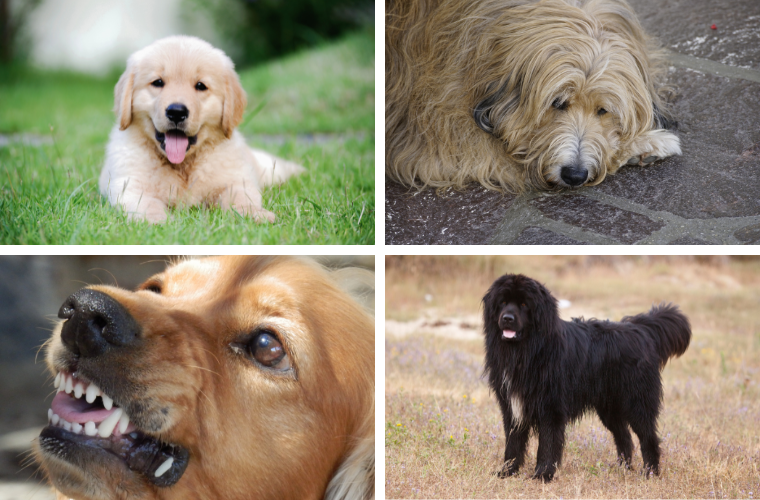
Photos from Canva
Every movement has its quiet prophets, the people who name what the rest of us are only struggling to feel. For those of us in animal welfare, one of those voices is Doug Fakkema. His essay, “The Four Phases,” has been passed from shelter to shelter, from compassion-fatigue trainings to late-night emails among colleagues who are hanging on by a thread.
Doug Fakkema was one of the early voices to name what animal welfare workers already knew in their bodies long before they had language for it. He did not romanticize the work. He described its emotional cost with clarity and gave people tools to survive it.
What follows is a return to his four phases, as they continue to repeat in the lives of people who choose this work and refuse to walk away.
Phase One: The Fire That Finds You
Most of us do not drift into animal welfare. The work finds us in a moment of sharp clarity, sometimes even outrage. We see a dog chained in a yard, a cat left in a box, a shelter full of faces with nowhere to go, and something in us stands up and refuses to sit back down.
In that first phase, the energy feels endless. We take every shift, every transport, every call. We become fluent in the language of urgency. Sleep feels optional. Relationships that do not understand this calling fall away, and we hardly pause to notice. We tell ourselves that the mission just matters more.
At this stage, the world looks simple. We become convinced that there must be a single answer, a law, a program, a campaign, a slogan, that can solve the problem if only enough people would listen. We carry these simple answers like banners and believe we can drag the whole world with us if we only pull hard enough.
Phase Two: The Weight
But the world does not move on our schedule. The same people come through the door with another litter. The same excuses, the same shrugs, the same quiet cruelty. The “adopted” dog returns. The cat nobody wants has been here for months. The euthanasia list keeps filling.
This is where the second phase begins. The fire that once fueled us now burns inward. We stop telling people where we work, not out of shame, but out of exhaustion. We come home, close the door, let the phone go dark, eat whatever is within reach, and sink into a numb kind of silence.
We start to believe that nothing changes, that our effort does not matter, that every animal we cannot save is proof of our failure. It feels personal. We begin to carry the entire system on our own backs. It becomes hard to see the animals in front of us as individuals. They start to blur into a single, overwhelming story of loss.
Nothing changes. Nothing matters. Every loss feels like proof.
Phase Three: The Sharp Edge of Grief
Unchecked sorrow often turns into rage. That is the third phase.
It rarely arrives with a big dramatic moment. More often, it slips in quietly. The driver who cuts us off becomes the person who dumps a dog. The neighbor who complains about barking becomes every person who has ever called a pet “just an animal.” The line between private anger and public work disappears.
People begin to collapse into a single frustrating category, not just the obvious abusers, but the ordinary, inconsistent, distracted public.
We resent colleagues who do not work the way we do, who question our decisions, who ask hard questions about euthanasia or policy. The shield we built in Phase Two hardens here.
Anger becomes the only emotion that feels safe enough to show. Compassion is locked inside, guarded by sarcasm and dark humor. The work is still getting done, but the heart that once drove it has retreated far behind the barricades.
Phase Four: The Quiet Work of Staying
If we are lucky, and if we are honest, something shifts. It is not a sudden revelation. It is a slow turning.
We look back and realize that even in all that chaos, animals were helped. Laws were passed. Gas chambers were closed. Communities learned new habits. The numbers are not perfect, but they are different than they were a decade ago, and we were part of that.
In this fourth phase, we begin to right-size the work. We accept that the problems are complex and that there is no single fix. We learn to bring a full toolbox instead of a single slogan. Legislation, data, community outreach, low-cost clinics, enforcement, education, and storytelling all find their place.
We also learn to right size ourselves. We start to guard days off. We take vacations and actually rest. We let someone else answer the phone sometimes. We honor our families, our friendships, and even our hobbies, not as a distraction from the work, but as part of what makes the work sustainable.
Burnout is not a badge of honor. It is a warning light.
In this phase, we no longer see “the public” as the enemy. Most people are not cruel, they are uninformed or overwhelmed. Ignorance is not always easy to fix, but it is often possible. We aim our anger more precisely, at systems and policies rather than at every imperfect person we meet.
Most important, we reconnect with the animals themselves. They are no longer symbols of a broken system, but living beings in front of us, in this moment, with needs we can meet. We allow ourselves to feel sadness when we must say goodbye, instead of burying it behind distraction or distance. We let the waves of emotion pass through instead of drowning in them.
This is not a phase of surrender. It is a phase of staying. Staying in the work, staying in relationship, staying present to both the grief and the small victories.
One policy at a time, one case at a time, one animal at a time, we are still changing the world.
Author’s note: This essay is adapted from and inspired by “The Four Phases,” an influential piece by shelter director and trainer Doug Fakkema, who helped animal-welfare workers name and navigate what we now call compassion fatigue.
I am grateful to Nancy Heigl, co-founder of the Jason Debus Heigl Foundation, for recently reminding me of Fakkema’s essay. Her own journey in animal welfare reflects many of the same lessons explored here: the movement from urgency, through disillusionment, toward a more grounded and sustainable form of advocacy.
Posted on All-Creatures.org: June 10, 2026
Return to Animal Rights/Vegan Activist Strategies
Read more at How to Avoid Burning Out as an Animal Rights/Vegan Activist
Follow us on:


- Home Page
- What's New
- Contact Us
- Action Alerts
- Animal Exploitation
- Animal Issues
- Animal Rights Activism
- Archives
- Art & Photography
- Articles Directory
- Bible
- Bible Commentary Blog
- Books
- Campaigns
- Church & Religion
- Discussions
- Events / Podcasts / Media
- Health
- Hosted Web Sites
- Humor
- Kids' Korner
- Letters
- Links
- Nature Studies
- Newsletter
- Poetry & Stories
- Prayers
- Quotations
- Recipes with Photos
- Recipes Without Photos
- Sermons
- Stop Cruelty in Churches
- Video Library
- The Mary T. and Frank L. Hoffman Family Foundation
- Email: [email protected]
A web site sponsored by The Mary T. and Frank L. Hoffman Family Foundation and all-creatures.org
Copyright © 1998-2026 The Mary T. and Frank L. Hoffman Family Foundation. All rights reserved. May be copied only for personal use or by not-for-profit organizations to promote compassionate and responsible living. All copied and reprinted material must contain proper credits and web site link www.all-creatures.org.
Fair Use Notice: This document, and others on our web site, may contain copyrighted material whose use has not been specifically authorized by the copyright owners. We believe that this not-for-profit, educational use on the Web constitutes a fair use of the copyrighted material (as provided for in section 107 of the US Copyright Law). If you wish to use this copyrighted material for purposes of your own that go beyond fair use, you must obtain permission from the copyright owner.
Thank you for visiting all-creatures.org.
