Articles Reflecting a Vegan Lifestyle used with permission from All-Creatures.org
Tracy Knight shares some excellent suggestions for gently and subtly bringing your staunchly omnivorous friends and family around to vegan cuisine.
The Never-Vegan Versus Vegan Food
From Tracy Knight, VLCE, Main Street Vegan Academy, MainStreetVegan.com
February 2026

Images from Canva
Originally printed in the Main Street Vegan blog, MainStreetVegan.com.
The meat and potatoes omnivore is a significant culinary challenge for the vegan. Their consumption of produce is minimal and their diet is supplemented predominantly with bread and processed foods. It can be a long-term process to appeal to these never-vegans, but with a little strategy, you may be able to open their minds to a healthier, kinder way of eating. There may be no methods to convert the unwilling, however every shared vegan meal involves a dinner table full of food that no animals had to suffer for.

Photo credit: Tracy Knight
The most important thing is to avoid deception. You wouldn’t want someone to prepare a vegan friendly dish with chicken stock thinking you wouldn’t notice. Respect their expressed limitations. If you are aware of a strong aversion to a particular food (or allergy), you shouldn’t prepare anything with that. My omnivore husband won’t eat mushrooms, but I convinced him to go to a vegan restaurant. When he selected a vegan seafood dish, I informed him it was probably made with mushrooms. He selected something else.
Do Not Call the Food Vegan
Some vegans may argue this point, but I am talking about enlightening a very closed-minded group of people. The process is about psychology and respect and requires patience.
Veganism turns them off. Vegetarianism makes sense to them. Omnivores understand vegetarian and that the restrictions vary, but in their eyes it is still real food. Many people don’t comprehend vegan and are skeptical about or even disgusted by so-called strange ingredients. They have no clue about the biohazardous environments within which their carnivorous food suffers. To reach them, it may be better to say “plant-based” or “vegetarian”. If they ask, be honest and tell them it is vegan or vegan-friendly. Call it omnivore-friendly for a laugh. As you get together more often, you can gradually incorporate the word vegan, based upon their receptivity.
Presentation, Texture, Flavor
- The scent must trigger the appetite and craving.
- Appearance should provoke the eyes are bigger than the stomach.
- Mouthfeel matters. If it actually reaches their mouths, it has to feel good—many people, even some vegans, do not enjoy the textures of mushrooms or tofu.
- Flavor should conquer all apprehension.
- Be prepared to confess ingredients when asked, don’t lie or deceive. Highlight the most appealing elements.
Cheese
Cheese is biologically and mentally addictive. Cheese contains casein which affects the brain like morphine, yet not as extreme. It is a natural element in cow’s milk that ensures a calf will continue to feed and thrive. Once a person has that physical addiction, the mental aspect develops in the desire for the texture, creaminess, and flavor which are all highly difficult to duplicate. Unless you can accomplish this, you should avoid referring to vegan cheese as “cheese” to the non-vegan. Comparisons and expectations are unavoidable. Cheese is one food that often prevents a vegetarian from taking the last step and becoming vegan. For the omnivore, it is even more difficult.
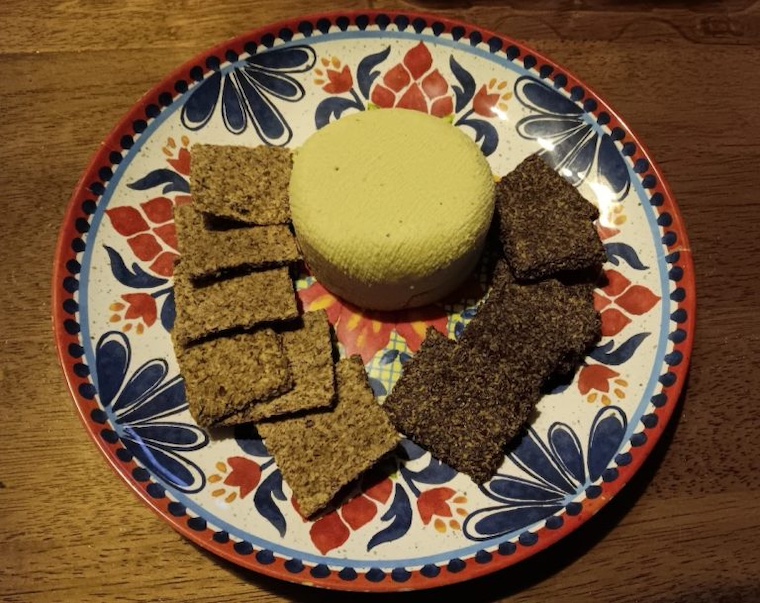
Photo credit: Tracy Knight
If you call it cheese, they will first visually inspect it. They might still try it, but if it isn’t perfect, they probably won’t enjoy it. Rather, call it a spread or give it a gourmet name. I have called mine “cashew and turmeric pate” and “garlic and dill spread.”
Appetizers and Sides
Appetizers are typically presented in the center of the table. This is a perfect way to include both familiar and new foods. Guests may be more open if the food isn’t on their plate and they don’t feel a sense of obligation to taste it. Some good choices are stuffed mushrooms, nachos with salsa and guacamole, veggie tempura, or onion rings. Fried or deep-fried foods tend to be welcome in the never-vegan circles, especially since much of the flavor and texture comes from the fried aspect. Visually, deep-fried foods seem to all look the same.
Sides can also be presented in the center of the table to introduce both the new and familiar yet again. Otherwise, bread, rice, salad, French fries, and potatoes are very simple to prepare and are a great way to make any meal more inviting.
Entrees
The easiest foods to prepare for the never-vegans are those which traditionally do not require animal-based products. Pasta with marinara sauce and rice and beans are perfect examples. Fajitas are probably one of the best options, since you can offer many fillers for guests to choose from. It’s a great communal meal with numerous selections to present in the center of the table, as with the appetizers, enabling guests to have control over what is on their plate. They are more likely to experiment when they are free to choose.

Photo credit: Tracy Knight
Many cultural foods can be made vegan without much or any alterations: Italian, Mexican, and delicacies from countries in Asia and Africa are often plant-based. These meals are a great way for your friends and family to trust your cooking and become more open minded for future gatherings.
Gauge their willingness to try alternatives to animal products with each meal you share and serve such items at their pace. A staple animal-based dish is not easily duplicated with substitutes. The attempt could provoke comparisons and false expectations. There is a flavor and a texture that they will expect once you call something “steak” “lobster” or “chicken”. If it is not a perfect substitute, it can stunt any desire to consume more plant-based meals.
Snacks
Great snacks to provide are chips, nuts, crackers, nachos, and dips made with vegan sour cream. Veggie and fruit platters are excellent snack items. I find that adults and children alike will devour grapes. Even never-vegans appreciate grapes as a snack.
Desserts
Most desserts made vegan are exactly like those with animal products, or better. They smell, look, feel, and taste the same. Pies, cakes and cookies only require plant-based butter and unbleached flour and sugar. I find that with cookies in particular, flax meal effectively replaces eggs without altering any element of what makes cookies so decadent. Hopefully your guests are more than satisfied with the meal, followed with dessert, which is a great way to prove that you are not making any sacrifices being vegan.
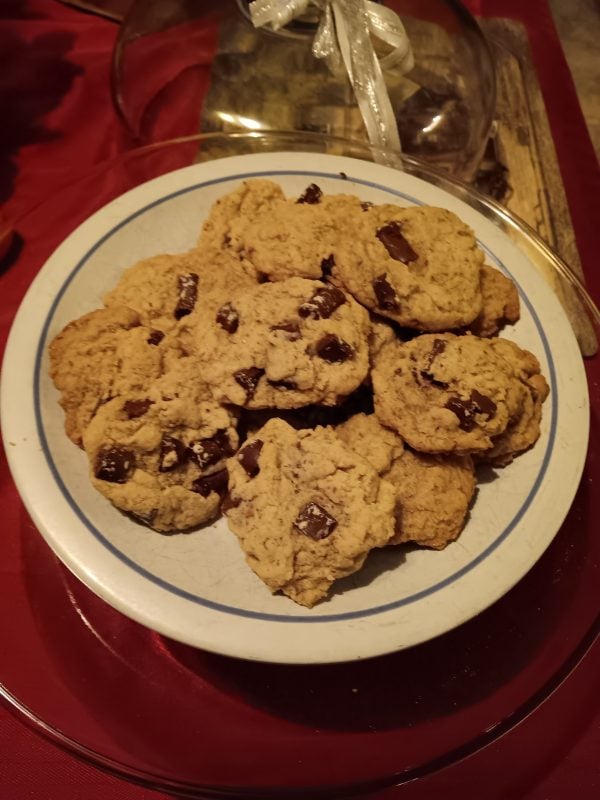
Photo credit: Tracy Knight
For the Animals
The never-vegan is a person who seldom consumes produce and has no interest in experimenting even with animal-based foods. This personality is the least likely to ever go vegan, or vegetarian, even when faced with health concerns. But we can still make an effort. By entertaining our never-vegan friends and family, we are opening their minds and hopefully their hearts. As we celebrate togetherness around the table, we are making a difference for their health, for the environment, and especially for the animals.
By Tracy Knight, trained and certified as a vegan lifestyle coach and educator by Main Street Vegan Academy, www.MainStreetVegan.com
Tracy Knight began her vegan journey 37 years ago. She volunteers as an animal advocate and loves helping farm sanctuaries and spending time with the animals. Tracy is a Vegan Lifestyle Coach and Educator through the Main Street Vegan Academy and believes that once you cross that threshold of true awareness, you can never go back. You don’t become desensitized, rather you become more sensitized. Every animal matters and every animal has a soul.
Find Tracy on Instagram and Facebook.

Photo credit: Tracy Knight
Posted on All-Creatures: March 26, 2026
Return to Articles Reflecting a Vegan Lifestyle
Read more at Animal Rights/Vegan Activist Strategies
Follow us on:


- Home Page
- What's New
- Contact Us
- Action Alerts
- Animal Exploitation
- Animal Issues
- Animal Rights Activism
- Archives
- Art & Photography
- Articles Directory
- Bible
- Bible Commentary Blog
- Books
- Campaigns
- Church & Religion
- Discussions
- Events / Podcasts / Media
- Health
- Hosted Web Sites
- Humor
- Kids' Korner
- Letters
- Links
- Nature Studies
- Newsletter
- Poetry & Stories
- Prayers
- Quotations
- Recipes with Photos
- Recipes Without Photos
- Sermons
- Stop Cruelty in Churches
- Video Library
- The Mary T. and Frank L. Hoffman Family Foundation
- Email: [email protected]
A web site sponsored by The Mary T. and Frank L. Hoffman Family Foundation and all-creatures.org
Copyright © 1998-2026 The Mary T. and Frank L. Hoffman Family Foundation. All rights reserved. May be copied only for personal use or by not-for-profit organizations to promote compassionate and responsible living. All copied and reprinted material must contain proper credits and web site link www.all-creatures.org.
Fair Use Notice: This document, and others on our web site, may contain copyrighted material whose use has not been specifically authorized by the copyright owners. We believe that this not-for-profit, educational use on the Web constitutes a fair use of the copyrighted material (as provided for in section 107 of the US Copyright Law). If you wish to use this copyrighted material for purposes of your own that go beyond fair use, you must obtain permission from the copyright owner.
Thank you for visiting all-creatures.org.
